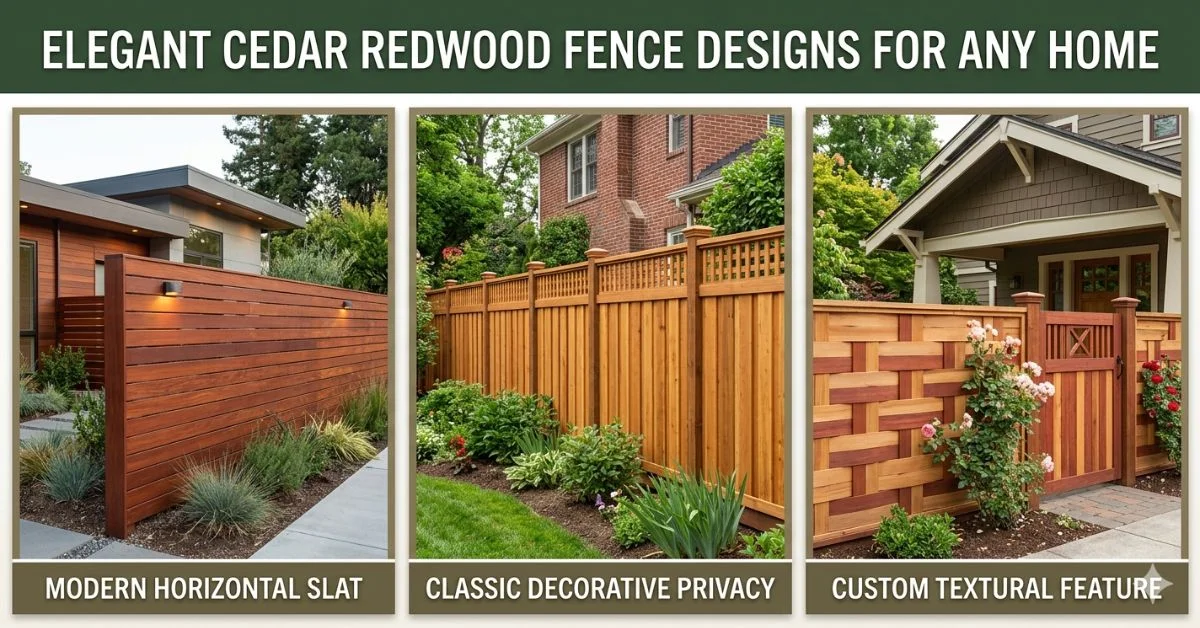
Elegant Cedar Redwood Fence Designs for Any Home
A cedar redwood fence does more than mark a property line. It can transform your home’s first impression, shape outdoor privacy, and make the entire landscape feel complete. The best designs blend durability, maintenance needs, and the home’s architectural style. Whether you want a sleek privacy screen, a warm rustic boundary, or a refined front yard statement, the right fence design elevates everything around it.
Core Design Principles for Cedar and Redwood Fencing
A cedar redwood fence works best when the design matches your home’s character and the yard’s purpose. Cedar is popular because it is affordable, easy to work with, and naturally resists decay. Redwood is valued for its deep color, dimensional stability, and upscale appearance. Both woods excel in residential fencing, whether you build a solid privacy fence, a decorative boundary, or a hybrid style that combines function with visual softness.
The most important rule is simple: the fence should look intentional from both the street and the backyard. That means carefully considering board spacing, post style, height, stain color, and whether the fence needs to block views, support climbing plants, or frame a garden.
What Makes These Fences Elegant
Elegance in fencing comes from proportion, texture, and restraint. A cedar or redwood fence looks refined when lines are clean, hardware is minimal, and the finish complements the home rather than competing with it. Straight vertical boards, hidden fasteners, smooth post caps, and a consistent stain create a premium result far better than overly ornate details.
Good design also avoids visual clutter. If your home already has strong architectural features, the fence should support that look with a simple pattern. If the house is plain, the fence can add character through a lattice top, contrasting posts, or a carefully chosen stain.
Cedar and Redwood Fence Styles by Function
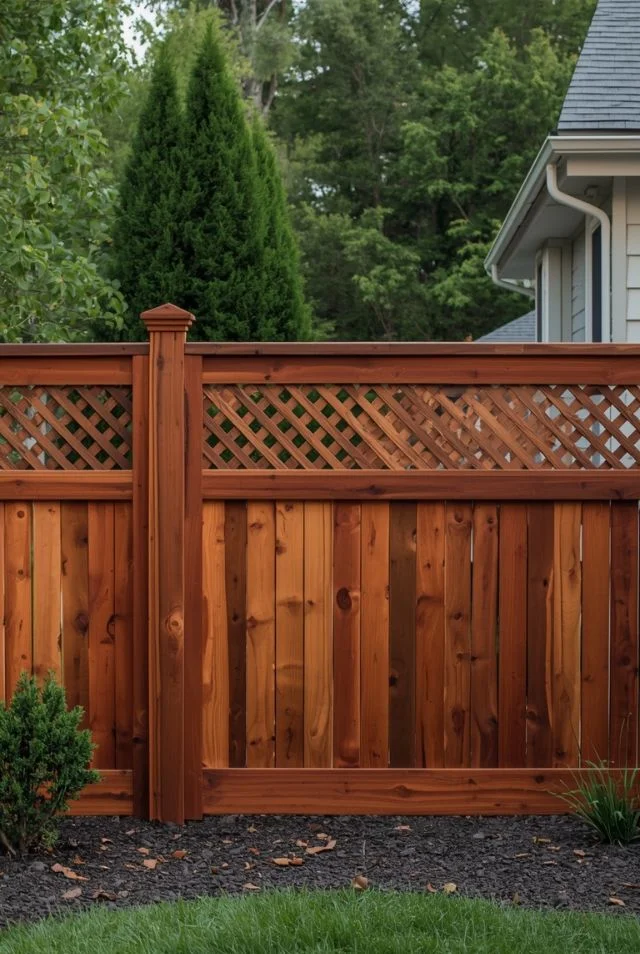
The rightcedar redwood fence style depends on how much privacy you need and how formal you want the property to feel. Privacy focused designs use full height boards. Decorative styles use spacing, lattice, or open rails to keep the yard feeling light and airy. Many of the strongest designs combine both approaches.
Here are the styles that work especially well for modern homes, traditional homes, and landscape heavy yards.
Board on Board Privacy Fence
A board on board cedar redwood fence is one of the most practical premium options. The overlapping boards reduce gaps as wood expands and contracts, which helps maintain privacy and gives the fence a thicker, more architectural appearance. This design is ideal for backyards, pool areas, and homes near neighbors or busy streets.
For a more elegant finish, use slightly wider boards, smooth trimmed edges, and a stain that emphasizes the wood grain. A board on board design looks especially good when paired with matching gate hardware and a tidy landscape border of low shrubs or gravel.
Shadowbox Balance Fence
A shadowbox cedar redwood fence offers a better visual experience on both sides than a flat privacy fence. The alternating boards create depth and shadow, which gives the fence texture without making it look heavy. This is a smart choice if the fence line is shared with neighbors or if the property boundary is visible from multiple angles.
This style is also useful where airflow matters. Because the boards are not completely solid, the fence feels less massive while still preserving a strong sense of enclosure. It works beautifully in family backyards and along side yards where you want privacy without a solid wall.
Horizontal Slat Modern Fence
A horizontal cedar redwood fence creates a sharper, more modern look. It works especially well with contemporary homes, black framed windows, stucco exteriors, concrete paths, and minimal planting schemes. The horizontal lines visually widen the yard, which can make smaller spaces feel more open and expansive.
This style becomes more elegant when spacing is precise and board widths are consistent. A semi transparent stain with gaps preserves light and filtered views, while a tighter board placement provides privacy without looking bulky. Use dark metal posts or hidden fasteners for an ultra clean appearance.
Lattice Top Softening Fence
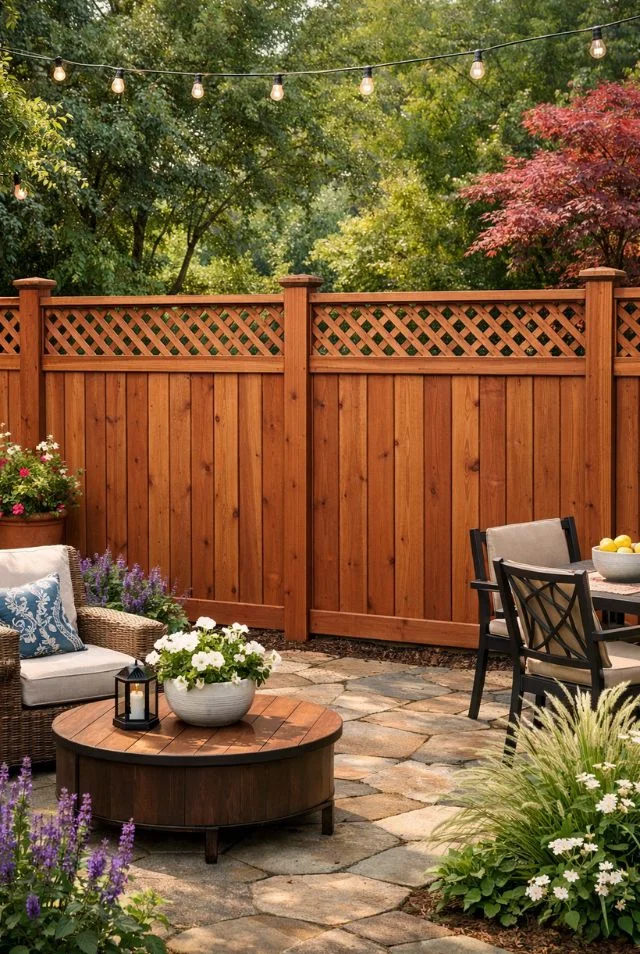
A lattice top cedar redwood fence is a strong choice when you want privacy without a hard visual stop at the top edge. The lower solid section provides seclusion, while the lattice introduces airflow, light, and decorative interest. This design is especially effective around patios, garden rooms, and backyard entertaining spaces.
Lattice tops also soften the transition between fence and sky, which helps tall fences feel less imposing. For homes with flowering vines or climbing plants like jasmine or clematis, this style becomes even more attractive over time. You can also add a curved or arched lattice top for a romantic garden feel.
Picket Style Redwood Front Yard Fence
A picket style cedar redwood fence is perfect for front yards and classic homes. It feels friendly and timeless while providing a clear but low boundary. Picket fences work well with cottages, Colonial revivals, and traditional suburban houses. The spacing between pickets keeps the yard open and welcoming.
To make a picket fence look more elegant, use taller pickets with decorative tops like Gothic, flat, or pointed finials. A semi transparent redwood stain enhances the natural grain and pairs beautifully with white trim or stone pathways. Keep the height between 3 and 4 feet for the best proportion.
Mixed Material Cedar Fence
For contemporary or luxury homes, a mixed material cedar fence can be stunning. Combine cedar slats with black metal frames, concrete blocks, or steel panels. This architectural style is distinctive, durable, and highly customizable. Use it for front yard statements, pool enclosures, or to screen outdoor kitchens.
The key to elegance with mixed materials is restraint. Use only two materials, keep lines straight, and ensure the wood finish ties into other exterior elements like decking or window trim. A cedar and black metal fence looks expensive and modern without being busy.
Matching Fence Designs to Home Architecture
The best cedar redwood fence designs are tailored to your home’s architecture. A fence that looks perfect on a modern house may feel wrong on a cottage or Colonial home. Matching the fence style to the property creates a cohesive, expensive look.
For Modern Homes
Modern homes usually look best with straight lines, dark stains, and strong geometric patterns. A cedar or redwood fence with horizontal slats, slim metal accents, or offset boards complements the clean architectural language of the house. Keep the design disciplined and uncluttered.
Use a charcoal or espresso stain to make the wood look more architectural. Pair the fence with concrete pavers, gravel, ornamental grasses, and black metal fixtures. Avoid lattice, scalloped tops, or any ornate detail.
For Traditional Homes
Traditional homes often work well with vertical boards, cap and trim details, and soft natural tones. A redwood fence with a decorative top rail or a cedar fence with evenly spaced pickets echoes the home’s classic proportions. These details create charm without appearing dated.
For older homes, a warm stain that allows the grain to show usually feels more authentic than a heavy opaque finish. Consider a board on board or shadowbox style with a rounded or flat cap. The fence should look like it belongs to the house, not like an afterthought.
For Rustic Homes
Rustic homes and country properties often benefit from fences that look natural and unfussy. A cedar or redwood fence with rougher texture, round posts, or a lighter finish fits well with stone, barn wood, and landscape heavy lots. The goal is to feel grounded rather than polished.
Open rail elements or a split rail style can also work when the property is expansive and the fence is meant to define rather than fully enclose. In these settings, the wood itself becomes part of the landscape design. Use a clear sealer or very light honey stain.
Balancing Privacy, Beauty, and Light
One of the biggest design decisions is choosing how much privacy the fence should provide. Full privacy is excellent for backyards and urban properties, but complete opacity can make a space feel smaller or darker. That is why many of the best cedar and redwood fence designs use a layered approach.
A smart design can preserve privacy at eye level while still letting the top section filter light. This creates a softer, more open feeling without sacrificing comfort or security.
Best Privacy Layouts
The strongest privacy layouts include solid board on board construction, overlapping vertical boards with minimal gaps, taller heights for street facing or close lot properties, and lattice or open top details only where privacy is less important. Matching gates that do not break the fence’s visual rhythm are also critical.
These options work well when outdoor living areas, pools, or neighboring windows are close by. They create a calm, enclosed atmosphere that still looks designed rather than defensive. A 6 foot height is standard, but you may need 7 or 8 feet for sloped lots or two story neighbors.
Best Light Friendly Layouts
When light and openness matter more than total seclusion, use shadowbox construction, horizontal slats with slight spacing, lattice top sections, partial height fences in front yards, or decorative fencing around gardens and patios.
These choices are useful when the fence’s job is more about defining space than fully blocking it. They help the yard feel larger and more relaxed. A 4 foot picket fence in front or a 5 foot shadowbox along a side yard strikes an excellent balance.
Color and Finish Choices That Elevate
A cedar or redwood fence can look dramatically different depending on the finish. Natural wood tones feel warm and organic, while darker stains create a high end architectural look. The finish should also support maintenance goals, because some colors hide weathering better than others.
Staining is usually better than leaving the wood raw if you want long term visual consistency. Stain helps the fence age evenly and can bring out the grain in a much more attractive way than clear sealers alone.
Natural Wood Tones
Natural finishes work well when the landscape is lush and the house has earthy materials like stone, brick, or wood siding. Cedar tends to have a softer golden tone, while redwood often reads richer and deeper. Both look elegant when sealed properly with a UV inhibiting stain.
Natural tones are especially effective in gardens because they let plants and flowers remain the visual focus. They are also less likely to feel trendy or dated. Use a semi transparent stain in honey, cedar, or light walnut.
Dark Stains for Modern Refinement
Dark stains make a cedar or redwood fence feel more refined and modern. Espresso, walnut, and charcoal tones pair well with black windows, metal railings, and contemporary exteriors. These colors also help conceal knots and create a more uniform appearance.
The tradeoff is that dark finishes can show dust and sun fading more visibly over time. That makes maintenance and recoating more important. Plan to clean and reapply every two to three years in sunny climates.
Light and Neutral Stains for Softness
Light stains and neutral honey tones create a softer, more relaxed appearance. They work especially well for suburban homes, coastal styles, and spaces meant to feel warm and welcoming. These finishes are often easier to blend with mixed planting and varied exterior colors.
If the design goal is elegance without drama, this is usually the safest direction. A light driftwood or natural redwood tone complements almost any home style. Use a semi solid stain if you want more uniformity while keeping a light look.
Practical Construction Details That Matter
A beautiful fence still needs to perform well over time. The best cedar and redwood fence designs use strong posts, proper spacing, quality fasteners, and good drainage near the base. Those details may not be glamorous, but they keep the fence straight and attractive.
Poor construction can ruin even the best design. Warping, leaning, uneven spacing, and rusty hardware make a fence look cheap quickly. Invest in the hidden details.
Posts and Frame Quality
A fence is only as good as its posts and frame. For a polished cedar redwood fence, use straight, properly set posts and a frame that keeps the boards aligned. Steel posts can improve durability and reduce movement, especially in larger privacy fences or windy areas.
Set posts in concrete with a gravel base for drainage. The frame should be pressure treated lumber, not cedar or redwood, to resist ground contact moisture. Use hidden or minimal hardware such as color matched screws or hidden clips. When structural elements are clean, the wood becomes the star.
Gates Are a Focal Point
The gate should match the fence style exactly. A mismatched gate can disrupt the visual flow and make the whole project feel unfinished. Reinforced gate frames, proper hinges, and consistent board spacing are important if you want the fence to look elegant for years.
A wide double gate can be especially useful for gardens, equipment access, or backyard entertaining. It can also become a design feature when framed with matching trim. Use self closing hinges and a high quality latch in a finish that matches your house hardware.
Height and Proportion Rules
Fence height should match the scale of the property. A short fence on a large lot can look undersized, while an overly tall fence in a front yard can feel harsh. Most elegant designs pay attention to proportion as much as material.
For example, a 6 foot privacy fence works well in many backyards, while a 4 foot decorative fence often suits front yards or garden edges better. If the fence is tall, adding a lattice top can soften the height. On a slope, step the fence or rack it to follow the ground for a clean line.
Maintenance and Longevity for Cedar and Redwood
A cedar redwood fence performs best when it is maintained consistently. Even durable woods need protection from sun, moisture, insects, and soil contact. Regular maintenance preserves both appearance and structural integrity.
Good maintenance also protects your investment. A well kept fence lasts longer, looks better, and improves the home’s overall presentation.
Simple Maintenance Checklist
Follow these steps to keep your fence beautiful. Inspect the fence twice a year for cracks, loose boards, leaning posts, and hardware corrosion. Clean the surface with a gentle wood cleaner or pressure washer on low setting to remove dirt, mildew, and debris. Reapply sealant or stain as needed, typically every two to four years, to protect the wood from UV and moisture. Keep plants, sprinklers, and soil away from the fence base. Replace damaged boards before problems spread.
These habits keep the fence looking intentional rather than weathered. They also reduce repair costs over time. In humid climates, inspect more often for mildew.
Common Problems and Solutions
The most common issues are warping, discoloration, rot near the base, and loose fasteners. These problems usually appear faster when the fence is untreated or installed without proper drainage. Wood movement is normal, but bad construction makes it worse.
To prevent rot, keep soil and mulch at least two inches below the bottom of the fence boards. Use stainless steel or coated screws to avoid rust stains. If warping occurs, replace individual boards rather than trying to force them straight. A quality finish and sound installation reduce most risks.
Real World Use Case: One Property, Multiple Styles
A family in a suburban neighborhood may choose a cedar redwood fence with a board on board backyard enclosure, a lattice top section near the patio, and a horizontal slat section along the side yard. That single property can use different designs for different functions while keeping the same wood, stain, and trim style.
The result is practical and attractive: privacy where needed, light where wanted, and a consistent architectural language across the lot. This is often a better approach than using one fence style everywhere. Plan transitions carefully so corners and gates blend seamlessly.
Cedar vs Redwood: Which Should You Choose?
Cedar and redwood are often discussed together because both are premium natural wood options, but they have slightly different strengths. Cedar is often a practical choice when budget and ease of use matter, while redwood is prized for its richer look and upscale feel. In many projects, the right choice depends on climate, design goals, and maintenance expectations.
Here is a simple way to think about them.
Cedar has a warm, lighter, versatile appearance. It is usually more budget friendly. It is easy to cut and build with. It looks great for casual to modern homes. It is best used for privacy fences and general residential fencing.
Redwood has a rich, deep, premium appearance. It is often more expensive. It is also workable but has a slightly more premium feel. It looks great for elegant and high end homes. It is best used for feature fencing and upscale curb appeal.
If your goal is broad versatility, cedar is often the easier route. If your goal is a more luxurious finish and the budget allows it, redwood can create a stronger visual impression. Both woods perform well in most climates when properly finished.
Design Mistakes to Avoid
Even a high quality cedar or redwood fence can look average if the design choices are weak. The most common mistakes are easy to avoid once you know what to watch for.
Avoid choosing a fence height that is too tall or too short for the property. Avoid mixing hardware finishes that clash with the wood tone. Avoid using decorative elements that do not match the home’s architecture. Avoid leaving the fence unfinished or poorly sealed. Avoid installing a style that ignores neighborhood context and sight lines.
A good fence should feel like part of the home design, not a separate object dropped onto the lot. Always look at your fence from inside the house, from the street, and from your neighbor’s perspective before finalizing the design.
Expert Design Tips for a High End Look
If you want the fence to look more expensive, focus on details people notice subconsciously. Clean post caps, straight lines, consistent board spacing, and a stain that matches other exterior elements all matter. The best results usually come from restraint rather than decoration overload.
A few practical upgrades can make a major visual difference. Use matching gate hardware in a dark metal finish. Add a slight trim cap for a finished top edge. Plant low shrubs or ornamental grasses at the base. Keep fence lines level and aligned with paving edges. Match the stain to window trim, pergola wood, or deck materials.
These details help the fence read as part of a designed outdoor space. Also consider lighting. Low voltage post cap lights or ground lights shining up through lattice can make your fence a feature at night.
Conclusion
A cedar redwood fence is an investment in your home’s beauty and function. The best designs are not the most complicated ones. They are the ones that fit your home’s architecture, respect your need for privacy or light, and use quality materials with careful construction. Whether you choose board on board for total seclusion, horizontal slats for modern flair, or lattice top for garden charm, the key is intentionality. Plan your fence with the same care you would give to a deck or a front door. The result will be a fence that welcomes, protects, and impresses for decades.
FAQs
1. Which is better for a fence, cedar or redwood?
Redwood offers a richer color and greater stability, while cedar is more affordable and still naturally decay resistant; choose redwood for high end curb appeal and cedar for practical elegance.
2. What is the most attractive fence design for privacy?
A board on board cedar or redwood fence with overlapping vertical boards and a semi transparent stain provides complete privacy with a polished, layered look that ages beautifully.
3. How do I make my wood fence look expensive?
Use hidden fasteners, smooth post caps, a consistent dark or natural stain, and keep lines clean with no gaps or warped boards for an instantly more refined appearance.
4. What fence style works best with a modern home?
Horizontal slat fencing in cedar or redwood with charcoal stain and black metal accents creates the sharp, minimalist look that complements contemporary architecture.
5. How long does a cedar or redwood fence last without staining?
Without stain, a cedar or redwood fence may gray and crack within 12 to 24 months; with proper staining every 2 to 4 years, it can last 20 to 30 years.

As an admin, with a passion for transforming spaces and a sharp eye for design trends, I created Interior Design Style Quiz to help homeowners make confident, informed decisions about their homes from the curb all the way inside.