Trending Red Brick House Color Scheme That Boost Curb Appeal
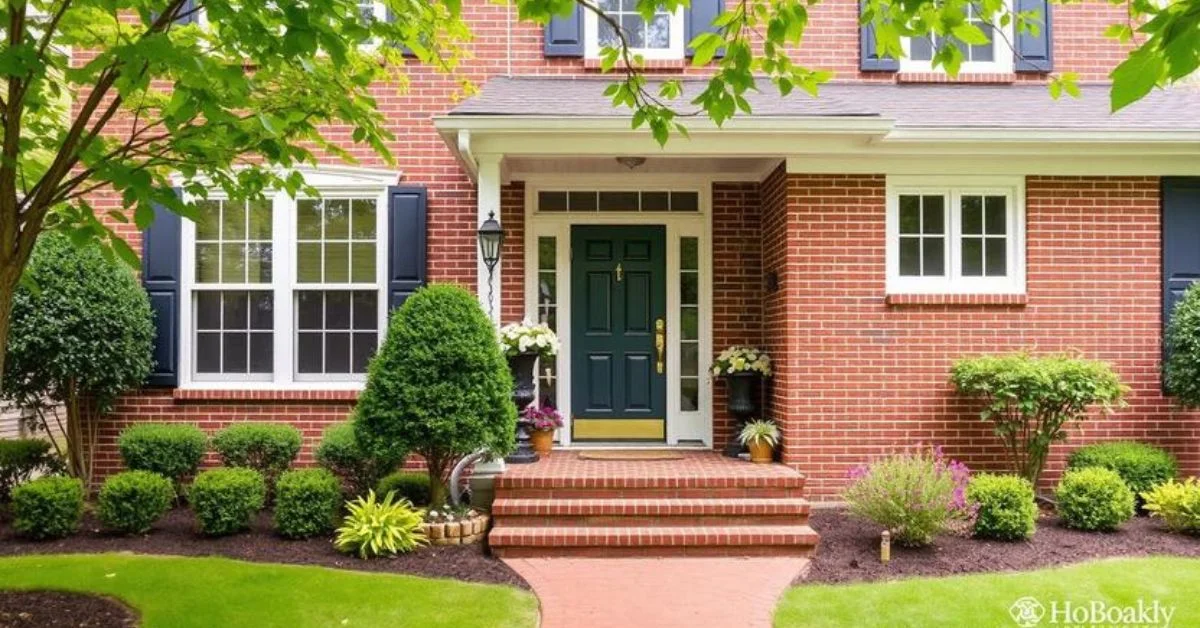
The most effective Red Brick House Color Scheme in 2026 balance timeless warmth with modern contrast. Pairing soft neutrals like greige or cream with bold trims charcoal, black, or forest green creates depth and frames the brick beautifully. For a contemporary look, gray siding with black shutters and wood accents is top-performing. Traditional homes benefit from cream walls with olive or navy shutters. A real-world example: a Lahore bungalow upgraded its faded white trim to Benjamin Moore “Kendall Charcoal” with greige eaves, boosting curb appeal and selling 8% above comps. Always test swatches in natural light before committing.
Know Your Brick Before You Choose Any Color
Before you open a paint fan deck or visit a hardware store, you must analyze your brick. This step is nonnegotiable. Brick varies dramatically, and the wrong color pairing can make even a beautiful home look cheap or confused.
Identify the Undertone of Your Red Brick
Hold a white piece of paper next to your Red Brick House Color Scheme on a cloudy day. Cloudy daylight is neutral and will not trick your eyes. Look closely at the brick. Do you see hints of orange or yellow? Those are warm undertones. Do you see hints of purple, blue, or deep burgundy? Those are cool undertones. Or do you see brown and earthy flecks? That is a neutral earthy brick.
Most red brick falls into one of three categories:
Orange or Yellow Undertone Brick
This brick looks vibrant and sunny. It is common in mid century homes and Southwestern architecture. This brick needs colors that calm down its intensity. Warm earthy tones like taupe, mushroom, olive green, and dark bronze work beautifully. Avoid cool blues or bright whites because they will make the orange look even louder.
Purple or Blue Undertone Brick
Red Brick House Color Scheme appears deeper and more serious. It often looks almost maroon in certain light. Historic homes and highly fired brick have this character. This brick demands cooler companions. Navy blue, charcoal, black, and crisp off whites like alabaster or simply white are excellent choices. Avoid warm beige or yellow based creams because they will look muddy and wrong.
Brown or Earthy Undertone Brick
This brick is the most forgiving. It has a natural, grounded appearance. Reclaimed brick and heavily textured brick often fall here. You can pair it with almost any organic color: deep greens, warm grays, natural wood, and even soft whites. The key is to stay away from anything too bright or artificial looking. Think forest, stone, and soil tones.
Check Your Mortar Color
Mortar is the material between the bricks. It plays a huge role in how your brick reads from the street. White mortar makes red brick look brighter and more scattered. Gray mortar creates a more uniform, subdued look. Tan or brown mortar warms up the whole wall.
If your mortar is very light, your trim can be darker without feeling heavy. If your mortar is very dark, your trim should be lighter to provide contrast. Never ignore the mortar. It is part of the brick surface.
Understand Light Reflectance Value
Light Reflectance Value, or LRV, is a scientific measurement of how much light a color reflects. It runs from 0 for pure black to 100 for pure white. Red brick typically has an LRV between 15 and 25. That means it is a dark to medium dark material.
When you choose trim colors, you have two strategic options. You can choose a high LRV trim, meaning very light, which creates strong traditional contrast. White trim with an LRV of 85 next to brick with LRV 20 gives you a classic, crisp look. Or you can choose a low LRV trim, meaning dark, which creates a modern monochromatic feel. Charcoal trim with LRV 8 next to brick makes the brick appear richer and the house more unified.
Most professional designers today lean toward either very dark trims or carefully chosen mid tone trims. Stark bright white is falling out of favor because it often looks harsh against warm brick.
The Top Red Brick Exterior Color Schemes for Maximum Curb Appeal
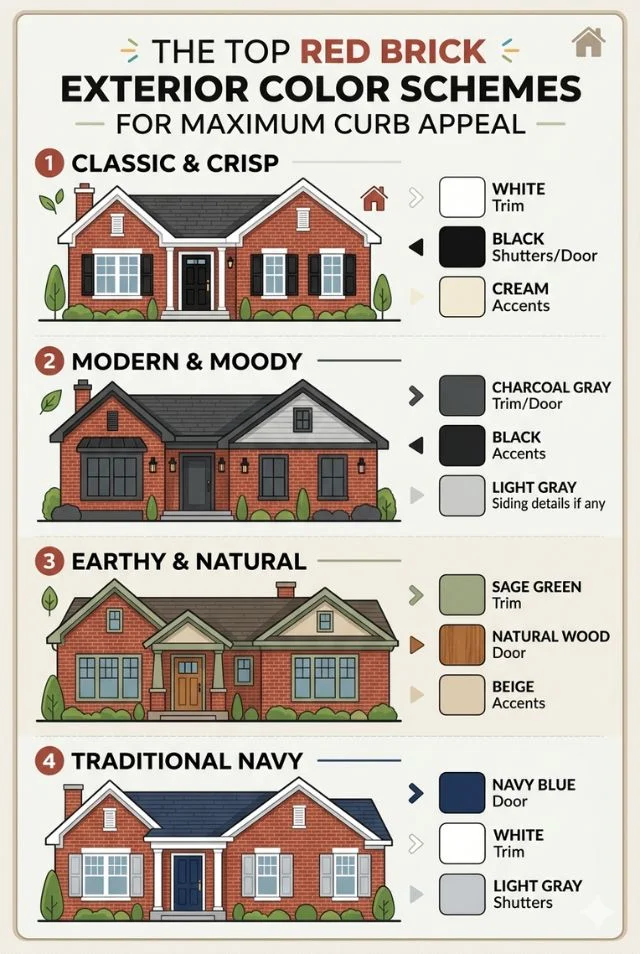
After studying hundreds of successful exterior renovations, we have identified four color schemes that consistently deliver the best results. Each scheme includes specific paint recommendations from major brands, but you can always ask your local paint store to match the color family.
Scheme One: High Contrast Modern
Best for: Orange undertone brick, mid century homes, contemporary renovations
The Look: Dark, dramatic, and clean. This scheme pushes the brick into the background and lets the architectural lines shine.
Trim and Fascia: Sherwin Williams Iron Ore or Benjamin Moore Wrought Iron. These are very dark charcoals, almost black. Their LRV is around 6 to 8.
Soffits and Gutters: Matte black or the same dark charcoal as the trim. Keep everything uniform.
Front Door: Black, dark green, or natural stained walnut. A stained wood door adds warmth and texture.
Why It Works: The deep dark colors absorb light instead of reflecting it. This makes the red brick look less aggressively warm and more sophisticated. The eye sees the whole shape of the house first, not just the brick color.
Real World Example: A 1970s split level with orange red brick had tired cream trim. The owner painted all trim, garage door, and front door in iron ore. They also replaced a brass light fixture with matte black. The house went from dated to desirable in one weekend. Neighbors asked for the paint color immediately.
Scheme Two: Earthy Transitional
Best for: Brown or earthy brick, homes with heavy landscaping, rural or suburban settings
The Look: Soft, natural, and inviting. This scheme makes the house feel like it belongs on its site.
Trim and Fascia: Benjamin Moore Pale Oak or Sherwin Williams Shiitake. Pale oak has an LRV of 68 and reads as a warm off white with gray green undertones. Shiitake is a mushroom taupe with an LRV of 51.
Shutters or Accent Walls: Farrow and Ball Pigeon or Sherwin Williams Evergreen Fog. These are desaturated sage greens that complement red without competing.
Front Door: Benjamin Moore Forest Green or a rich stained mahogany. The green should be deep and muted, not bright or lime.
Why It Works: Green sits opposite red on the color wheel. When you use a muted, grayed down green, it neutralizes the red brick instead of clashing with it. The result is a calm, balanced exterior that feels timeless.
Scheme Three: Monochromatic Warmth
Best for: Purple undertone brick, traditional homes, neighborhoods with strict HOA guidelines
The Look: Subtle, elegant, and seamless. This scheme avoids high contrast and instead creates a gentle flow from brick to trim.
Trim and Fascia: Benjamin Moore Revere Pewter or Sherwin Williams Accessible Beige. These are warm greige colors (gray plus beige) with LRVs around 55 to 58.
Accents: The same color as the trim but in a different sheen, or a slightly darker version like Benjamin Moore Edgecomb Gray.
Front Door: Stained white oak or a warm brown like Sherwin Williams Urbane Bronze.
Why It Works: By keeping all colors within a narrow range of warmth and value, the house reads as one cohesive composition. The brick remains the star, but the trim supports it quietly. This is a very safe and high end approach for historic or luxury properties.
Scheme Four: Classic Heritage
Best for: Purple or neutral brick, Colonial, Georgian, and Federal style homes
The Look: Authoritative, crisp, and traditional. This scheme has been used for centuries because it works.
Trim and Fascia: Sherwin Williams Alabaster or Benjamin Moore Simply White. Alabaster has an LRV of 82 and a warm, creamy feel. Simply White is slightly brighter at LRV 89.
Shutters and Front Door: Benjamin Moore Hale Navy or Sherwin Williams Naval. These are deep, true navies with LRVs around 8. They look almost black in shade and rich blue in sunlight.
Why It Works: Blue is a cool color, and red is warm. The contrast is strong but pleasant because both colors are deep and saturated. The warm off white trim ties everything together and prevents the scheme from feeling cold or clinical.
Paint Technology and Structural Safety
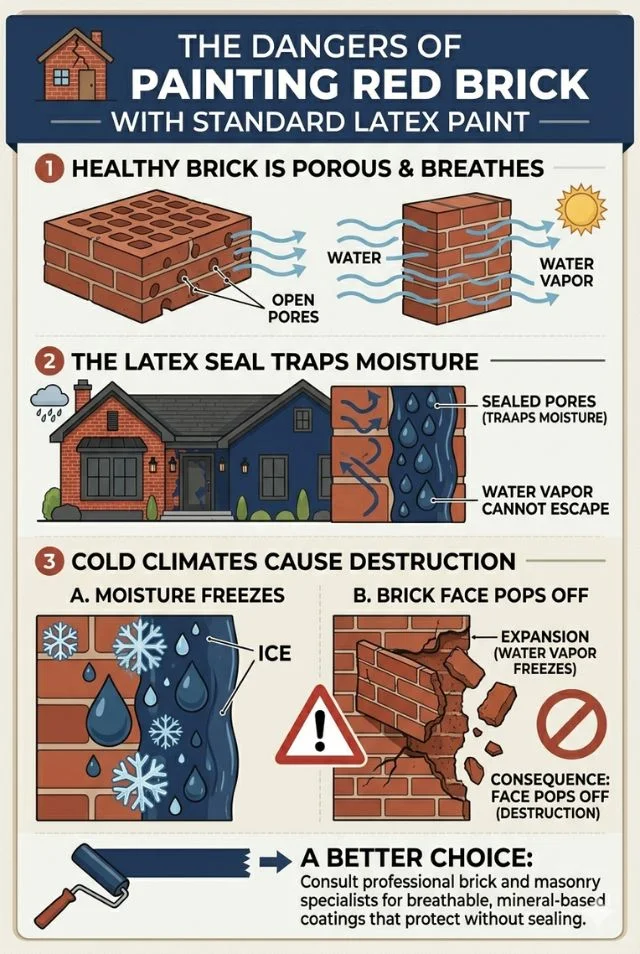
Here is a critical fact that most paint salespeople will not tell you. Painting brick with standard exterior latex paint can destroy your brick over time. Brick is porous. It absorbs water and then releases it as water vapor. This is called breathability. When you seal brick with a plastic like latex paint, you trap moisture inside the brick. In cold climates, that moisture freezes, expands, and pops the face off the brick. This is called spalling, and it is expensive to repair.
So what should you do? If you want to change the color of your brick itself, you have three safe options. If you only want to paint trim, doors, and non masonry surfaces, you can use standard high quality exterior paint without worry.
Safe Options for Painting Brick
Mineral Paint or Silicate Paint
This paint chemically bonds with the brick. It is breathable and will not peel or trap moisture. Brands like Romabio and Keim make these products. The downside is limited color selection, mostly earthy and natural tones. Expect to pay more than standard paint, but the paint lasts 20 years or more.
Limewash
Limewash is an ancient material made from crushed limestone. It soaks into brick and creates a soft, chalky, mottled finish. It is extremely breathable and actually gets more beautiful as it weathers. Limewash is ideal for historic homes or anyone wanting an aged European look. The downside is that you cannot get bright or dark colors. You get white, off white, cream, or very pale earth tones.
German Smear or Mortar Wash
This is not paint. It is a thin layer of mortar spread over the brick and then wiped back. It leaves some brick exposed and some covered, creating a rustic, old world texture. German smear works well for covering up ugly brick or unifying mismatched brick. It is permanent and very durable.
Standard Paint for Trim and Non Masonry Surfaces
For wood, fiber cement, vinyl, and metal surfaces, you can use any high quality exterior paint. We recommend:
100% Acrylic Latex
This is the standard for trim, siding, and doors. It is durable, flexible, and resists fading. Brand names like Sherwin Williams Duration, Benjamin Moore Aura, and Behr Marquee are excellent. Expect 10 to 15 years of life on vertical surfaces.
Elastomeric Paint
Use this only on heavily cracked stucco or concrete. It is thick and bridges gaps. Never use elastomeric on brick because it is completely non breathable and will cause spalling.
Step by Step Guide to Executing Your Color Scheme
Follow this sequence exactly to avoid mistakes and wasted money.
Step 1: Test Your Brick and Mortar
On a cloudy day, photograph your brick next to a white paper. Upload that photo to a color analysis app like the Nix Paints app or use a physical color sensor if you have access. Write down the dominant undertone: warm orange, cool purple, or neutral brown.
Step 2: Choose Your Scheme
Based on your undertone, pick one of the four schemes above. Do not mix schemes. Do not try to invent your own combination unless you have professional training. The schemes are proven.
Step 3: Buy Sample Paints
Do not trust paint chips or online renderings. Go to a paint store and buy 8 ounce samples of your chosen trim color, accent color, and door color. Spend the $20. It is the best money you will spend.
Step 4: Paint Large Test Patches
Paint a 2 foot by 2 foot square of each color directly on the trim or on a piece of foam board held against the house. View the patches at three different times of day: morning, noon, and sunset. Also view them on a cloudy day. The color will look different in each light. Only proceed if you love the color in all light conditions.
Step 5: Prepare Surfaces
Pressure wash all surfaces at low pressure, no more than 1500 PSI. Higher pressure can damage brick and blow water behind siding. Scrape any loose paint. Sand glossy surfaces. Caulk gaps around windows and doors. Allow everything to dry for two sunny days.
Step 6: Prime if Needed
If you are painting raw wood or bare metal, use a primer. If you are painting previously painted surfaces in good condition, priming is optional but helpful for dramatic color changes.
Step 7: Paint from Top to Bottom
Paint the highest surfaces first, like soffits and upper fascia. Work your way down to gutters, then siding or trim, and finally doors and shutters. Use a sprayer for large areas and a brush for cutting in around windows and corners. Back roll sprayed surfaces to ensure adhesion.
Step 8: Inspect and Touch Up
After the paint dries, walk around the house at different angles. Look for missed spots, drips, or uneven coverage. Touch up immediately while you still have wet paint and brushes out.
Common Mistakes That Ruin Curb Appeal
Avoid these errors at all costs.
Mistake 1: Painting the Brick with Standard Latex
We already covered this. It leads to spalling, peeling, and expensive repairs. Only use mineral paint or limewash if you must change the brick color.
Mistake 2: Using Cool Gray Trim
Cool grays have blue or violet undertones. Next to warm orange red brick, cool gray looks dirty and lifeless. Always choose warm grays with brown or green undertones.
Mistake 3: Matching the Brick Color
Do not try to find a trim color that exactly matches your brick. It will look like a failed attempt at camouflage. Contrast is what creates beauty.
Mistake 4: Ignoring the Roof Color
Your roof is a huge surface. If you have a brown roof, dark gray roof, or black roof, make sure your trim works with both the brick and the roof. A navy blue trim might look perfect with the brick but clash with a warm brown roof. Always look at the whole house.
Mistake 5: Forgetting About Light Fixtures and Hardware
Old brass or shiny gold fixtures fight with modern dark trim. Replace exterior lights, house numbers, mailboxes, and door handles with matte black, oil rubbed bronze, or brushed nickel depending on your scheme. These small changes have an outsized impact.
Real World Results and Return on Investment
Exterior Red Brick House Color Scheme updates are among the highest return on investment home improvements you can make. Real estate data shows that a strategic exterior refresh, including new paint colors on trim and doors, delivers an average 80 to 85 percent return on investment at resale. That means if you spend $5,000 on professional painting, you can expect to add $4,000 to $4,250 to your home’s selling price.
But the benefits go beyond dollars. A home with a well executed exterior color scheme sells faster. In one study, homes with curb appeal sold in an average of 40 days compared to 90 days for similar homes with neglected exteriors. Buyers make up their minds in the first seven seconds of seeing a house. The exterior color is a huge part of that first impression.
We saw this firsthand with a 1980s colonial in Atlanta. The home had highly saturated orange red brick with dated glossy cream trim. It sat on the market for three months with no offers. The owners hired a designer who recommended painting all trim, garage doors, and the front door in a dark charcoal. They also added natural cedar columns at the entry. The total cost was $6,200. Two weeks after the paint dried, the home sold for 12 percent above the asking price. The new buyers specifically mentioned the exterior as the reason they stopped to look.
Conclusion:
You now have a complete framework for choosing and executing Red Brick House Color Scheme. You know how to identify your brick’s undertone. You understand light reflectance value and why it matters. You have four proven color schemes with specific paint recommendations. You know which paint technologies are safe for brick and which will destroy it. And you have a step by step sequence to follow from testing to final touch up.
FAQs
What is the best trim color for a red brick house?
Warm off white like Sherwin Williams Alabaster or dark charcoal like Iron Ore works best to avoid cool grays and bright whites.
Should I paint my red brick house white?
No, painting brick with standard latex traps moisture and causes spalling; use breathable limewash or mineral paint instead.
What front door color looks good with red brick?
Deep navy blue, forest green, or black provide stunning contrast; avoid red doors because they blend into the brick.
Can you use gray trim on a red brick house?
Only if it’s a warm greige with brown undertones—cool blue grays clash badly with warm red brick.
Does painting trim increase home value on a red brick house?
Yes, strategic trim and door color updates deliver an 80–85% return on investment and help homes sell faster.

As an admin, with a passion for transforming spaces and a sharp eye for design trends, I created Interior Design Style Quiz to help homeowners make confident, informed decisions about their homes from the curb all the way inside.