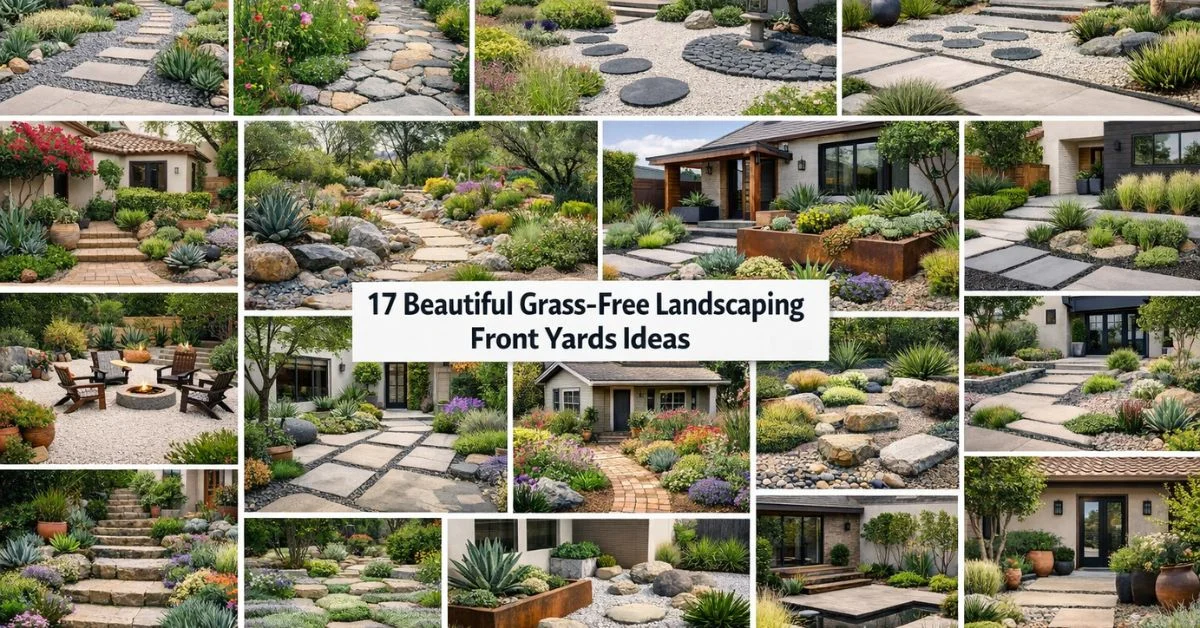
17 Beautiful Grass Free Landscaping Front Yards Ideas
Grass Free Landscaping Front Yards rely on drought‑tolerant plants, hardscape elements, and climate‑appropriate design to replace traditional turf while improving curb appeal, reducing water use by 50–90%, and lowering long‑term maintenance. The best approaches include native meadows, gravel courtyards, succulent gardens, permeable driveways, woodland shade gardens, and groundcover “lawn look” alternatives. These systems perform better than turf because they align with microclimate, soil, and hydrology rather than forcing a high‑input monoculture.
Why grass free landscaping front yards are winning
Traditional cool‑season lawns can consume up to 50–75% of a home’s outdoor water use in dry regions, while many drought‑tolerant or native plantings use 50–95% less water once established.
For expert designers, Grass Free Landscaping Front Yards are attractive because they:
- Free up design budget from turf maintenance to structure, lighting, and planting.
- Unlock microclimate‑specific planting instead of a monoculture lawn.
- Align with policy and incentives (rebates, drought ordinances, HOA evolution).
- Photograph and share better—critical for portfolio, listings, and local reputation.
Xeriscape framework as the base system
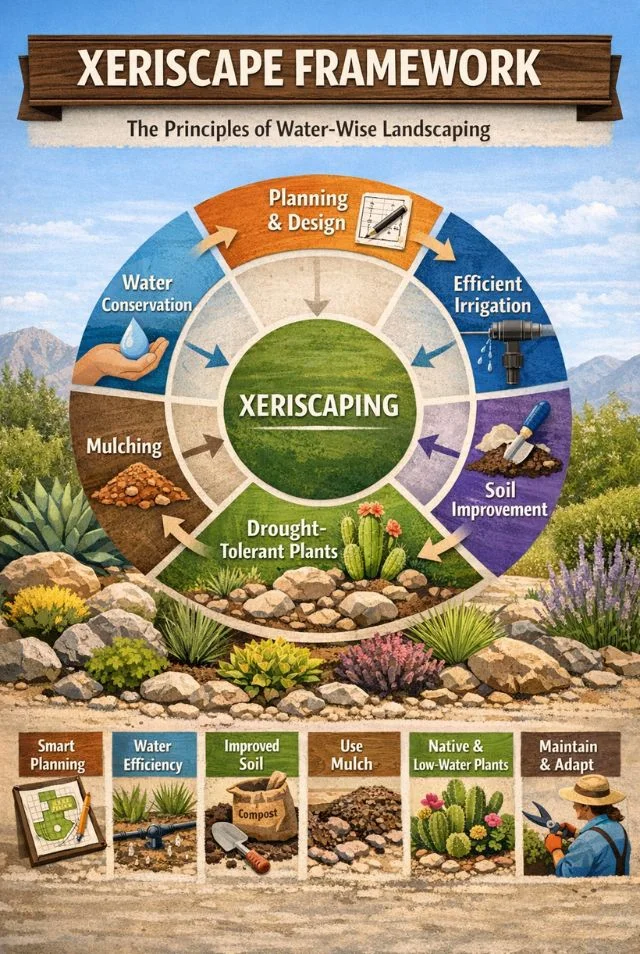
Xeriscaping isn’t just “rocks and cactus.” It’s a water‑budgeted design method that can underpin almost any Grass Free Landscaping front yard.
Core principles
- Hydro‑zoning: Group plants by water need and exposure.
- Soil prep: Amend for drainage where using drought‑tolerant plants; retain moisture where using woodland or shade palettes.
- Irrigation: Drip or subsurface lines with pressure regulation and zoning.
Practical expert moves
- Start with a water budget per square foot and back into plant density.
- Use 3–5 primary materials (gravel, decomposed granite, stone, mulch, steel) to avoid visual chaos.
- Design for 10–15 years of growth, not just year one.
Native meadow front yard (lawn replacement with structure)
A native meadow can visually “read” Grass Free Landscaping alternative while being ecologically rich.
Design notes
- Species mix: Native bunchgrasses (e.g., deer grass, Pacific reed grass) plus wildflowers and low shrubs.
- Form: Treat it as a soft “field” framed by crisp edges—steel, stone, or concrete.
- Access: One or two strong paths to the entry to prevent trampling.
Performance
- Water savings: Many native perennials use ~50% less water than conventional turf; drought‑tolerant natives can save 70–95%.
- Maintenance: Seasonal cutback, selective weeding, and occasional overseeding.
Sculptural succulent and cactus garden
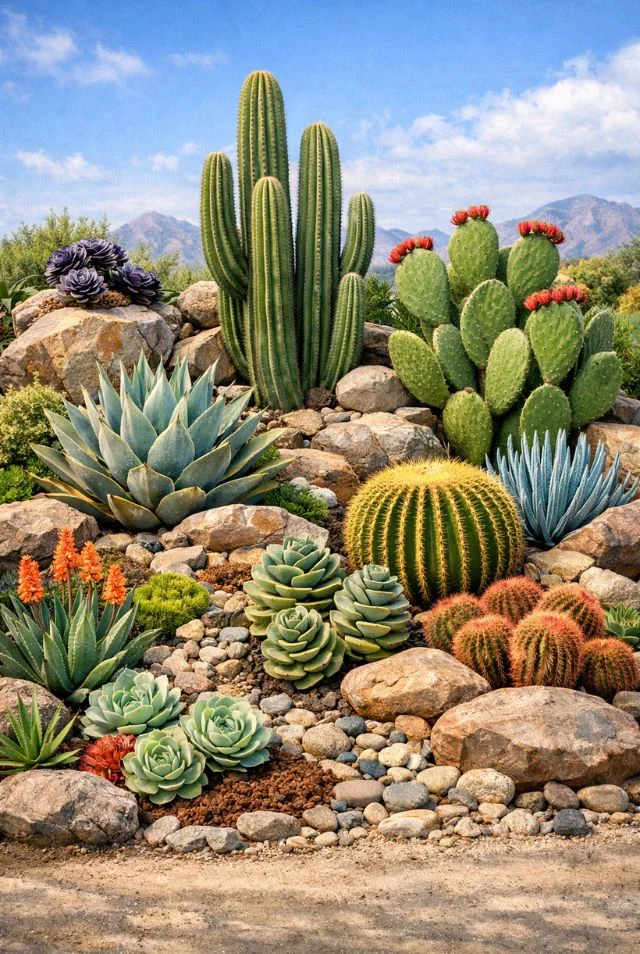
Succulents and cacti are ideal for Grass Free Landscaping Front Yards in arid and Mediterranean climates.
Design strategy
- Architectural focal points: Agave, barrel cactus, large aloes as “sculptures.”
- Understory: Low rosette succulents (echeveria, sedum) and groundcovers.
- Substrate: Well‑drained soil with gravel or pumice; top‑dress with decorative rock.
Expert tips
- Use repeating forms (e.g., three agaves at different sizes) to avoid a “collector’s yard” look.
- Integrate night lighting—uplight sculptural plants for dramatic curb appeal.
Mediterranean dry garden with shrubs and herbs
Mediterranean palettes are powerful for Grass Free Landscaping front yards in warm, dry regions.
Planting palette
- Shrubs: Lavender, rosemary, santolina, cistus.
- Accents: Olive or bay trees, dwarf citrus where climate allows.
- Ground plane: Gravel or decomposed granite with stepping stones.
Why it works
- Plants are naturally drought‑adapted, evergreen or semi‑evergreen, and aromatic.
- The look is timeless and upscale, ideal for higher‑end neighborhoods.
Modern gravel courtyard with specimen trees
For contemporary architecture, a gravel courtyard can replace lawn while amplifying the building’s lines.
Layout
- Large gravel field (one color, one size) for visual calm.
- Specimen trees (multi‑trunk olive, desert willow, Japanese maple in cooler climates).
- Minimal underplanting grasses, low perennials, or no planting at all.
Technical considerations
- Use stabilized decomposed granite or compacted gravel for accessibility.
- Install subsurface drainage to avoid puddling and migration.
Dry creek bed and stormwater‑smart front yard
A dry creek bed is both aesthetic and functional, especially where you want to manage runoff.
Hydrology‑driven design
- Swale and creek alignment follows natural drainage.
- Rock sizing: Larger “bank” boulders, smaller river rock in the “channel.”
- Planting: Riparian‑style plants near the “creek,” more drought‑tolerant species upslope.
Benefits
- Reduces runoff and erosion.
- Creates a visual focal line from street to entry.
- Can help meet local stormwater regulations.
Pollinator‑rich cottage front yard (without lawn)
You can deliver a lush, cottage‑style Grass Free Landscaping front yard without a single blade of turf.
Design approach
- Layered planting: Tall perennials and shrubs at the back, mid‑height in the middle, low edging plants at the front.
- Species: Salvias, echinacea, yarrow, penstemon, native wildflowers, and ornamental grasses.
- Structure: A clear path and one or two clipped elements (e.g., boxwood balls) to keep it from feeling chaotic.
Ecological upside
- High nectar and pollen availability.
- Supports butterflies, bees, and birds while still reading as intentional design.
Front yard patio instead of lawn
Replacing lawn with a usable patio in theGrass Free Landscaping front yard is one of the highest‑ROI moves for livability.
Spatial strategy
- Hardscape “room”: Pavers, brick, or concrete with a defined edge.
- Enclosure: Low hedge, planters, or a short fence for privacy.
- Softening: Perimeter planting beds with drought‑tolerant shrubs and grasses.
Use cases
- Morning coffee zone, neighborhood social hub, or overflow entertaining space.
- Particularly powerful on small urban lots where backyard space is limited.
Idea 9: Desert‑inspired minimalism with bold forms
Desert‑inspired Grass Free Landscaping front yards are perfect for hot, dry climates and modern or mid‑century homes.
Key elements
- Bold focal plant: Yucca, dasylirion, or large agave in a corten or concrete planter.
- Ground plane: Warm‑tone gravel or rock.
- Repetition: Repeated low shrubs or grasses to create rhythm.
Design nuance
- Keep the palette tight and sculptural—too many species breaks the minimalism.
- Use shadow and light as design tools; these yards look incredible at sunrise and sunset.
Rock garden with alpine or drought‑adapted perennials
Rock gardens are a strong option on slopes or awkwardly shaped front yards.
Composition
- Boulders first: Set large rocks partially buried to look natural.
- Plant in pockets: Use drought‑tolerant perennials, sedums, and small shrubs between rocks.
- Gravel mulch: Controls weeds and stabilizes soil.
Expert considerations
- Think in microclimates north side of a boulder is cooler and moister than the south side.
- Use a rock color that harmonizes with the house (roof, trim, or stone veneer).
No‑mow ornamental grass matrix
Instead of lawn, use a matrix of ornamental grasses that move with the wind.
Planting strategy
- Dominant grass: One main species (e.g., Muhlenbergia, Miscanthus, or native bunchgrass).
- Secondary accents: Flowering perennials punctuating the matrix.
- Maintenance: Annual or biennial cutback, depending on species.
Visual effect
- Soft, dynamic, and seasonal.
- Reads as a “field” but with far less water and no mowing.
Gravel + stepping stone tapestry
This is a highly scalable pattern for Grass Free Landscaping Front Yards in small and medium lots.
Pattern logic
- Base layer: 2–3″ of compacted gravel.
- Stepping stones: Large format pavers or natural stone set flush for accessibility.
- Planting pockets: Cutouts for shrubs, grasses, or small trees.
Why experts love it
- Easy to phase and modify.
- Works with almost any architectural style by changing stone and plant selection.
Shade‑adapted woodland front yard
Grass Free Landscaping north‑facing or tree‑shaded front yards, a woodland palette beats struggling turf.
Planting palette
- Groundcovers: Ajuga, pachysandra, native shade groundcovers (where climate allows).
- Shrubs: Hydrangea, viburnum, shade‑tolerant natives.
- Trees: Understory trees like dogwood, redbud, or Japanese maple.
Technical notes
- Focus on soil health and organic matter to retain moisture.
- Irrigation can be minimal once established, especially in cooler climates.
Permeable driveway + planted bands
Driveways often dominate the Grass Free Landscaping front yard. Turning them into permeable, planted features reduces the need for lawn.
Design moves
- Ribbon driveway: Two wheel tracks with planting or gravel in the center.
- Permeable pavers: Joints filled with gravel or groundcovers.
- Side bands: Linear planting strips along the driveway edge.
Benefits
- Reduces runoff and heat island effect.
- Visually breaks up hardscape mass and integrates the driveway into the landscape.
Low‑water front yard with seasonal color blocks
For clients who want color but low water, use seasonal color blocks instead of lawn.
Strategy
- Block planting: Mass single species in defined shapes (e.g., a 6′ x 10′ block of lavender).
- Seasonal sequencing: Choose plants that peak at different times to extend interest.
- Neutral backdrop: Gravel or mulch to let color blocks stand out.
Expert tip
- Use repetition of blocks to tie the design together and avoid a patchwork feel.
Art‑driven front yard with sculpture and minimal planting
When architecture or art is the hero, the Grass Free Landscaping can be intentionally restrained.
Composition
- Primary focal: Sculpture, water feature, or custom metalwork.
- Ground plane: Simple gravel or concrete.
- Planting: A few strong, structural plants (e.g., clipped spheres, columnar trees).
Why it works
- Low maintenance and water use.
- Ideal for galleries, modern homes, or clients with strong art collections.
Hybrid “lawn look” with groundcovers
For Grass Free Landscaping who still want a “green carpet” look, use groundcovers instead of turf.
Options
- Sun: Dymondia, creeping thyme, kurapia (where permitted), low native groundcovers.
- Shade: Clover mixes, shade‑tolerant groundcovers.
- Pattern: Treat as a “living rug” framed by hardscape or planting beds.
Performance
- Lower water and no mowing (or very minimal).
- Can satisfy more conservative neighborhoods while still being grass‑free.
Conclusion
Grass Free Landscaping Front Yards are not a compromise; they’re an upgrade in performance, aesthetics, and long‑term resilience. For expert designers, they open up a richer design vocabulary: meadows instead of monoculture, courtyards instead of unused turf, and plant communities instead of generic foundation shrubs.

As an admin, with a passion for transforming spaces and a sharp eye for design trends, I created Interior Design Style Quiz to help homeowners make confident, informed decisions about their homes from the curb all the way inside.