25 Modern Tiny House Exterior Designs Ideas That Look Stunning (and Stand the Test of Time)
The best modern tiny house exterior design ideas focus on clean lines, honest materials, and deliberate contrast. Vertical board-and-batten or Shou Sugi Ban charred cedar siding paired with black-framed windows and a shed roofline is currently the most popular and visually striking combination. Dark exterior colors charcoal, deep forest green, or matte black make small structures look intentional rather than temporary. A stone base course grounds the building visually, while a covered entry porch completes the composition. Keep materials to three maximum, match your finish choices to your climate zone, and treat the deck as part of the floor plan rather than an afterthought. Those decisions alone will put your tiny house exterior ahead of 90% of what gets built.
What Makes a Tiny House Exterior Design Ideas Feel “Modern”?
Before jumping into ideas, it helps to understand what separates modern from just new. Modern tiny house design tends to prioritize:
- Geometric clarity clean lines, deliberate forms, no unnecessary ornamentation
- Material contrast pairing two or three materials intentionally rather than defaulting to one
- Connection to site the exterior should respond to where the house sits, not ignore it
- Functional details overhangs that actually protect, windows placed for cross-ventilation, entries that feel intentional
With that frame in mind, here are 25 ideas worth stealing.
Modern Siding Styles That Elevate Tiny House Curb Appeal
1. Board-and-Batten Vertical Siding
Vertical siding has made a significant comeback and for good reason. The vertical lines draw the eye upward, making a tiny house feel taller and more substantial than it is. Board-and-batten specifically, where wide boards are covered at the seams by narrower strips, adds depth through shadow lines.
Dark-painted board-and-batten in charcoal, deep forest green, or matte black has become the defining look of a certain type of modern tiny house, one that feels intentional and grounded rather than temporary.
Best paints for this: Benjamin Moore’s Wrought Iron (2124-10), Sherwin-Williams Iron Ore (SW 7069), or deep sage greens like Rosemary (SW 6187) if you want something warmer.
Cost range: Fiber cement board-and-batten runs $5–$10 per square foot installed. Real cedar costs more but ages beautifully.
2. Shiplap Horizontal Siding with a Contemporary Twist
Horizontal shiplap reads as coastal, but when painted in high-contrast colors or left as weathered natural cedar, it shifts into something more architectural. The trick is consistency tight reveals (the exposed gap between boards) of about ½ inch look cleaner than the 1 — 1.5 inch gaps that read as more rustic.
Some builders alternate horizontal and vertical sections to break up façades and create a designed look without structural complexity.
3. Metal Cladding: Corrugated, Standing Seam, or Flat Panel
Steel and aluminum cladding on tiny houses used to look industrial by accident. Now designers are using it deliberately.
Corrugated metal, particularly Galvalume or Corten steel, adds texture that plays beautifully against softer landscape elements. Standing seam metal, the same profile used in high-end roofing translates surprisingly well as wall cladding and creates an almost seamless look between roof and wall.
A word on Corten steel: It weathers to a distinctive rust-orange patina over 1–3 years, requires no maintenance, and looks genuinely spectacular. The downside is the rust runoff during weathering. Build in proper drainage details before specifying it.
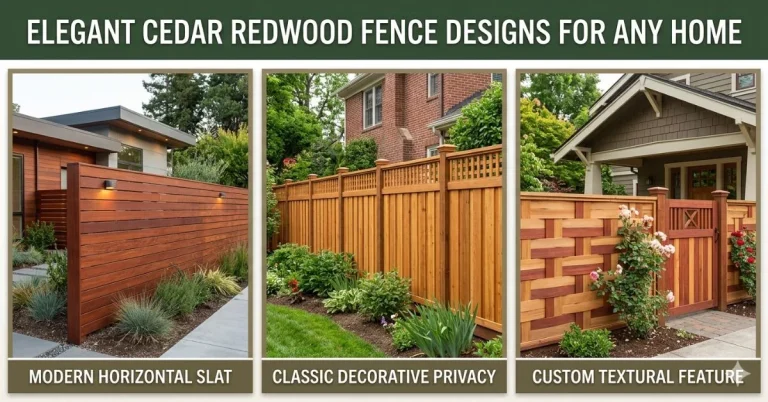
4. Cedar or Redwood Horizontal Tongue-and-Groove
Natural wood siding remains one of the most visually satisfying exterior choices. The warmth of grain, the way it ages, the way it responds to light no synthetic material fully replicates it.
On a tiny house, unpainted cedar with a clear UV-protective finish develops a silver-gray patina within two seasons that pairs beautifully with black metal accents or stone base courses. Some homeowners apply a penetrating oil (Sikkens, Penofin, or Cabot Australian Timber Oil) annually to preserve the warm tone longer.
Maintenance reality: Natural wood requires attention every 3–5 years. If you want low maintenance, go with a high-quality engineered alternative instead.
5. Thermally Modified Wood (Accoya or ThermoWood)
This is the material choice that separates builders who’ve done their research from those who haven’t. Thermally modified wood is heat-treated to reduce its moisture content to near-zero, dramatically improving dimensional stability and rot resistance without chemical preservatives.
Accoya, in particular, comes with a 50-year warranty against rot. It takes paint and stains beautifully. On a tiny house where every surface is exposed to weather, this is a smart long-term investment.
Rooflines That Define Modern Tiny House Character
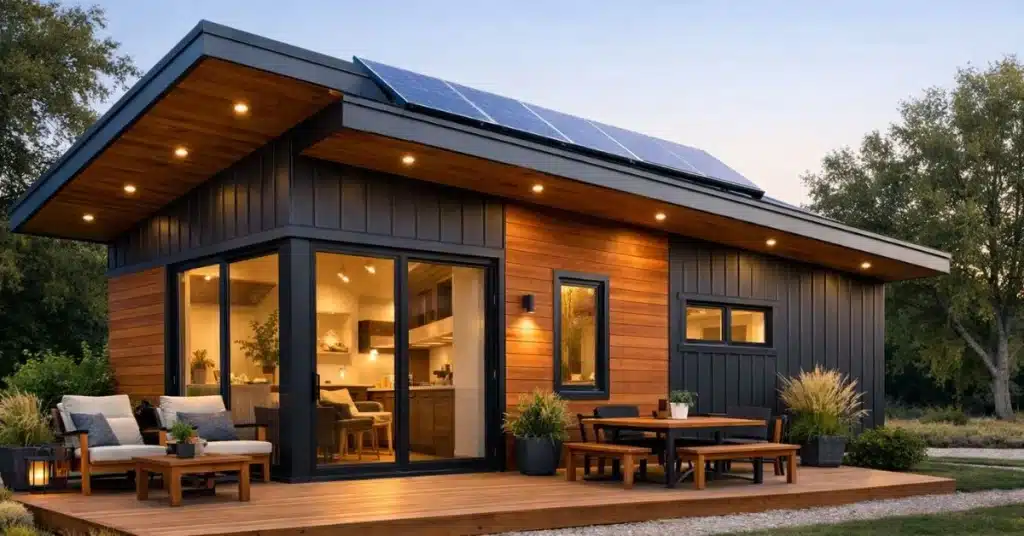
The roofline is the single biggest contributor to a tiny house’s architectural personality. Get it right, and even a modest exterior feels designed.
6. The Shed Roof (Single-Slope)
The shed roof, a single plane sloping in one direction is the workhorse of modern tiny house design. It’s structurally efficient, easy to frame, works well for solar panel installation on the high side, and creates interesting interior ceiling heights.
On the exterior, a shed roof with a substantial overhang on the high wall creates a sheltered zone that feels intentional. When the fascia and soffit are detailed cleanly in metal or finished wood, the roofline becomes an architectural feature rather than just weather protection.
7. Flat Roof with Parapet Walls
True flat roofs (technically low-slope, typically 1/4″ to 1/2″ per foot minimum for drainage) give tiny houses an almost brutalist, gallery-like quality. The parapet wall, a short wall that extends above the roofline, hides the roof from the street and creates a clean, unbroken silhouette.
The challenge is waterproofing. A flat roof on a tiny house demands high-quality TPO, EPDM, or PVC membrane roofing, properly detailed at all penetrations. This isn’t the place to cut costs.
Best use case: Tiny houses built on permanent foundations in dry or semi-arid climates. In high-snow regions, flat roofs require careful structural engineering for load.
8. Butterfly Roof
The butterfly roof slopes inward from both sides toward the center, the visual opposite of a gable. It’s striking, unmistakably modern, and works beautifully on tiny houses because the high sides allow clerestory windows that flood the interior with light.
The central valley also naturally channels rainwater toward a single collection point, making it excellent for rainwater harvesting systems.
Fewer builders attempt butterfly roofs because the waterproofing detail at the valley is critical. When done correctly, though, it’s one of the most architecturally distinctive rooflines available.
9. The Classic Gable, Reimagined
The gable roof doesn’t have to look traditional. When the pitch is steep (10:12 or higher), the proportions feel more like a European chalet or Scandinavian cabin than a tract house. Add a dramatic front overhang, metal roofing, and a glass gable end, and the whole thing reads as thoroughly contemporary.
A-frame tiny houses fall into this category and have found a strong following in the vacation property market particularly in wooded or mountain settings where the form echoes the landscape.
Windows and Glazing That Transform Small Exteriors
Windows are doing double duty on a tiny house exterior: they need to look right from outside while delivering light, ventilation, and views from inside.
10. Floor-to-Ceiling Glass Walls (One Feature Wall)
One fully glazed wall, typically the south or the wall facing the best view creates a visual anchor that makes a tiny house feel like a considered architectural statement rather than a scaled-down version of something larger.
Frameless or minimal-frame systems (Fleetwood, NanaWall, or more affordable alternatives from Milgard or Marvin) work particularly well. The thermal performance of these systems has improved dramatically; triple-glazed options now perform comparably to well-insulated wall assemblies.
11. Clerestory Windows
Clerestory windows, a band of windows positioned near the roofline serve a specific purpose: they bring light deep into the plan without sacrificing wall space for furniture. On the exterior, a row of clerestories adds horizontal rhythm and a sense of lightness that lifts a design.
On shed-roof tiny houses, the high wall is the natural location for clerestories. This combination (shed roof + high clerestory windows) is among the most functionally and aesthetically successful configurations in modern tiny house design.
12. Black-Framed Windows
Window frame color has more impact on tiny house exteriors than most people expect. Black frames whether true black aluminum or painted wood create definition against both light and dark siding. They read as contemporary and intentional.
Marvin’s Modern line, Andersen’s 100 Series in black, and Pella’s Impervia line all offer black exterior frames at various price points. For budget builds, exterior-painted Milgard or Simonton windows in black perform adequately.
Exterior Color Palettes That Work for Modern Tiny Houses
Color is where a lot of tiny house owners overthink things. The truth is that the palettes working best right now fall into a few clear categories.
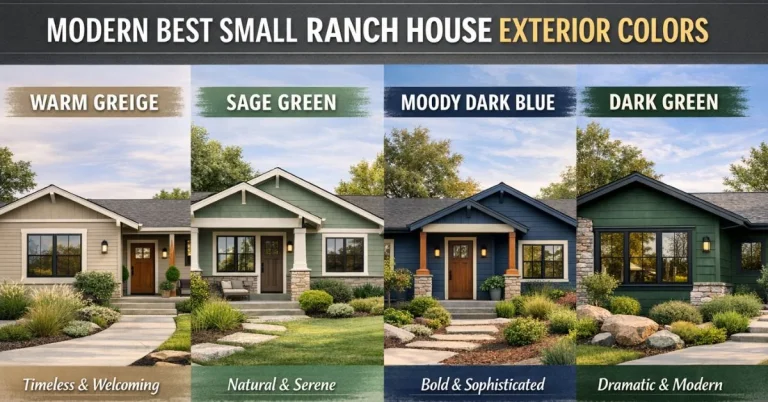
13. High-Contrast Dark Body, Light Trim
The most photographed tiny houses on platforms like Instagram and Pinterest tend to follow this formula: dark body (charcoal, forest green, deep navy), with crisp white or light gray trim. The contrast creates visual sharpness and makes the structure read clearly from a distance.
It’s popular because it works. Just resist the urge to add a third color; the restraint is part of what makes it look designed.
14. Tone-on-Tone Neutrals
The quieter alternative to high-contrast is tone-on-tone where body, trim, and roofline are all within the same color family but at different values. Warm greiges, cool grays, or off-whites in this treatment create houses that look composed and sophisticated without shouting.
This approach works especially well when the siding has natural texture (rough cedar, board-and-batten) that provides visual interest the color scheme doesn’t need to carry.
15. Earth Tones with Natural Material Accents
Browns, ochres, deep terracotta, and warm tans combined with natural stone, wood, or rammed earth accents place tiny houses squarely in a landscape-responsive tradition. These palettes look appropriate across a wide range of regional climates and settings.
Farrow & Ball’s Down Pipe, Dead Salmon, and Mole’s Breath work in this territory, as do Sherwin-Williams’ Ancestral Gold and Whole Wheat.
Exterior Feature Details That Separate Good Designs from Great Ones
16. Metal Roof and Wall Accent Panels
Mixing a metal roof with the same or contrasting metal on a small accent wall or trim detail creates material continuity that reads as intentional design. Standing seam metal roofing from companies like Metal Sales Manufacturing or MBCI, when continued down a single accent wall, creates a monolithic quality that’s particularly striking on compact structures.
17. Stone or Masonry Base Course
Bringing a base course of stone, concrete block, or brick up to window sill height grounds a tiny house visually and provides a practical water-resistant zone where siding meets grade. Even 18–24 inches of stone wainscoting transforms the perceived weight and permanence of a small structure.
Thin stone veneer systems (Eldorado Stone, Cultured Stone) bring this look at a fraction of the cost of natural stone installation.
18. Covered Entry Porches and Canopies
A covered entry transforms the experience of arriving at a tiny house. Even a 4×6-foot covered porch just enough for two people to stand out of the rain while opening the door makes the exterior feel more hospitable and architecturally complete.
Modern canopies in powder-coated steel or aluminum, often with a polycarbonate or corrugated metal roof panel, can be sourced ready-made and attached to most wall assemblies.
19. Integrated Outdoor Living: Decks and Platforms
The most livable tiny houses treat the exterior deck as an extension of the interior floor plan. A deck of equal square footage to the interior doubles the functional living area in good weather and blurs the line between inside and out.
For THOWs (tiny houses on wheels), removable or fold-down deck systems have become increasingly sophisticated. Companies like Tiny Idahomes and Escape Homes have developed proprietary deck systems that pack down for transport.
20. Green Roofs and Living Walls
A sedum or moss green roof on a tiny house provides real functional benefits: insulation (R-value contribution of approximately 8–20 depending on depth), stormwater retention, and habitat for pollinators. They also look unlike anything else.
Living walls planted panels on exterior walls are more maintenance-intensive but create instant visual interest and improve air quality around the structure.
Structural note: A saturated green roof adds 80–150 lbs per square foot of dead load. Verify structural capacity before specifying.
21. Exposed Structural Elements
Some modern tiny house designs deliberately expose the structural framing on the exterior heavy timber posts, exposed rafter tails, visible steel connections. Done with care, this communicates the craft of the build and adds visual richness.
Post-and-beam or timber frame tiny houses from companies like Pioneer Log Homes or Jamaica Cottage Shop often feature this aesthetic.
Style Categories Finding Your Design Direction
22. The Scandinavian / Nordic Aesthetic
Clean lines, simple forms, natural materials, and a subdued palette. The Nordic approach to tiny house design emphasizes quality of detail over quantity of features. Painted white or pale gray with black metal accents, natural pine or ash on exposed elements, and generous glazing.
Think: a smaller, colder-climate version of a Copenhagen waterfront home.
23. Japanese-Influenced Design (Wabi-Sabi Aesthetic)
The Japanese concept of wabi-sabi finding beauty in imperfection and impermanence translates beautifully into tiny house design. Charred wood siding (Shou Sugi Ban / Yakisugi), natural bamboo, low horizontal profiles, and restrained openings create structures that feel rooted in time and place.
Shou Sugi Ban charred cedar, once a traditional Japanese preservation technique, has become one of the most popular exterior treatments in the American tiny house market. It’s extremely low maintenance, fire-resistant after charring, and visually striking.
24. Pacific Northwest Cabin Aesthetic
Steeply pitched roofs, deep overhangs, rough cedar or Douglas fir siding, large south-facing windows, and a connection to the surrounding tree canopy. The Pacific Northwest aesthetic is regional in origin but has spread across the country as a shorthand for “thoughtful rural design.”
This is the aesthetic that platforms like Airbnb have made aspirational and the reason companies like Spacious Spas and Getaway have built entire business models around it.
25. Industrial Modern
Steel framing (sometimes exposed), concrete block or poured concrete walls, corrugated or perforated metal screens, minimal vegetation. The industrial tiny house aesthetic borrows from commercial construction and applies it at residential scale.
This style works particularly well in urban infill lots, former industrial neighborhoods, and sites where a conventional residential aesthetic would feel out of place.
Comparison Table Modern Tiny House Exterior Materials
Common Exterior Design Mistakes to Avoid
Too many materials. Three materials, maximum. One primary, one secondary, one accent. More than that and the exterior starts to read as indecisive.
Ignoring proportion. Windows and doors that are sized correctly for a full-size house look wrong on a tiny house. Work with an architect or experienced designer to proportion openings correctly.
Skipping the overhang. An eave or overhang of at least 12–18 inches protects the wall assembly from water infiltration at the siding-to-foundation junction, extends the life of siding dramatically, and provides shade in summer.
Choosing the wrong finish for the climate. Semi-gloss paints that hold up in mild Portland weather will fail fast in a Texas freeze-thaw cycle. Match materials and finishes to your specific climate zone.
Treating the deck as an afterthought. The deck and entry sequence are the first things a visitor experiences. Design them as part of the house, not as an add-on.
What Does a Modern Tiny House Exterior Renovation Actually Cost?
For existing tiny houses getting a full exterior refresh:For new builds, exterior finishes typically represent 15–25% of the total construction budget. On a $80,000 tiny house build, expect $12,000–$20,000 allocated to exterior materials and labor.
Tiny House Exterior Design by Climate Zone
Your geography should drive material and design choices more than trend images on Instagram.
Hot, humid climates (Southeast US, Gulf Coast): Prioritize ventilated rain screen wall assemblies. Light colors reflect heat. Fiber cement or metal siding (not natural wood, which expands and contracts in high humidity). Generous roof overhangs for shade.
Cold climates (Upper Midwest, Mountain West, New England): Continuous exterior insulation behind siding is critical. Avoid materials with high moisture absorption. Metal roofing handles snow loads and sheds ice cleanly. Ensure windows are properly thermally broken.
Dry climates (Southwest, high desert): Earthen tones look most at home. Concrete, rammed earth, or adobe-style finishes are regionally appropriate. Flat or low-slope roofs work well. Passive solar strategies (south-facing glass, thermal mass) are effective.
Pacific Northwest (rainy, mild): Ventilated rainscreen essential. Cedar performs beautifully here. Steeply pitched roofs shed water quickly. Metal roofing prevents moss growth better than asphalt.
Conclusion
A well-designed Tiny House Exterior Design Ideas proves that small scale never means small ambition. The right siding material, a thoughtful roofline, carefully placed windows, and a restrained color palette work together to create something that feels genuinely architectural rather than simply compact. None of these decisions require a massive budget, they require intention. Start with your climate, choose materials that perform there, pick a palette and commit to it, and let the proportions do the work. The tiny houses people stop and photograph are not the ones that tried to look like everything at once. They are the ones that made a few clear choices and executed them well.
FAQs
1. What is the best siding for a modern tiny house?
Fiber cement or Shou Sugi Ban charred cedar both are durable, low-maintenance, and look sharp.
2. What color makes a tiny house look modern?
Dark charcoal, deep forest green, or matte black with crisp white trim is the most effective combination.
3. What roofline suits a modern tiny house best?
A shed roof (single slope) it’s structurally efficient, solar-friendly, and cleanly contemporary.
4. How do I make a tiny house exterior look more permanent?
Add a stone base course, a covered entry porch, and proper deck at grade level.
5. How much does a tiny house exterior renovation cost?
Expect $8,000–$25,000 depending on material choice, structure size, and local labor rates.

As an admin, with a passion for transforming spaces and a sharp eye for design trends, I created Interior Design Style Quiz to help homeowners make confident, informed decisions about their homes from the curb all the way inside.