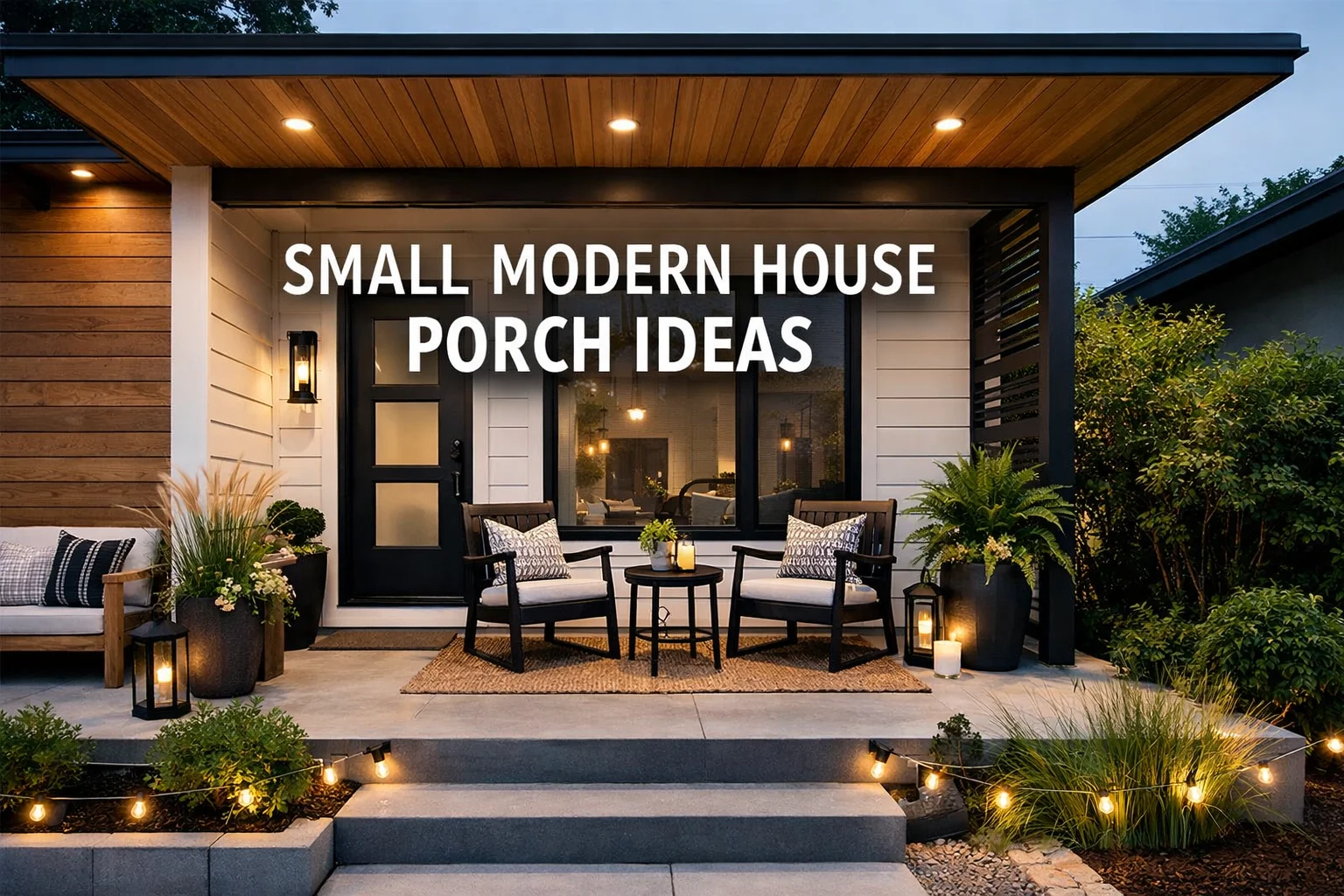
31 Small Modern House Front Porch Ideas 2026 That Make a Big First Impression
The best small modern house front porch ideas focus on three things: clean material choices, intentional negative space, and one strong focal point, usually the front door. Start with paint, hardware, and lighting for the highest return at lowest cost. Built-in benches, cable railings, large-format pavers, and vertical slat screens are the structural upgrades that deliver the biggest visual shift on a compact porch.
That’s what this guide is for. These 31 ideas are drawn from real homes bungalows, cottages, townhouses, and ranches where designers and homeowners figured out how to pull off a modern aesthetic on a small porch without sacrificing warmth, function, or personality.
Why Small Modern Porches Are Actually an Advantage
Before getting into specific ideas, it’s worth reframing the small porch problem entirely.
A small space forces intentionality. Every element earns its place. There’s no room for filler furniture, half-hearted plantings, or design choices made out of habit. That constraint when you work with it instead of against it tends to produce cleaner, more considered results than a large porch ever would.
Modern design principles align perfectly with small spaces: clean lines, deliberate material choices, edited color palettes, and the elevation of function to an art form. So if your porch is 6×8 feet, you’re not working against modern design. You’re practically in its sweet spot.
What Makes a Front Porch Feel “Modern”?
Modern doesn’t mean cold, gray, or stripped of character. In architectural and design terms, a modern front porch typically features:
- Horizontal orientation Low-slung railings, elongated planters, wide steps instead of tall ones
- Honest materials Concrete, steel, cedar, and composite materials shown as they are, not disguised
- Controlled color palettes Usually two or three tones, often including one neutral and one bold or dark accent
- Integrated lighting Recessed, strip, or wall-mounted fixtures rather than decorative lanterns (though some modern homes use oversized statement lanterns deliberately)
- Purposeful negative space Not every corner needs to be filled
- Indoor-outdoor continuity Materials, colors, and proportions that visually connect to the home’s interior
Keep these principles in mind as you browse the ideas below. They’ll help you adapt any concept to your specific home.
31 Small Modern House Front Porch Ideas
1. The Floating Bench Built-In
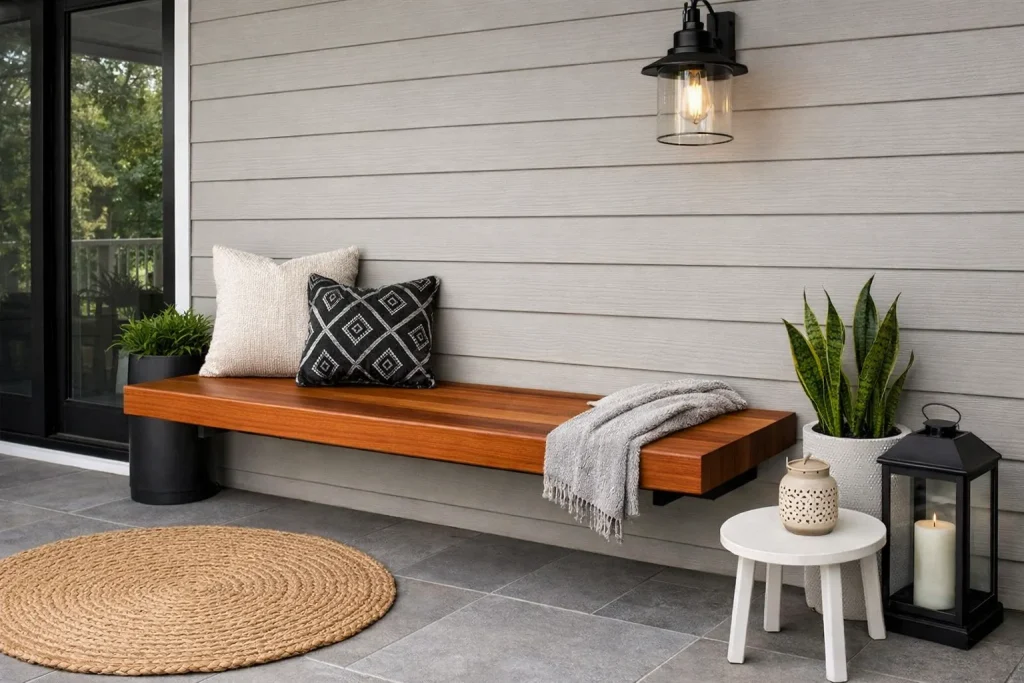
A built-in bench that appears to float off the porch wall typically mounted 14–18 inches from the floor with no visible legs is one of the most impactful details you can add to a small modern porch. It solves three problems at once: seating, visual interest, and space efficiency.
Materials that work best: smooth-finish concrete board, black powder-coated steel brackets with a cedar or ipe seat, or painted MDF with a sleek undermount profile.
2. Monochromatic Front Door and Trim
Painting your door, trim, and even porch ceiling the same color or tightly related shades creates a cohesive, intentional look that reads as distinctly modern. Dark tones like Tricorn Black (Sherwin-Williams), Iron Ore, or Benjamin Moore’s Onyx work especially well on small porches because they make the architecture feel more sculptural.
This approach is particularly effective on craftsman bungalows and mid-century ranch homes where the architectural detailing is already strong.
3. Concrete Pavers with Grass or Gravel Joints
Replacing a standard concrete slab or brick path with large-format concrete pavers separated by grass joints, gravel strips, or dark polymeric sand elevates the entire front entry. For a small porch, 24×24-inch or 24×48-inch pavers feel proportionally right and avoid the visual busyness of smaller tiles.
Brands like Belgard, Tremron, and Nantucket Pavers all offer large-format modern styles in cool gray, charcoal, and buff tones.
4. Steel and Glass Railing
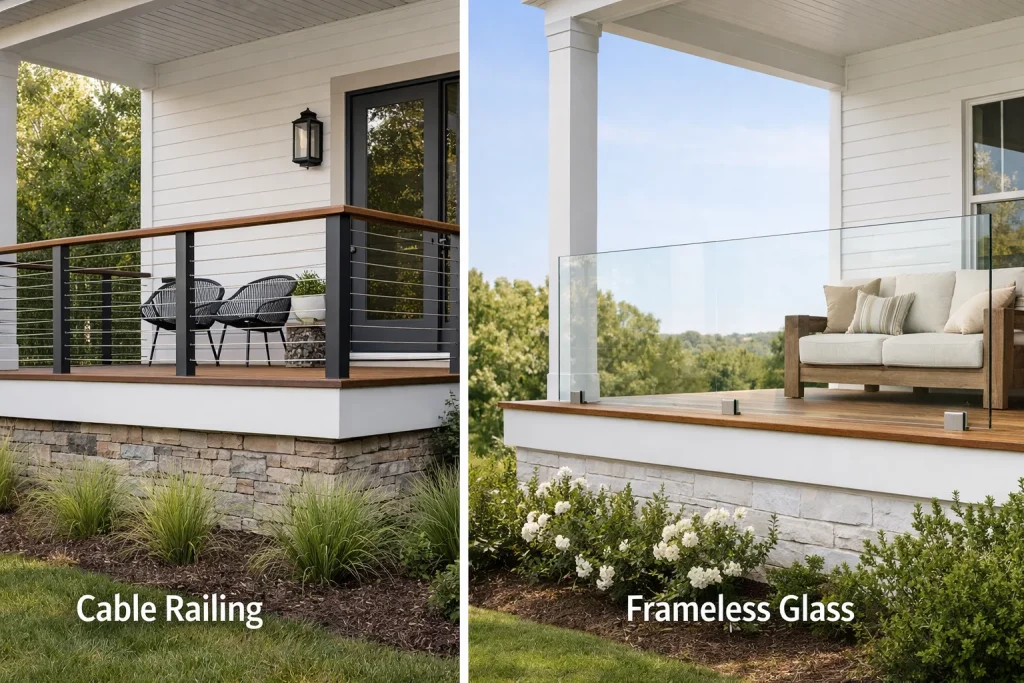
If your porch is elevated and requires a railing, the transition from wood balusters to a cable railing or frameless glass panel system is one of the fastest ways to modernize it. Cable railings (horizontal stainless steel cables tensioned between posts) cost $150–$300 per linear foot installed and immediately read as contemporary.
For smaller porches, a single frameless tempered glass panel essentially a see-through guard keeps sightlines open and avoids any feeling of enclosure.
5. Horizontal Cedar Cladding on the Facade
Adding horizontal cedar slat cladding to the wall behind your porch or to the half-wall that defines the porch edge creates a strong textural element that ties the porch to the house’s architecture. Pre-finished cedar cladding from brands like Shou Sugi Ban House (charred finish) or Western Red Cedar Lumber Association products in a natural oil finish are both appropriate for outdoor exposure.
This works especially well when the rest of the house is stucco or painted brick.
6. Oversized Front Door
A taller, wider door 8 feet tall instead of the standard 6’8″, or a 36-inch-wide single door instead of 32 changes the proportions of a small porch dramatically. Modern pivot doors (which rotate on a central or offset vertical axis rather than swinging from a side hinge) are particularly effective on compact entries because they create a moment of drama without requiring extra floor space.
Kloppe, Pivot Door Company, and TruStile all offer pivot-style options at various price points.
7. Vertical Garden Panel
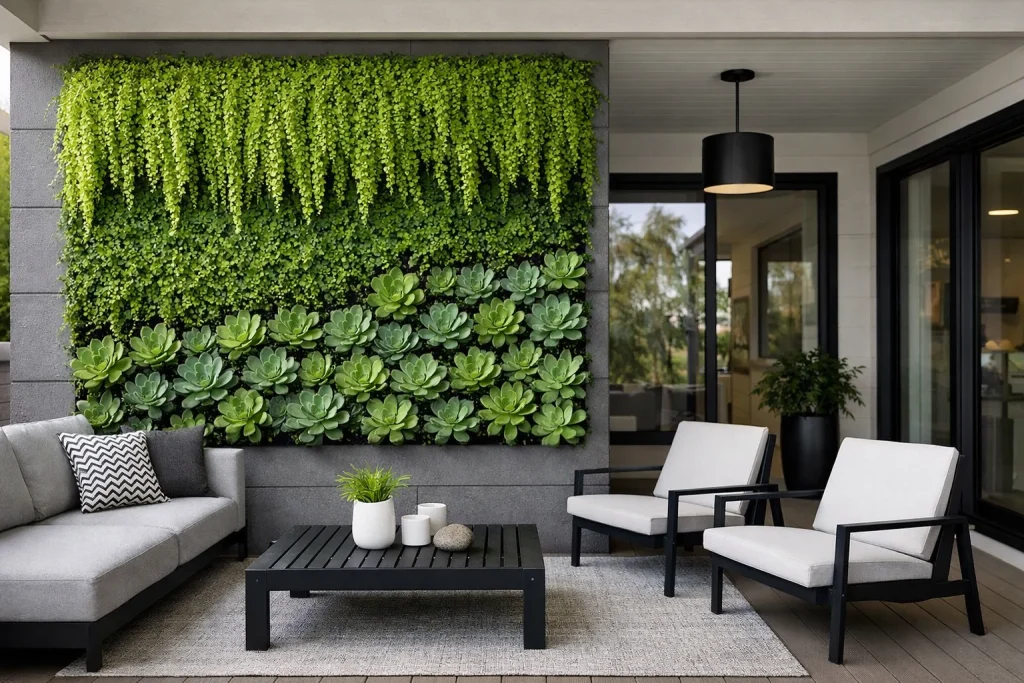
A living wall or vertical garden panel mounted on one side of the porch introduces greenery without sacrificing floor space. For a modern look, stick to a single plant variety (sword ferns, succulents, or baby’s tears) or a tight palette of two complementary species. Felt pocket panels from companies like Woolly Pocket or modular planting systems from Florafelt are easy to maintain and look intentional rather than improvised.
8. Recessed Ceiling with Tongue-and-Groove
If your porch has a roof structure, replacing a flat painted ceiling with tongue-and-groove pine or cedar even just painted white adds depth and texture. A slight box beam or cove detail at the perimeter takes it further. For a more modern finish, use wider planks (5–7 inches) and skip the stain in favor of a soft white or greige paint.
9. Slim-Profile Exterior Sconce Lighting
The wrong light fixture can make any porch look dated instantly. For a modern small porch, look for wall sconces with:
- Matte black or dark bronze finish
- Cylindrical or rectangular silhouettes
- Frosted glass or open-top designs that project light upward and downward
Brands to explore: Kichler, Visual Comfort, and Cedar & Moss all have slim-profile exterior sconces that work well on tight facades.
10. Potted Olive or Topiary Trees
A pair of potted olive trees (Olea europaea) flanking the front door is one of the most reliable modern landscaping choices available. They’re evergreen, low-water after establishment, and naturally sculptural. In colder climates (zones below 8), move them inside during winter or substitute with boxwood topiary balls or AGM-certified Laurus nobilis (bay laurel).
Use black or concrete-finish planters at a minimum height of 18–24 inches for proportion.
11. Extended Roof Overhang
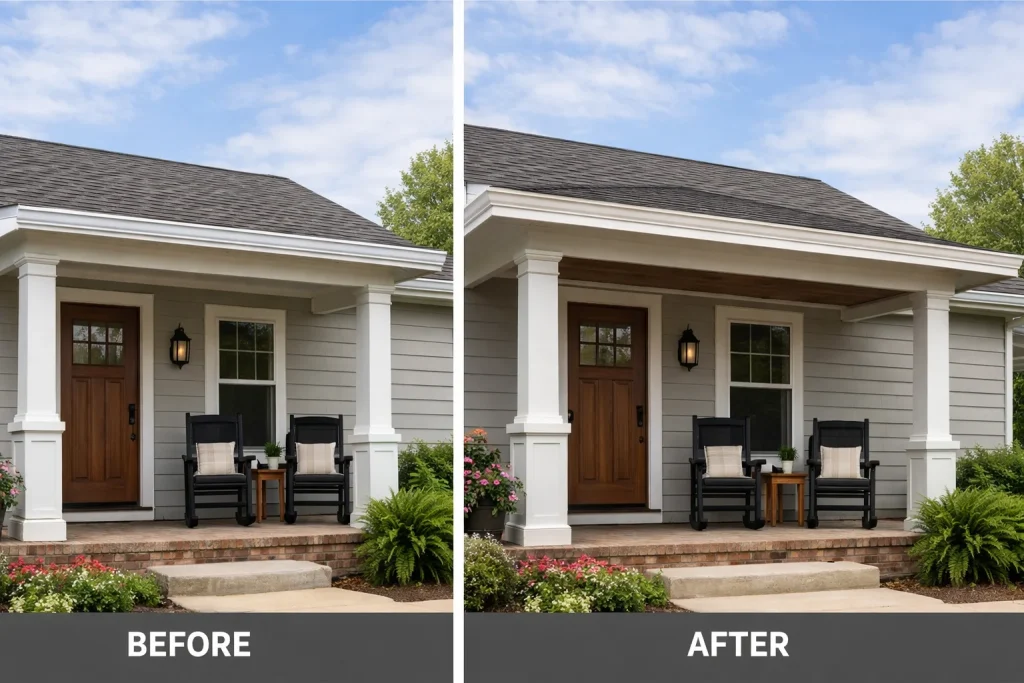
One of the most architecturally impactful changes to a small porch isn’t furniture or landscaping, it’s extending the roof overhang. Even 12–18 additional inches of overhang transforms the proportional relationship between the porch and the house. It also provides genuine weather protection and creates deeper shadows that make the architecture look more resolved.
This is typically a structural project, but on single-story homes, it’s often within the range of a skilled carpenter without requiring permits.
12. Stained Concrete Floors
A polished or stained concrete porch floor sealed with an exterior polyurethane or penetrating epoxy looks cleaner and more contemporary than any painted surface. Salt-and-pepper or charcoal tones work for most modern palettes. If your existing slab is in reasonable condition, a concrete overlay product (like Ardex or Quikrete’s concrete resurfacer) can achieve a similar look for $3–$8 per square foot.
13. Simple Metal Pergola
A small steel or aluminum pergola over the front entry area, even just 6×6 feet, provides shade, defines the entry zone, and adds significant architectural presence. Powder-coated black aluminum pergola kits from brands like Palram, Yardistry, and Homestyles start around $800–$1,500 for compact sizes.
Keep the lines clean: avoid decorative lattice or ornate brackets. The less ornamentation, the more modern it reads.
14. House Numbers as Design Elements
Standard plastic address numbers are a missed opportunity. On a modern porch, oversized address numbers in matte black, brushed brass, or raw steel mounted directly to the house, the porch column, or a fence panel function as graphic design elements. Look for 4–6-inch or even 8-inch numbers for a bold statement.
Brands like Address America, Neutype, and Salt & Pepper Home all offer modern options worth considering.
15. Black Steel Window Boxes
Window boxes aren’t just for cottages. Steel window boxes with a flat black or dark weathered finish mounted below porch windows or along a railing create a sharp, intentional look that reads as modern. Plant them with a single species: trailing rosemary, lavender, or ornamental grass for a low-maintenance and architectural effect.
16. Sliding Barn Door (Interior-Style) for Porch Enclosure
If your porch has an opening that catches weather, a modern exterior sliding panel in powder-coated steel mesh, perforated metal, or black-stained cedar slats serves as both a design element and functional screen. This is particularly effective on porches that face prevailing wind or intense afternoon sun.
17. Mixed Material Steps
Instead of a single poured concrete or brick stair, combining materials like concrete treads with steel side stringers, or ipe wood treads set into a poured concrete base creates visual interest at the entry that costs no more than a standard stair replacement. The material transition also helps define the transition from public (sidewalk) to private (porch) space.
18. Minimal Covered Portico
For homes where a full porch isn’t feasible (due to lot lines, existing structure, or budget), a small cantilevered portico essentially a roof projection over just the door, supported by two slim columns can achieve a strong modern entry effect. Steel columns, a flat roof with a metal fascia edge, and concealed downspouts are the details that separate a modern portico from a generic one.
19. Japanese-Inspired Zen Planting
Limiting your porch plantings to two or three species, a specimen Japanese maple, a low bed of mondo grass, and a single architectural stone creates a focused, meditative entry that embodies the Japanese concept of ma (negative space as design). This approach requires almost no maintenance and photographs beautifully year-round.
20. Bold Mailbox as Entry Feature
A custom or semi-custom mailbox in black powder-coated steel, architectural concrete, or corten weathering steel can anchor the entry sequence. Wall-mounted options from companies like Architectural Mailboxes, Bobi, and Salsbury Industries offer sleek profiles that complement modern homes.
21. Smart Door Hardware as Styling Detail
Door hardware is a small detail that registers subconsciously with every visitor. Swapping out a brass knob for a matte black, satin nickel, or brushed brass lever handle set combined with a matching door hinge and kickplate is a sub-$300 update that materially changes how modern your porch entry feels.
Baldwin, Emtek, and Rejuvenation all have modern exterior hardware collections worth exploring.
22. Recessed Entry Niche
If your porch is being built or renovated, carving a recessed niche into the porch wall even 8–12 inches deep gives you a natural place for a potted plant, a lantern, or seasonal objects. Recessed niches read as architecturally intentional and avoid the visual clutter of objects sitting on open shelves.
23. Monolithic Planter-Bench Combination
A single large concrete or fiber-reinforced concrete planter that doubles as a bench seat L-shaped or running the length of one porch wall solves the seating and planting problem in one move. Custom concrete fabricators in most cities can produce these for $400–$1,200 depending on size. Pre-cast options are available through companies like Eon Outdoor and NCI Landscape.
24. Wooden Slat Privacy Screen
A vertical wood slat screen (cedar, ipe, or pressure-treated pine) mounted on one or both sides of an open porch creates privacy, reduces street noise slightly, and defines the porch as a distinct outdoor room. Spacing the slats 1–2 inches apart maintains airflow and natural light while providing meaningful visual privacy.
This is one of the highest-impact, lowest-cost improvements you can make to a small porch.
25. Black-Framed Storm or Screen Door
A black aluminum full-view storm door or a black powder-coated screen door with a simple cross-bar detail in front of your entry door adds a layer of material, depth, and visual interest without changing your actual front door. Larson, Emco, and Pella all make modern-profile storm doors that work for this application.
26. Concealed Shoe Storage Bench
A built-in or freestanding bench with a hinged top and interior storage for shoes, umbrellas, or delivery packages addresses a real organizational need while adding seating. For a modern look, use a bench with clean drawer faces or a lift-top design in painted MDF, dark-stained oak, or black metal frame with a solid wood seat.
27. Concrete Column Bases
If your porch has wooden posts that look dated, adding a concrete or stone column base wrap, essentially a box of masonry or fiber cement that surrounds the lower portion of the post is an affordable way to add weight and modernity to the entry structure. Quanex Building Products and Fypon make cellular PVC column wraps that can be painted to match.
28. Flush-Set Threshold with Continuous Flooring
Eliminating the visual step between your interior floor and porch floor by choosing a flush threshold detail and using materials that coordinate (like large-format indoor tile echoed in a similar-toned outdoor paver) makes a small porch feel like a genuine extension of the home. This is particularly effective in modern homes where the interior aesthetic is meant to flow outside.
29. Contrasting Front Door Color Against Muted Facade
When your house exterior is a quiet neutral greige, white, gray, or soft sage, a single bold front door in deep navy, hunter green, matte black, or even terracotta orange creates a focal point that draws the eye and makes the whole porch feel more resolved. This is one of the most approachable changes on this list, requiring only a quart of exterior paint.
Some tried-and-tested combinations:
30. Strategic Outdoor Rug
An outdoor rug is the quickest way to define a small porch as a deliberate space. For modern homes, look for flat-weave rugs with geometric patterns, stripes, or solid tones in deep charcoal, slate blue, or warm terracotta. Brands like Ruggable (for washable options), Dash & Albert, and Annie Selke all offer outdoor-rated styles that don’t skew traditional.
Size matters: the rug should extend 6–12 inches beyond the furniture footprint on at least three sides.
31. Integrated Doorbell and Entry Technology
A flush-mounted smart doorbell (Ring Doorbell Pro, Nest Doorbell, or Arlo Video Doorbell) with a matching keypad lock (August, Schlage Encode, or Yale Assure) and a clean cable management solution creates a polished, cohesive entry tech ecosystem. When mounted with intention at the same height, with matching finishes these elements read as designed features rather than afterthoughts.
Choosing the Right Ideas for Your Home
Not every idea works on every house. Before committing to any of these concepts, consider:
Architectural compatibility. A clean modern floating bench looks intentional on a mid-century ranch and incongruous on a Victorian with ornate brackets. Work with your home’s existing language, not against it.
Material durability. Front porches take weather abuse. Every material choice should be rated for exterior exposure. Ipe and teak are self-oiling hardwoods that need minimal treatment. Cedar requires a clear sealer every 2–3 years. Aluminum is maintenance-free. Concrete is durable but can spall in freeze-thaw climates without proper sealing.
Budget sequencing. If you’re working with a limited budget, start with paint (door color, trim, porch ceiling), hardware, lighting, and a rug. These four categories together represent the highest visual return on investment and can all be accomplished for under $600.
Material Comparison: Small Modern Porch Flooring Options
Common Mistakes to Avoid on a Small Modern Porch
Overcrowding the space. The single most common error on small porches is adding too much: too many plants, too many lights, furniture that’s too large, decorative objects that compete. Edit ruthlessly.
Mixing too many materials. Pick two or three materials and stick to them. When you use five different materials on a 6×8 porch, the result always looks busy, regardless of how good each individual element is.
Ignoring the ceiling. Most people focus on the floor, walls, and furniture and completely forget the porch ceiling. A porch ceiling painted in a warm hue (Sherwin-Williams Comfort Gray or Benjamin Moore Sea Salt are popular), with tongue-and-groove paneling, or simply cleaned up and finished properly, adds as much to the experience as any furniture choice.
Using indoor furniture outside. Furniture designed for interior use degrades quickly in outdoor conditions. For a small porch, invest in one or two pieces of genuine outdoor-rated furniture rather than five pieces that will need to be replaced in two seasons.
Poor lighting placement. Overhead flood lights make any porch feel like a parking lot. Layer your lighting: a wall sconce for general light, under-bench or stair lighting for warmth, and potentially a pendant or lantern for atmosphere.
Conclusion
A small porch doesn’t need a big budget or a complete rebuild to feel genuinely modern. Most of the 31 ideas here work independently; you don’t have to do all of them, or even most of them.
Pick one anchor change (a floating bench, a bold door color, a pergola) and build the smaller details around it. That’s how real design decisions get made, and it’s how small porches end up looking like they were planned rather than assembled.
FAQs
Q1: What is the cheapest way to modernize a small front porch?
Repaint the front door in a bold dark tone — it costs under $50 and delivers the highest visual impact of any single change.
Q2: What furniture works best on a tiny modern porch?
A slim built-in bench or one low-profile chair with clean lines or anything with visible legs keeps the space feeling open.
Q3: What plants look best on a small modern front porch?
A pair of potted olive trees or boxwood spheres flanking the door single-species plantings always look more intentional than mixed arrangements.
Q4: What flooring is best for a small modern porch?
Large-format concrete or porcelain pavers in charcoal or cool gray fewer grout lines mean less visual clutter.
Q5: How do I make a small front porch feel bigger?
Use light colors on walls, choose furniture with visible legs, and resist filling every corner. Negative space is a design tool, not wasted space.

As an admin, with a passion for transforming spaces and a sharp eye for design trends, I created Interior Design Style Quiz to help homeowners make confident, informed decisions about their homes from the curb all the way inside.