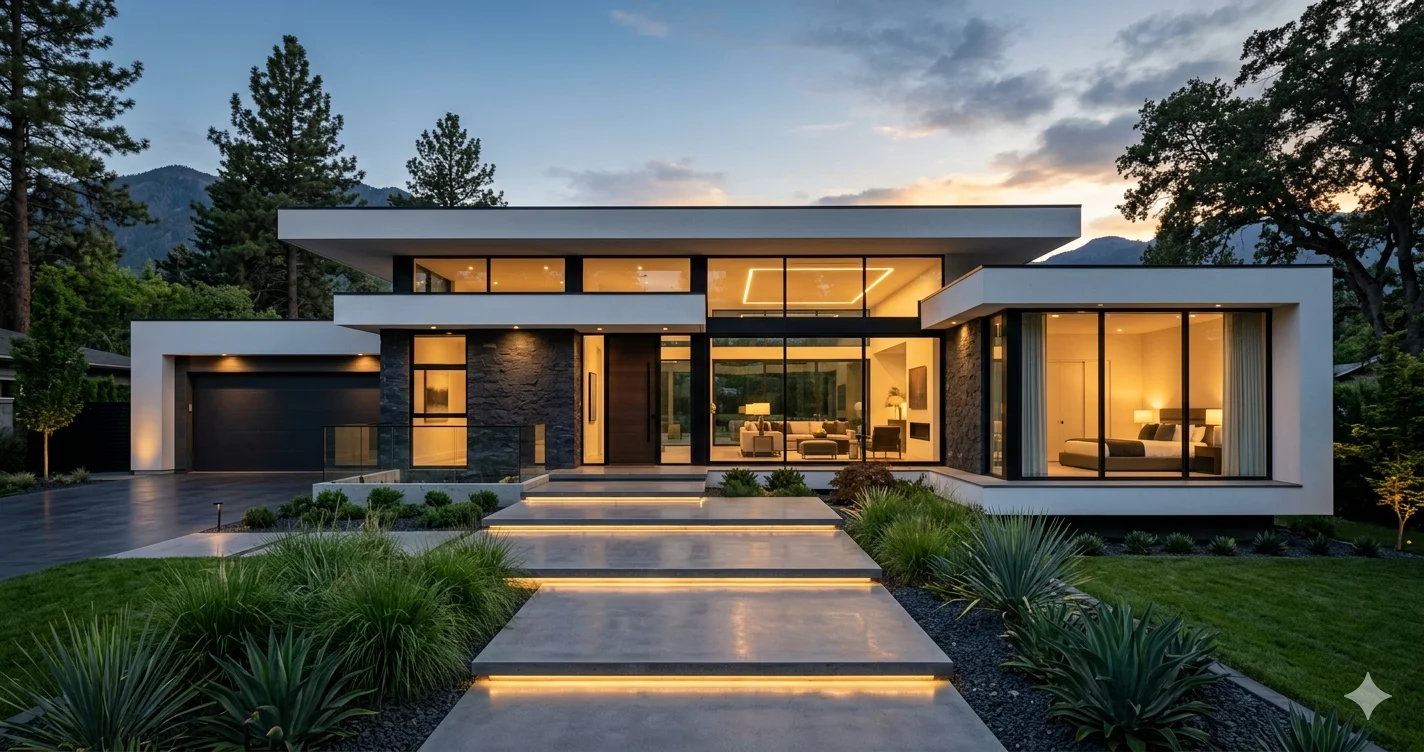
The Best Modern Front House Design Bungalow Ideas to Seriously Upgrade Your Curb Appeal
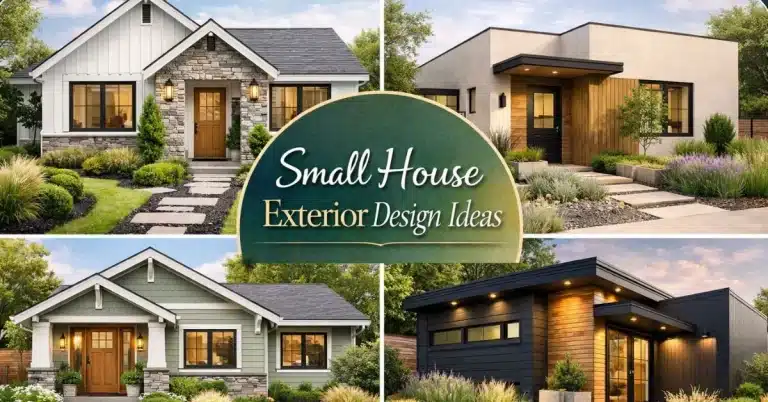
The best modern front house design bungalow ideas include minimalist black-and-white facades with matte black trim, warm wood accents contrasted against concrete or stucco, updated Craftsman-style stone and cedar combinations, modern farmhouse board-and-batten exteriors, and mid-century modern revival designs with earthy tones and large windows. Key upgrades that consistently improve curb appeal on bungalows are a bold front door, structured foundation plantings, updated exterior lighting, proportional porch columns, and a cohesive two or three-material palette. The most impactful single change on any bungalow front is a fresh, intentional exterior paint scheme paired with a contrasting front door color.
Whether you own a 1940s Craftsman bungalow in a quiet Chicago suburb or a mid-century ranch-style home in Southern California, the front of your house tells a story before anyone even knocks on the door. This guide covers the most effective modern front house design bungalow ideas with practical context, real design principles, and enough variety to match nearly any taste or budget.
What Makes a Bungalow “Modern”?
The word “modern” in architecture doesn’t just mean new. It refers to a design philosophy rooted in simplicity, functionality, and honest use of materials.
A modern bungalow front design typically shares a few distinguishing traits:
- Low-pitched or flat rooflines that give the home a grounded, horizontal presence
- Minimal ornamentation decorative elements serve the structure, not the other way around
- Natural material combinations like wood, stone, brick, concrete, and steel used intentionally
- Large windows or glass panels that blur the line between interior and exterior
- Thoughtful landscaping that frames the structure rather than hiding it
What separates truly well-executed modern bungalow fronts from those that feel flat or unfinished is usually a matter of proportion, material contrast, and lighting. These three elements show up repeatedly in high-performing residential designs.
Modern Front House Design Bungalow Ideas by Style
1. The Minimalist Black and White Bungalow
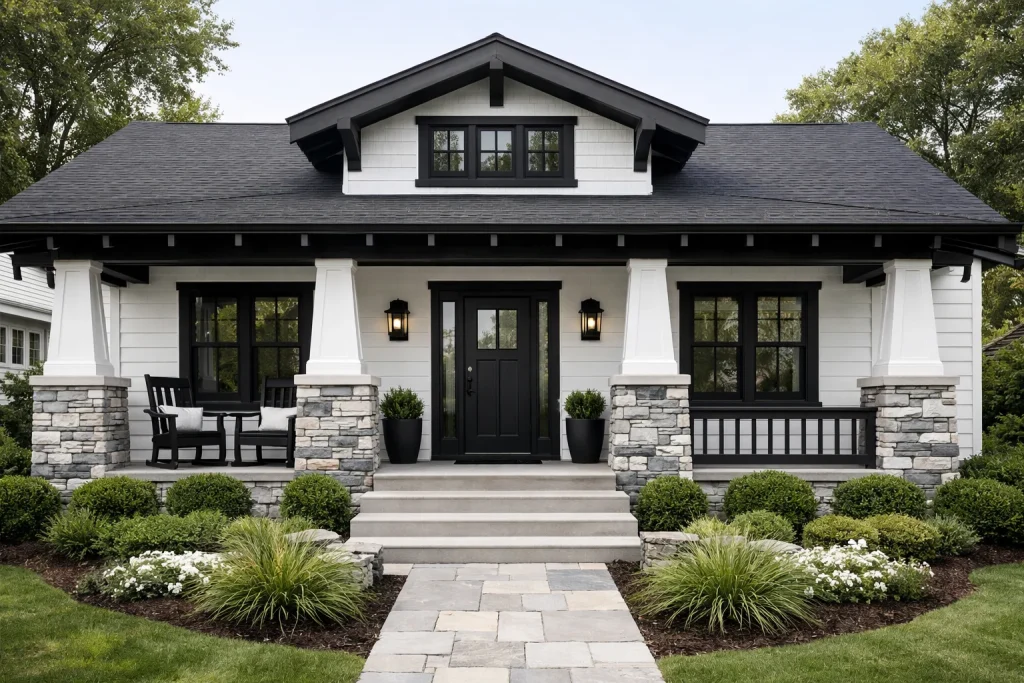
Arguably the most popular exterior trend of the past five years, the black-and-white bungalow facade leans on stark contrast to create visual impact. Dark window frames, a charcoal or matte black front door, and crisp white or off-white siding form a combination that reads as both contemporary and sophisticated.
This approach works particularly well on Craftsman and prairie-style bungalows where the original architectural bones, wide eaves, exposed rafter tails, tapered columns can be reinterpreted in a modern color language without losing historic character.
Key design moves:
- Paint the body a warm white (Benjamin Moore’s “Chantilly Lace” or Sherwin-Williams “Alabaster” are common choices)
- Use matte black for all trim, window frames, gutters, and the front door
- Add matte black exterior light fixtures to anchor the entry
- Keep the porch railing simple steel cable or horizontal steel rod railings complement this look well
2. Warm Wood Accents on a Concrete or Stucco Base
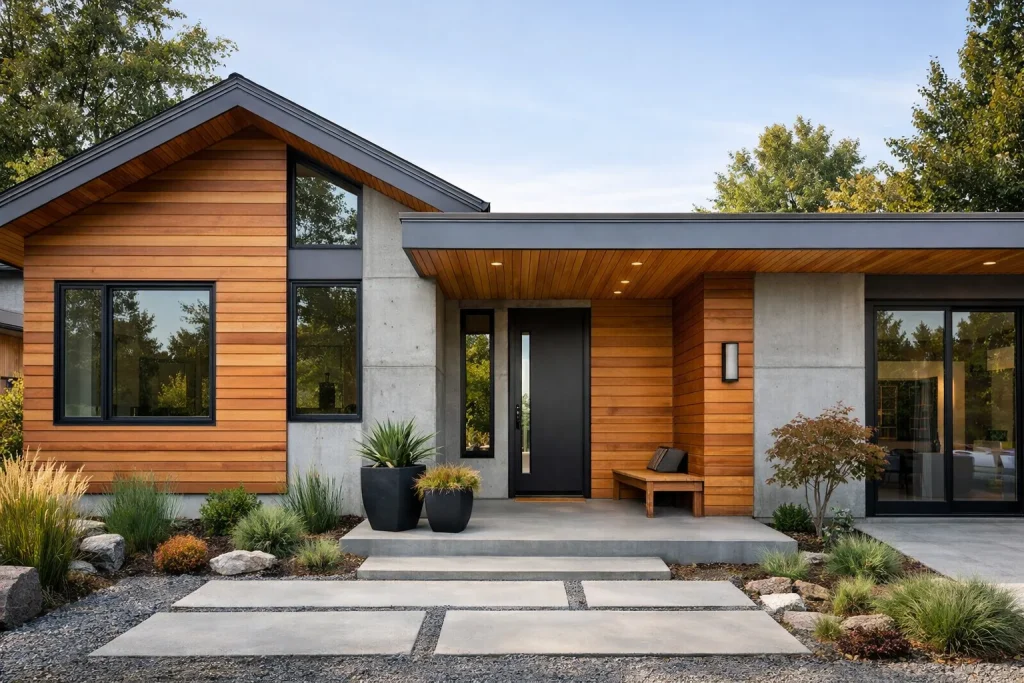
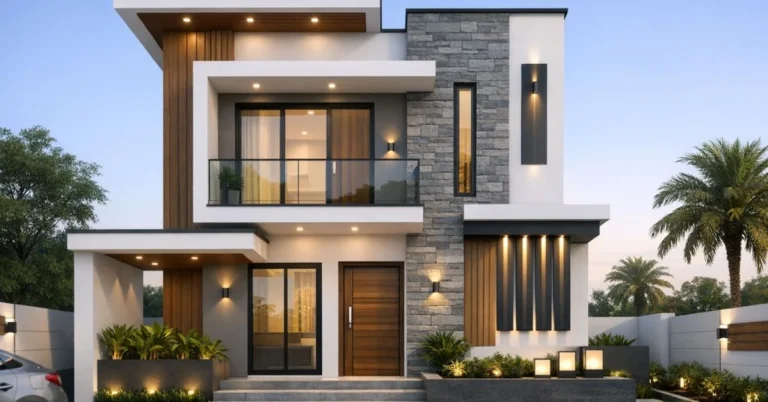
The contrast between cool concrete or stucco and warm natural wood is one of the most tactile and visually interesting combinations in modern exterior design. You’ll see it in contemporary homes designed by firms like Studio Gang and Olson Kundig, and it translates beautifully to the bungalow form.
Horizontal cedar or teak cladding on a gable section, an accent wall next to the entry, or a covered porch ceiling in natural wood breaks up a flat facade and adds organic warmth.
How to execute it:
- Use smooth stucco or large-format fiber cement panels as the primary cladding
- Introduce thermally modified wood (like Kebony or Accoya) for longevity in exposed areas
- Let the wood weather naturally to silver-gray or treat it with a UV-resistant oil to maintain its warm tone
- Pair with concrete pavers or poured concrete walkways to continue the material conversation
3. Stone and Wood Craftsman Revival
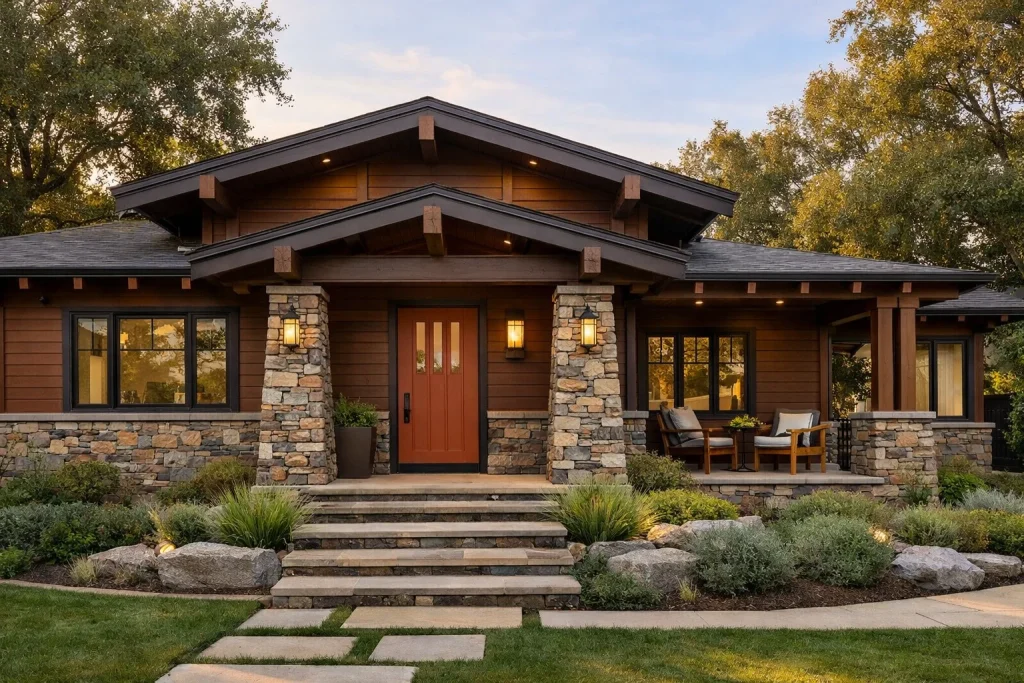
The original bungalow Craftsman style popularized by architects Charles and Henry Greene in Pasadena, California in the early 1900s was deeply rooted in natural materials. A modern revival of this approach doesn’t mean recreating a period piece. It means honoring the material logic of the original while updating the proportions and palette.
Natural stone either as a full base course or as column cladding pairs naturally with stained wood siding and a bold front door. The result is a home that feels both rooted in craft tradition and current in its execution.
What works:
- Ledger stone or dry-stack fieldstone for porch columns and foundation cladding
- Dark-stained cedar shingles or board-and-batten for upper body cladding
- Copper or oil-rubbed bronze hardware and light fixtures
- Deep, wide porch with tapered columns the signature Craftsman feature
4. Modern Farmhouse Bungalow
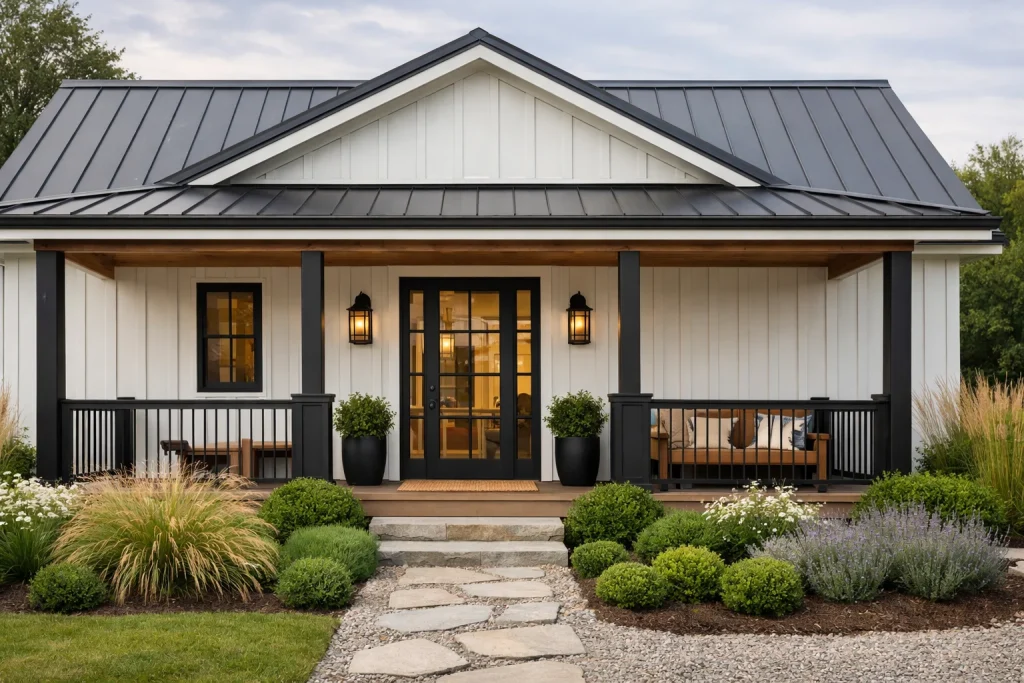
The modern farmhouse aesthetic, made widely popular through designers like Joanna Gaines and the Magnolia brand, has its own bungalow interpretation. This style takes cues from agricultural vernacular architecture board-and-batten siding, metal roofing, simple gable forms and refines them with clean proportions and a curated palette.
For a bungalow front, this usually means:
- White or cream board-and-batten vertical siding
- Standing seam metal roofing in charcoal or weathered bronze
- A black steel-frame or glass-panel front door
- A covered porch with simple square posts and black railing
- Warm, low-maintenance landscaping ornamental grasses, boxwoods, and native perennials
This style tends to read clearly from the street, which makes it particularly effective for improving curb appeal quickly.
5. Mid-Century Modern Bungalow Update
Mid-century modern homes built roughly between 1945 and 1969 often share a lot of DNA with the bungalow: one story, strong horizontal orientation, deep eaves, and a connection between interior and exterior. Updating a mid-century bungalow front means leaning into those qualities rather than fighting them.
Effective updates:
- Restore or replace the original horizontal wood siding with a tight V-groove or shiplap profile painted in a period-appropriate earthy tone terracotta, avocado green, mustard yellow, or slate blue
- Replace standard single-pane windows with Andersen or Pella double-pane versions that maintain the original profile
- Add low, ground-hugging foundation plantings like agave, bird of paradise, or Japanese maples
- Use large concrete stepping stones in the walkway to echo the geometric sensibility of the style
- Update exterior lighting with globe or bullet-style fixtures in matte black or brushed brass
6. The Monochromatic Tone-on-Tone Bungalow
One of the most underused approaches in residential exterior design is tone-on-tone: using varying shades and textures of a single color family across the entire facade. This creates depth without visual chaos.
A warm grey bungalow with slightly lighter trim, a darker front door in the same family, and stone details in a matching tone achieves a level of sophistication that polychromatic color schemes rarely match.
This approach requires careful attention to light conditions. What reads as distinct tonal variation in direct sun might flatten out in shade. Always test paint samples on the actual wall surface and observe them at different times of day before committing.
The Front Door: The Single Highest-Impact Change You Can Make
If there’s one investment that consistently delivers outsized visual return, it’s a new front door. A well-chosen front door on a bungalow can be read as a design statement, a point of welcome, and a signal of the home’s overall character all at once.
Front door styles that work well on modern bungalows:
| Style | Best Paired With | Average Cost Range |
|---|---|---|
| Solid wood with glass panel inserts | Craftsman, farmhouse, Craftsman revival | $800 – $3,500 |
| Steel with frosted or clear glass | Minimalist, black-and-white facades | $600 – $2,200 |
| Pivot door (wide, center-hung) | Contemporary, mid-century modern | $2,000 – $8,000+ |
| Dutch door (split horizontally) | Cottage, farmhouse, Craftsman | $700 – $2,500 |
| Solid flush door in bold color | Any style — adds personality | $400 – $1,800 |
Bold front door colors deep navy, forest green, terracotta red, burnt orange, or matte black are consistently among the most recommended upgrades by real estate professionals. A 2023 Zillow study found that homes with black front doors sold for an average of $6,271 more than expected. That’s a meaningful return on a relatively modest investment.
Landscaping That Makes the Architecture Look Better
The relationship between a bungalow’s front facade and its landscaping is closer than most homeowners realize. Poorly chosen or overgrown plantings can obscure the architecture; thoughtfully designed gardens frame and amplify it.
Foundation Plantings
The plants directly in front of your bungalow’s foundation set the visual baseline for everything else. For a modern look, the goal is structured simplicity not a cottage garden mixture of whatever’s on sale at the nursery.
Principles:
- Choose plants with a defined, sculptural form: boxwood spheres, upright junipers, ornamental grasses, or low-spreading junipers
- Repeat the same plant in groups of three or five rather than mixing species randomly
- Leave breathing room don’t allow plantings to grow over windows or block sightlines to architectural details
- Use mulch consistently (dark bark or river rock depending on your palette) to unify the bed
The Walkway
The path from the street to the front door shapes the entire arrival experience. Concrete, natural stone, brick, and composite pavers all read differently.
For a modern bungalow, large-format concrete pavers (24″ x 24″ or larger) with tight joints create a clean, confident path. Alternatively, a poured concrete walkway with a broom finish or exposed aggregate adds texture without fussiness.
Avoid narrow, meandering brick paths for modern interpretations; they tend to conflict with the clean geometry that modern design favors.
Trees and Vertical Elements
A single well-placed tree can do more for curb appeal than almost any other landscaping choice. For bungalows with low rooflines, a tree with strong vertical character, a columnar oak, a multi-stem serviceberry, or a Japanese maple adds height and visual interest without competing with the house.
Crepe myrtles are a popular choice in warmer climates (USDA zones 7-9) for their year-round interest and manageable scale. In cooler climates, river birch or white birch trees offer beautiful bark texture and filtered light.
Exterior Lighting: Often Overlooked, Always Noticed
Front exterior lighting has two jobs: functional (safety and visibility) and aesthetic (night-time curb appeal). Most bungalows have one or two wall sconces flanking the front door, but there’s significant opportunity beyond that.
Wall Sconces
The fixture style should be consistent with the overall design language of the facade. On a modern black-and-white bungalow, matte black cylinder sconces read well. On a Craftsman revival, lantern-style fixtures in oil-rubbed bronze or copper are more appropriate.
Scale matters. A small sconce on a wide porch pier looks lost. A fixture that’s proportionally generous with a wider shade or longer body reads with more confidence.
Landscape Lighting
Uplighting on trees or architectural features (columns, stone walls, interesting siding details) creates a dramatic night-time effect that makes a modest bungalow look considered and elevated. Kichler, Hinkley, and Bega all offer quality low-voltage outdoor lighting systems appropriate for residential use.
Pathway Lights
Ground-level pathway lighting along the walkway adds both safety and a welcoming quality. Keep them low and simple overly decorative mushroom-cap lights can read as dated.
Porch Design: The Bungalow’s Defining Feature
No element is more central to bungalow identity than the front porch. It’s what originally separated the bungalow from other single-family house types, a transitional space between the public street and the private interior.
For a modern renovation, the porch doesn’t need to disappear. It needs to be refined.
Porch Columns
Original bungalow columns are often tapered wood or brick-clad distinctive but sometimes tired-looking after decades. Options for modernization:
- Replace with simple square steel posts clean, low-maintenance, and works with multiple styles
- Clad existing wood columns in stone or brick adds texture and permanence
- Add a cable railing system between posts stainless steel cable railings read as contemporary and don’t block the view from inside
Porch Ceiling
In warmer climates, a painted tongue-and-groove porch ceiling (traditionally “haint blue” in Southern vernacular) is both practical and atmospheric. In a modern context, natural cedar or fir in a horizontal run reads as warm and intentional. Pair with an exposed Edison bulb pendant or a simple drum fixture for lighting.
Porch Flooring
Composite decking in a cool gray or warm brown tone is low-maintenance and durable. Painted concrete sealed and given a non-slip texture is another practical option. Natural wood (particularly teak or ipe) is beautiful but requires consistent maintenance to perform well outdoors.
Garage Integration: Often the Elephant in the Room
On many post-war bungalows, the attached garage dominates the front facade in a way that wasn’t always considered in the original design. A garage door that occupies 40% of the front elevation needs to be a design asset, not an afterthought.
Options that work:
- Flush aluminum or steel garage doors with a dark matte finish these disappear visually against dark house colors
- Carriage-style doors with glass inserts add texture and character on farmhouse or Craftsman-style homes
- Horizontal steel garage doors these lean contemporary and work exceptionally well on mid-century and minimalist bungalows
- Wood overlay panels on standard garage doors a cost-effective way to add material warmth
Clopay and Wayne Dalton both offer strong residential garage door lines with modern options across different price points.
Material Combinations That Consistently Work
| Primary Material | Good Accent Pairing | Avoid |
|---|---|---|
| White fiber cement siding | Black metal trim, natural wood accents | Brick in red tones |
| Stucco (warm gray/greige) | Horizontal cedar, dark window frames | Vinyl shutters |
| Brick (painted white or dark) | Steel elements, glass, copper details | High-gloss paint finishes |
| Natural stone base | Board-and-batten upper, dark trim | Ornate wood gingerbread trim |
| Board-and-batten (white) | Metal roofing, simple steel posts | Ornamental grilles |
How to Approach a Front Exterior Renovation: A Realistic Process
Step 1: Start With What You Have
Before making any changes, document the existing condition of your bungalow front through photographs taken in good light. Note what’s working the architectural bones, the proportion of porch to gable, the relationship of windows to wall and what’s undermining the potential of those bones.
Step 2: Set a Realistic Budget
A full front exterior renovation on a typical bungalow including paint, new windows, new front door, updated lighting, new garage door, and basic landscaping might run anywhere from $15,000 to $60,000 depending on material choices and regional labor costs. Individual elements can be tackled in phases over several years.
Step 3: Consult an Architect or Designer (At Least Once)
Even a single consultation with a residential architect or an exterior design specialist can save significant money. They can identify which changes will have the most visual impact relative to cost, flag any issues with proportions or material choices before you commit, and sometimes provide digital renderings that let you see the result before spending a dollar on materials.
Houzz and Angi (formerly Angie’s List) are reliable platforms for finding local design professionals with documented exterior renovation experience.
Step 4: Sequence the Work Correctly
If you’re doing multiple improvements, sequence them to minimize rework. Landscaping changes should come last. New roofing or siding should precede painting. Electrical work for new fixtures should happen before any surface finishes are applied.
Conclusion
A bungalow’s front exterior holds more potential than most homeowners give it credit for. The architectural bones, low roofline, wide porch, strong horizontal presence are already working in your favor. What modern design ideas do is strip away the clutter, sharpen the material choices, and let those bones speak clearly.
FAQs
Q1: What is the easiest way to modernize a bungalow’s front exterior?
Repainting with a fresh color scheme and replacing the front door delivers the biggest visual impact for the least cost.
Q2: What colors work best for a modern bungalow facade?
White or warm greige for the body, dark trim in charcoal or black, and a bold accent color on the front door is the most consistently effective combination.
Q3: How do I make a small bungalow look more modern from the street?
Clean up the landscaping, add structured foundation plantings, and replace dated light fixtures with simple matte black sconces.
Q4: What front door style suits a modern bungalow best?
A solid wood door with glass panel inserts or a flush steel door in a bold color like navy, forest green, or matte black works best.
Q5: Does landscaping really affect how modern a bungalow looks?
Yes overgrown or mismatched plantings undermine even a well-painted facade, while structured, minimal landscaping makes the architecture look intentional.

As an admin, with a passion for transforming spaces and a sharp eye for design trends, I created Interior Design Style Quiz to help homeowners make confident, informed decisions about their homes from the curb all the way inside.