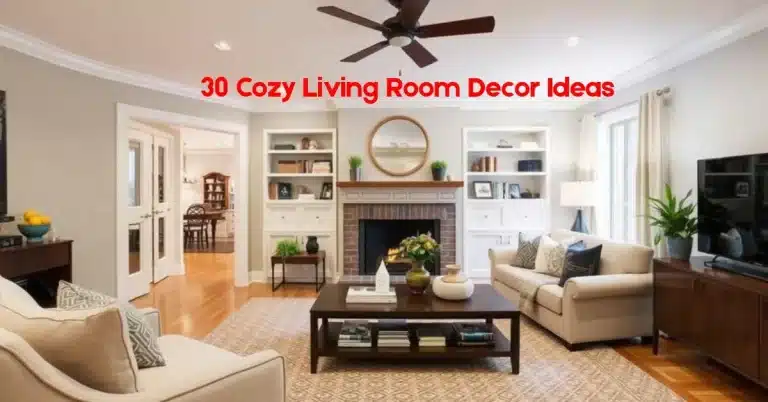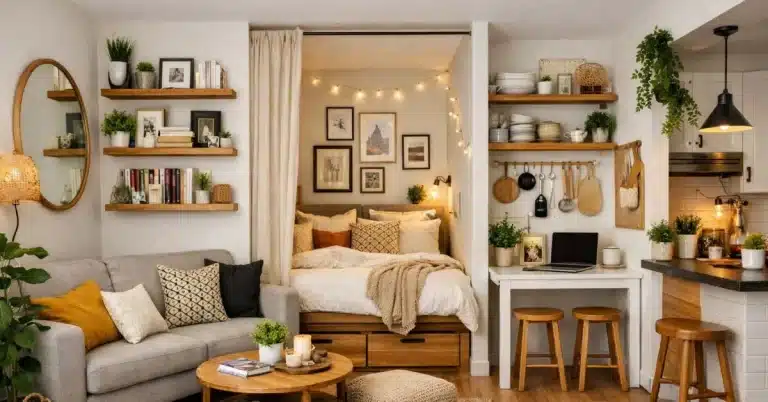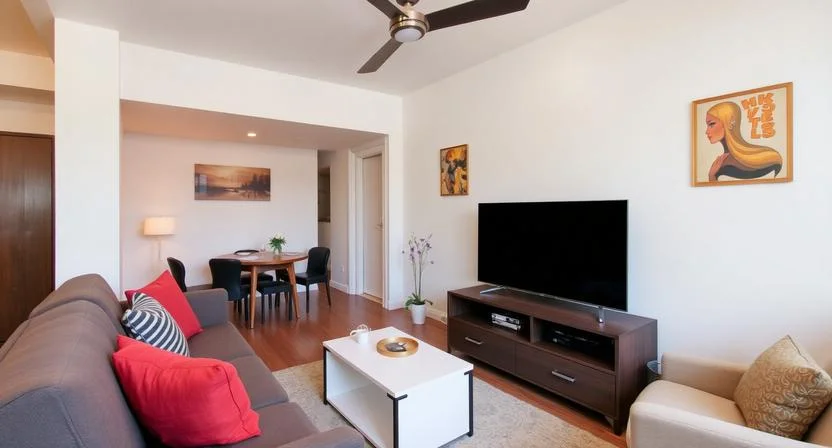
Rearrange in 10 Mins! small living room with tv and sofa
Small living room with tv and sofa directly opposite the TV wall with 6–10 feet of viewing distance, uses a wall-mounted TV, and keeps circulation paths clear. For rooms under 200 sq ft, a floating sofa with a slim media console is the most space-efficient arrangement.
The optimal layout depends on your room’s shape, door and window placement, and how you use the space. However, interior designers consistently recommend four primary layouts that work for most small living rooms.
7 Proven Small Living Room Layouts with TV and Sofa
1. Floating Sofa + Wall-Mounted TV
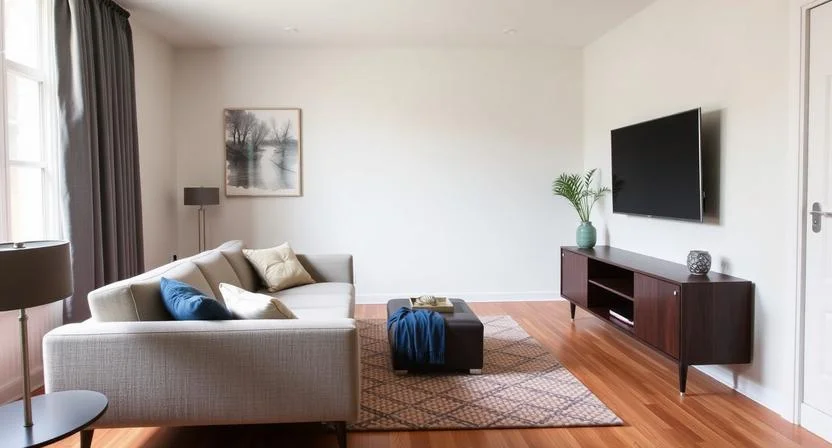
Place a slim sofa a few inches away from the wall to create a circulation corridor behind it. Mount the TV on the opposite wall and use a low-profile media unit for hidden storage. This arrangement works best in narrow or rectangular rooms.
Benefits: Creates visual depth, improves traffic flow, makes the room feel larger
Drawbacks: Requires a narrow console or shelf behind the sofa
Best for: Rooms under 150 sq ft, studio apartments, long narrow spaces
Pro tip: Choose a sofa with exposed legs to let light pass underneath and keep the visual field open.
2. Corner TV + Compact Sectional
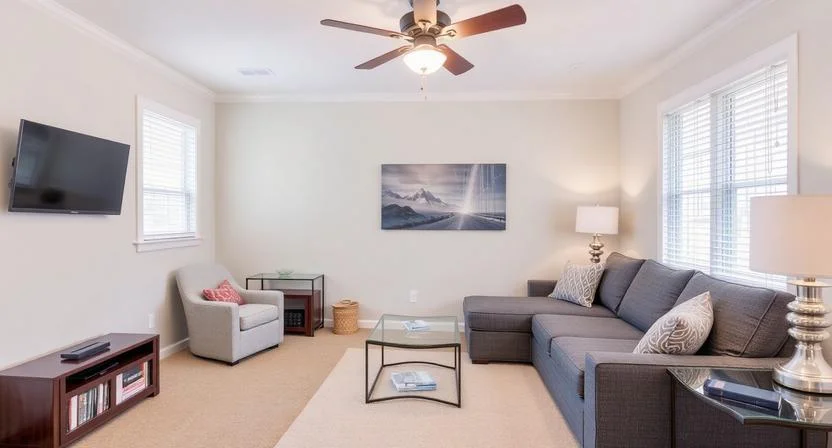
Position the TV in a corner and tuck a compact sectional or L-shaped sofa into the opposite angle. This maximizes seating while keeping sightlines clean and works well when doorways or windows restrict wall options.
Benefits: Maximizes seating capacity, uses underutilized corners
Drawbacks: Limited flexibility for reconfiguring
Best for: Square rooms, apartments with multiple doorways, family spaces
Pro tip: Add a tall plant or floor lamp in the opposite corner to balance the composition and lift the ceiling visually.
3. Symmetrical Twin Chairs + Small Sofa
Instead of one large sofa, use a shorter loveseat paired with two slim chairs facing the TV. Symmetry creates a sense of order and can make the room feel larger.
Benefits: Creates flexible conversation zones, keeps sightlines clear
Drawbacks: Fewer lounging options for movie nights
Best for: Couples, formal living rooms, spaces where entertaining is a priority
4. TV-Focused Linear Layout
Place the sofa directly opposite the TV wall with slim console tables and narrow side tables. This is the most straightforward arrangement for movie enthusiasts.
Benefits: Clear sightlines, simpler cable management, ideal for movie nights
Drawbacks: Less layered coziness
Best for: Households that prioritize TV watching, small families
5. Zoned Open Plan Layout
Use the sofa as a partial room divider to separate living and dining areas without walls. Rugs, lighting, and furniture orientation define each zone.
Benefits: Creates distinct functional areas in studio apartments
Drawbacks: Can reduce circulation if pieces are oversized
Best for: Studio apartments, open-concept spaces, multi-purpose rooms
Pro tip: Use a low-profile bookshelf behind the sofa to add storage and keep the flow open.
6. Nook-Style TV Alcove with Built-In Seating
Create a shallow alcove for the TV with built-in bench seating beneath. Add cushions for comfort and storage drawers below.
Benefits: Tailored look, efficient storage, maximizes every inch
Drawbacks: Requires carpentry, permanent installation
Best for: Homes with awkward wall niches, permanent installations
7. Multi-Functional Ottoman + Nesting Tables
Use a large storage ottoman as a coffee table, extra seating, and storage all at once. Pair with nesting tables that can be tucked away when not in use.
Benefits: Maximum flexibility, hides clutter, doubles as dining surface
Drawbacks: Ottomans can dominate visually if fabric is too bold
Best for: Studios, homes with limited storage, multipurpose rooms
Pro tip: Keep neutral upholstery and add one small accent table for drinks.
How to Choose the Right Sofa Size for a Small Living Room
Measure your TV viewing distance first, then choose a sofa that leaves 60–90 cm of circulation space behind or beside it.
Follow these steps to select the correct sofa size:
- Measure your TV diagonal in inches
- Calculate viewing distance: 1.5–2.5× the diagonal
- 50″ TV → 6.25–10.4 feet away
- 55″ TV → 6.9–11.5 feet away
- 65″ TV → 8.1–13.5 feet away
- Measure your available wall space for the sofa
- Subtract 60–90 cm for circulation paths
- Choose a sofa width that fits within the remaining space
Sofa recommendations for small spaces:
TV Placement: Wall-Mount vs. Stand
Wall-mounting the TV is almost always better for small living rooms because it saves floor space and creates cleaner lines.
Mounting height guideline: The center of the screen should be at seated eye level to avoid neck strain.
Space-Saving Storage Solutions
Use vertical shelving around the TV, storage ottomans, and floating shelves to add storage without consuming floor space.
Top storage strategies for small living rooms:
- Vertical shelving around the TV – Frames the entertainment area and provides display + storage
- Storage ottomans – Double as coffee table, extra seating, and hidden storage
- Built-in bench seating – Under-seat storage for toys, blankets, or media
- Floating shelves – Keep clutter off the floor and draw the eye upward
- Nesting tables – Tuck away when not in use, expand when needed
- Low-profile media units – Provide hidden storage for remotes, cables, and accessories
Pro tip: Choose a consistent finish for storage pieces to make them feel integrated rather than bolted-on.
Lighting Tips for Small Living Rooms with TV
Use bias lighting behind the TV to reduce eye fatigue, dimmable side lamps for ambiance, and avoid bright overhead lights pointing at the screen.
Lighting layers for small spaces:
- Bias lighting – LED strips behind the TV reduce eye strain and improve perceived contrast
- Dimmable side lamps – Create cozy ambiance without glare
- Avoid bright overheads – Direct light on the screen causes glare
- Use mirrors – Strategically placed mirrors bounce light and create depth
Feng Shui Principles for Small Living Rooms
Place the sofa against a solid wall when possible so people feel “backed up” and secure. Position the sofa with a clear view of the door without being directly in line with it.
Key Feng Shui guidelines:
- Anchor the sofa against a solid wall for security and better conversation flow
- Create a clear command position for both the TV and main seating
- Balance elements with color and texture
- Avoid furniture lined up against walls moving pieces even 10cm away creates the illusion of more space
Common Mistakes to Avoid
The most common mistakes are choosing furniture that’s too large, placing the sofa too close to the TV, and lining all furniture against walls.
Cost Considerations
A functional small living room setup can range from $500–$5,000 depending on furniture quality, TV size, and whether you DIY or hire professionals.
| Item | Budget Option | Premium Option |
|---|---|---|
| Sofa | $300–800 (loveseat) | $1,500–3,000 (modular sectional) |
| TV | $200–600 (43–55″) | $800–2,000 (55–65″ OLED) |
| TV Mount | $20–50 (fixed) | $100–250 (full-motion) |
| Media Console | $100–300 | $500–1,500 |
| Storage Solutions | $50–200 (shelves) | $500–2,000 (built-ins) |
| Lighting | $30–100 (lamps) | $200–500 (bias lighting + dimmers) |
| Installation | DIY | $200–500 (professional) |
Comparison Table: 7 Layouts at a Glance
| Layout | Best Room Shape | Seating Capacity | Storage Potential | Difficulty | Cost |
|---|---|---|---|---|---|
| Floating Sofa + Wall-Mounted TV | Narrow, rectangular | 2–4 | Medium | Easy | $$ |
| Corner TV + Compact Sectional | Square, irregular | 3–5 | High | Medium | $$$ |
| Symmetrical Chairs + Loveseat | Any | 2–4 | Low | Easy | $$ |
| TV-Focused Linear | Long, narrow | 2–4 | Medium | Easy | $$ |
| Zoned Open Plan | Open concept | 2–4 | Medium | Medium | $$ |
| Nook-Style Alcove | Awkward niches | 2–3 | High | Hard | $$$$ |
| Multi-Functional Ottoman | Any | 2–4 | High | Easy | $–$$ |
Conclusion
Designing a small living room with tv and sofa doesn’t require sacrificing comfort or style. The key principles are: float your sofa away from walls to create depth, mount your TV to save floor space, choose compact or modular seating with hidden storage, maintain proper viewing distances (1.5–2.5× TV diagonal), and use vertical storage to maximize every square inch.
Start by measuring your room and TV viewing distance, then select one of the seven layouts above that best fits your space and lifestyle. Prioritize multi-functional furniture, light colors, and layered lighting to make your small living room feel open, comfortable, and purposeful.
FAQs
Q1: What is the ideal TV distance in a small living room?
Q2: Should the sofa face the TV directly in a small room?
Q3: Are wall-mounted TVs better for small spaces?
Q4: How much clearance should I leave between sofa and coffee table?

As an admin, with a passion for transforming spaces and a sharp eye for design trends, I created Interior Design Style Quiz to help homeowners make confident, informed decisions about their homes from the curb all the way inside.