Cottagecore Home Decor 2026: The Complete Guide to Getting the Look
Cottagecore home decor is an interior design aesthetic centered on rural simplicity, natural materials, vintage finds, and a lived-in sense of warmth. It draws from English countryside cottages and European pastoral traditions. Key elements include floral and botanical prints, mismatched antiques, linen and cotton textiles, handmade objects, indoor plants, and soft, earthy color palettes. The style is highly affordable because it prioritizes thrifted, secondhand, and DIY pieces over new purchases.
Key Takeaways
- Cottagecore home decor emphasizes nature, nostalgia, and handmade craftsmanship over minimalism or mass production.
- The aesthetic originated on Tumblr around 2018 and surged on TikTok and Instagram during 2020.
- Core design elements include floral wallpaper, natural wood, wicker and rattan, vintage ceramics, and soft linen textiles.
- Cottagecore works in any home size it’s defined by a feeling, not a floor plan.
- Thrift stores, estate sales, and antique markets are the best (and most affordable) sources for authentic cottagecore decor.
- The color palette leans into cream, sage green, dusty rose, warm beige, and muted terracotta.
- Unlike purely nostalgic styles, cottagecore blends old and new in a way that feels personal, not staged.
What Is Cottagecore Home Decor?
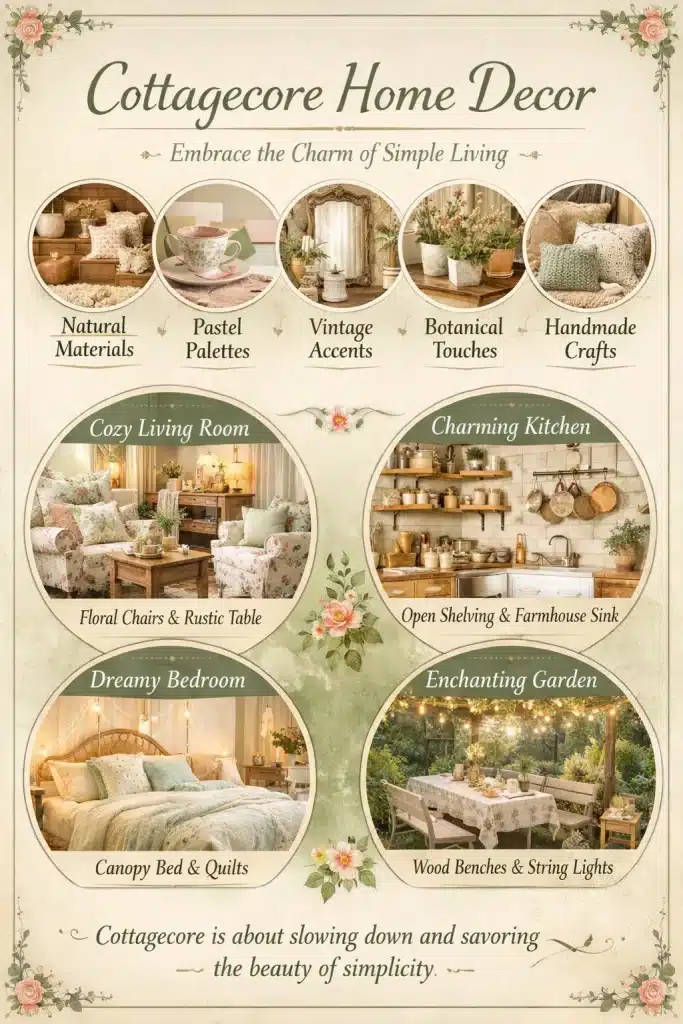
Cottagecore home decor is an interior design aesthetic that romanticizes rural, countryside living through vintage furniture, natural textures, botanical prints, handmade crafts, and warm, organic color palettes. The goal is a space that feels collected, cozy, and deeply personal as if it evolved over decades rather than being assembled from a catalog.
The term “cottagecore” emerged around 2018 on Tumblr and exploded in popularity during 2020, when social media users began idealizing slower, nature-connected lifestyles. The aesthetic draws from English cottage interiors, European farmhouse traditions, and the romantic naturalism movements of earlier centuries.
Core Elements of Cottagecore Interior Design
Natural Materials
Cottagecore interiors rely heavily on materials sourced from nature. Think unfinished wood, stone, rattan, wicker, linen, and cotton. Synthetic materials, chrome finishes, and glass-and-steel combinations sit at odds with the aesthetic.
Choose furniture with visible wood grain, cane or rattan seating, and stone or ceramic accessories. These materials age beautifully and add to the lived-in quality the style depends on.
Floral and Botanical Prints
Florals are the signature pattern of cottagecore decor. They appear on wallpaper, throw pillows, curtains, upholstery, bedding, and even painted ceramics. Unlike bold, graphic modern florals, cottagecore prefers vintage-scale prints: small, delicate roses, wildflowers, and trailing vines in muted or watercolor-style tones.
Mix florals with supporting patterns gingham, toile, plaid, and embroidery for a layered, textural look that feels authentic rather than coordinated.
Vintage and Antique Furniture
Cottagecore spaces feel assembled over time, not purchased in one trip. Mismatched chairs, worn wooden tables, and antique dressers with original hardware are ideal. Look for pieces with visible history: chipped paint, distressed edges, dovetail joints, and aged brass fittings.
Avoid matching furniture sets. Instead, combine a painted farmhouse table with mismatched dining chairs, or layer a linen sofa with a vintage wool throw and an embroidered cushion.
Handmade and Artisanal Objects
Mass-produced decor rarely fits the cottagecore aesthetic. Handmade pottery, woven baskets, cross-stitch samplers, hand-thrown ceramics, and hand-dipped candles all contribute to the sense that a space belongs to someone with real tastes and real history.
DIY projects are central to the lifestyle side of cottagecore dried flower arrangements, pressed botanical art, hand-sewn pillow covers, and homemade candles all fit naturally into this style.
Indoor Greenery
Plants are non-negotiable in a cottagecore interior. Trailing ivy, potted herbs on windowsills, wildflower bouquets in ceramic pitchers, and dried lavender bundles all reinforce the connection to nature. Terracotta pots, glazed stoneware planters, and galvanized metal buckets work better than plastic nursery containers.
Focus on plants that feel found rather than cultivated: ferns, moss, eucalyptus, and seasonal wildflowers suit the aesthetic far better than tropical showpieces.
Cottagecore Color Palette
Cottagecore interiors use a soft, nature-derived palette. Colors reference meadows, forests, stone, and dried botanicals rather than bold or trend-driven hues.
| Color | Description | Best Use |
|---|---|---|
| Cream / Off-White | Warm, not stark white | Walls, linen curtains, bedding |
| Sage Green | Muted, dusty green | Accent walls, ceramics, textiles |
| Dusty Rose | Faded, vintage pink | Upholstery, wallpaper, throw pillows |
| Warm Beige / Tan | Sand and biscuit tones | Wood furniture, rugs, baskets |
| Terracotta | Earthy, clay-toned orange | Pottery, planters, accent pieces |
| Muted Lavender | Faded purple with gray undertone | Bedrooms, soft furnishings |
| Forest Green | Deeper botanical green | Statement walls, velvet accents |
Avoid bright whites, cool grays, and bold primary colors. The palette should feel like it has faded gently in sunlight over many years.
Cottagecore Decor by Room
Living Room
Layer textures and patterns across every soft surface. A linen or velvet sofa in cream or sage pairs well with a mix of floral, gingham, and embroidered throw pillows. Add a worn Persian rug or a braided jute rug underfoot, and arrange a gallery wall of antique botanical prints and framed embroidery.
A wooden bookshelf filled with secondhand books, ceramic vases, and dried flower arrangements is one of the most effective focal points in a cottagecore living room. Include a few candles in brass or ceramic candlesticks for evening ambiance.
Bedroom
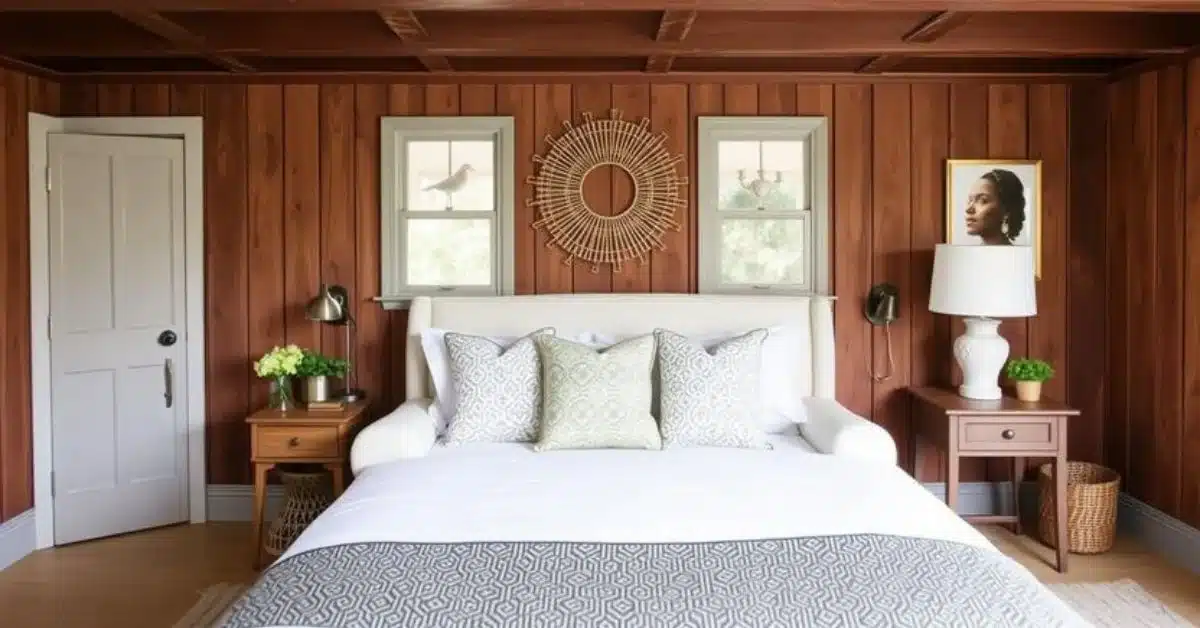
The cottagecore bedroom prioritizes softness and warmth. Layer a linen duvet with a handmade quilt, vintage-style pillow shams, and a chunky knit throw at the foot of the bed. Floral wallpaper on a single accent wall behind the headboard makes a strong statement without overwhelming the space.
An antique wooden dresser with mismatched knobs, a vintage vanity mirror, and a small collection of pottery on the nightstand complete the look. Dried flower bundles hung from exposed curtain rods or wooden beams add vertical texture.
Kitchen
The cottagecore kitchen centers on open shelving, handmade ceramics, and practical objects displayed as decor. Stack mismatched vintage plates, hang cast iron pans, and fill ceramic crocks with cooking utensils.
Fresh herbs in terracotta pots on the windowsill, a stone or butcher-block countertop, and linen dish towels with simple embroidered details all reinforce the aesthetic. A vintage enamelware collection or an assortment of antique glass jars used for pantry storage pull double duty as decor.
Bathroom
In bathrooms, cottagecore translates through linen hand towels with lace edges, a ceramic soap dispenser, dried herb bundles, and a small vase of seasonal flowers. Replace modern chrome fixtures with brushed brass or oil-rubbed bronze where possible.
A freestanding clawfoot tub, shiplap walls, or beadboard wainscoting reinforce the historical character of the space.
Cottagecore vs. Similar Styles: Key Differences
| Style | Primary Influence | Color Palette | Key Materials | Feel |
|---|---|---|---|---|
| Cottagecore | English countryside, pastoral romanticism | Soft, earthy, muted | Linen, rattan, natural wood | Nostalgic, lived-in, whimsical |
| Farmhouse | American rural, Shaker tradition | White, gray, neutral | Shiplap, galvanized metal, barn wood | Clean, functional, understated |
| Grandmillennial | Traditional American, chinoiserie | Rich jewel tones | Chintz, velvet, brass | Formal, layered, maximalist |
| Bohemian | Global artisan, nomadic influence | Warm, jewel-toned, eclectic | Macramé, kilim, carved wood | Eclectic, free-form, worldly |
| Shabby Chic | French country, distressed Victorian | Pastel, white, blush | Painted furniture, lace | Feminine, romantic, deliberately worn |
Cottagecore is closest to shabby chic in spirit but leans more natural and less overtly feminine. It differs from farmhouse style in its embrace of clutter, pattern mixing, and handmade sentimentality.
How to Achieve Cottagecore Decor on a Budget
You don’t need to spend much to build a convincing cottagecore interior. The aesthetic explicitly rejects the idea of coordinated, newly purchased decor. Here’s where to source it affordably:
- Thrift stores and estate sales The best source for vintage plates, candlesticks, baskets, frames, and textile finds. Visit frequently, since stock rotates constantly.
- Antique markets and flea markets Better for furniture and larger pieces. Prices vary, but negotiating is standard practice.
- Facebook Marketplace and Craigslist Ideal for antique furniture at low prices, especially dressers, chairs, and wooden tables.
- Your own family Inherited or family pieces carry exactly the kind of personal meaning cottagecore values.
- DIY Press wildflowers for framed art, dry lavender bundles, sew simple linen pillow covers, or decoupage old furniture with botanical prints.
Spending $50 to $200 on a collection of thrifted textiles, ceramics, and framed prints can transform a room more effectively than $1,000 spent at a retail decor chain.
Common Cottagecore Decorating Mistakes to Avoid
Buying everything new. Matching sets from big-box retailers rarely achieve the collected, personal quality that makes cottagecore work. Even if a piece is technically “cottagecore style,” newness undercuts the authenticity of the aesthetic.
Over-coordinating patterns. Cottagecore thrives on controlled chaos. If your patterns all share the same color family and scale, the room will look designed rather than gathered. Mix scales, styles, and eras intentionally.
Ignoring texture. Color alone won’t deliver the softness and warmth the aesthetic requires. Layer woven, knit, embroidered, and quilted textiles alongside smooth ceramics and rough wood for the full effect.
Cluttering without intention. Cottagecore displays are curated, not chaotic. Every object should look like it belongs there arrange in odd-numbered groupings, vary heights, and leave breathing room between vignettes.
Conclusion
Cottagecore home decor works because it rejects the idea that interiors need to be flawless, coordinated, or newly purchased to be beautiful. The most compelling cottagecore spaces look exactly like what they are: homes filled with things that matter to the people who live in them.
Start with what you have. Add a linen throw, swap a synthetic plant for a real potted herb, pick up a set of vintage plates at a thrift store, and hang a piece of framed botanical art. The aesthetic builds gradually, and that’s exactly the point.
FAQs
What is cottagecore home decor?
Cottagecore home decor is an aesthetic that draws from English rural cottages and pastoral traditions, emphasizing natural materials, vintage furniture, botanical prints, handmade objects, and a soft, earthy color palette. The goal is a space that feels warm, personal, and deeply connected to nature and history.
Is cottagecore the same as farmhouse style?
No. Farmhouse style prioritizes clean lines, neutral tones, and functional minimalism, often using shiplap, galvanized metal, and white-painted wood. Cottagecore embraces more pattern, more visual layering, and a stronger emphasis on whimsy, botanicals, and collected vintage objects.
What colors work best for cottagecore decor?
Cream, sage green, dusty rose, warm beige, terracotta, muted lavender, and forest green. The palette mimics natural, sun-faded tones rather than bold or trend-driven colors.
Where can I buy cottagecore decor affordably?
Thrift stores, estate sales, antique fairs, and Facebook Marketplace are the most cost-effective and authentic sources. Secondhand shops regularly stock the vintage plates, baskets, textiles, and candlesticks that define the aesthetic.
What patterns are used in cottagecore interiors?
Florals, gingham, toile, plaid, quilting, embroidery, and lace. Pattern mixing is encouraged the goal is a layered, collected look, not coordinated matching.

As an admin, with a passion for transforming spaces and a sharp eye for design trends, I created Interior Design Style Quiz to help homeowners make confident, informed decisions about their homes from the curb all the way inside.