Home Decor Styles: A Complete Guide (2026)
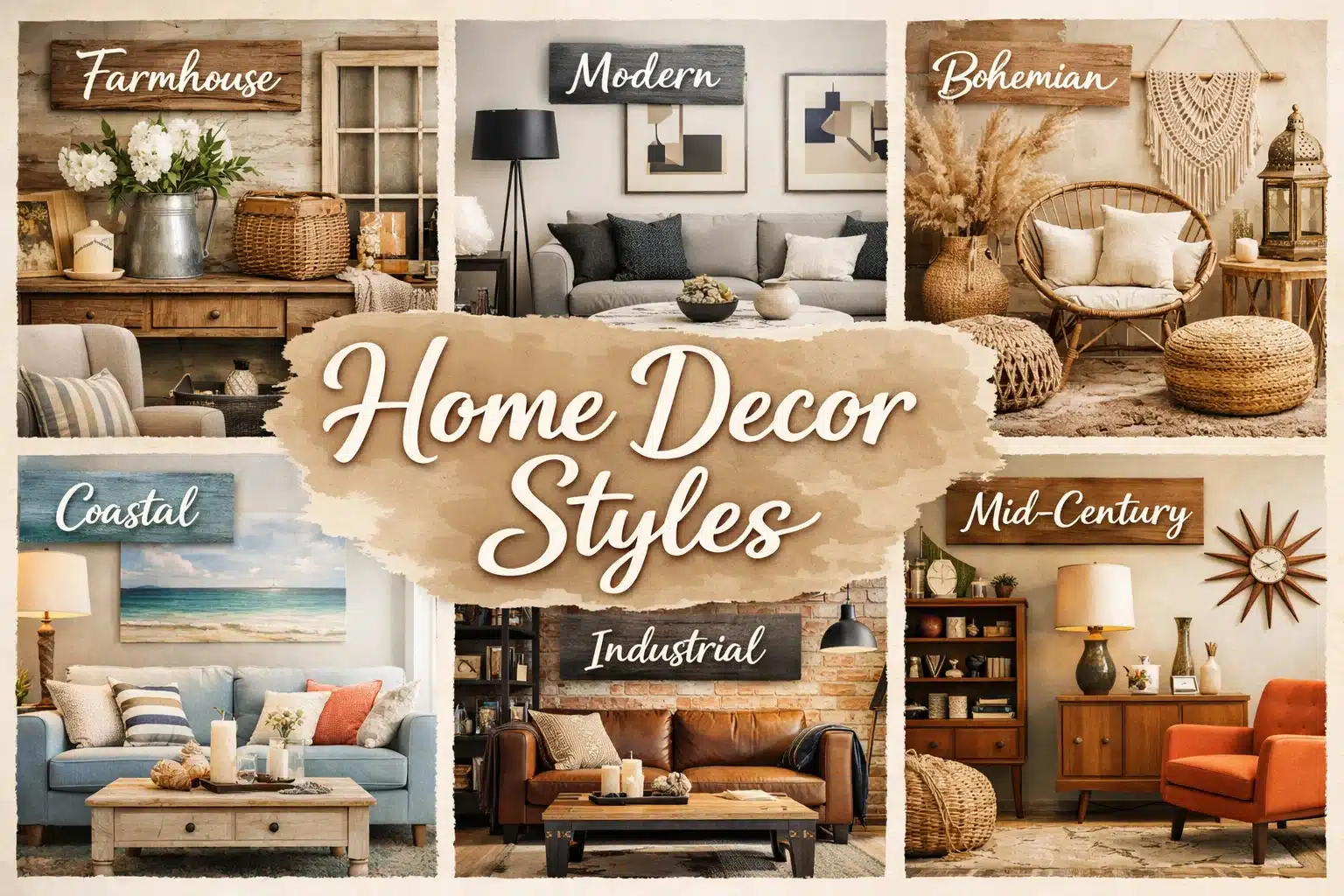
Home decor styles are defined design frameworks that guide furniture selection, color palette, material choices, and spatial arrangement. The most common styles in U.S. homes include modern, traditional, farmhouse, transitional, bohemian, Scandinavian, industrial, midcentury modern, coastal, and Japandi. Each style has identifiable visual hallmarks, compatible pairings, and a cost range for implementation. Identifying your style before purchasing furniture or redecorating prevents costly mismatches and creates visual cohesion.
Home Decor Styles: A Complete Guide for Every Room and Budget
Home decor styles are structured design systems that define how a space looks, feels, and functions through consistent application of color, texture, furniture, and materials. Choosing the right home decor style before buying furniture or repainting walls saves money and eliminates decision fatigue. This guide covers every major style, their defining characteristics, compatible pairings, and realistic cost benchmarks for U.S. homeowners.
What Are Home Decor Styles?
A home decor style is a cohesive visual language applied across a space. It determines which furniture shapes, finish tones, textiles, and accessories belong together. Most homes in the U.S. reflect one dominant style with elements of one or two complementary styles layered in.
Knowing your style also makes shopping more efficient. Rather than evaluating every piece individually, you filter by whether it fits your established framework.
The Most Popular Home Decor Styles in the U.S.
Modern Style
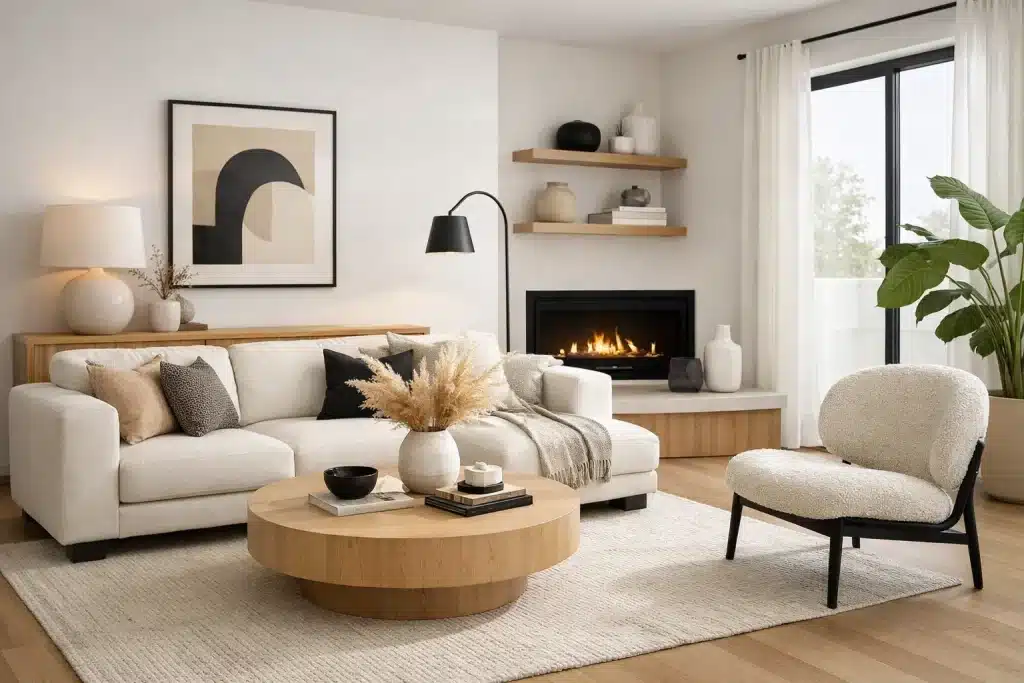
Modern style refers specifically to the design movement of the early-to-mid 20th century, rooted in the Bauhaus school (1919-1933) and influenced by architects like Ludwig Mies van der Rohe and Le Corbusier. It emphasizes structure, function, and restraint.
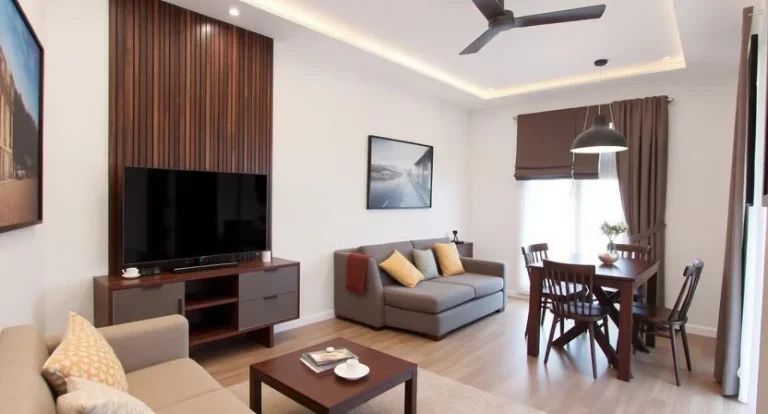
Key traits: flat surfaces, neutral palettes (white, black, gray, warm beige), materials like steel, glass, and poured concrete, and furniture with clean geometric silhouettes. Ornamentation is deliberately absent.
Modern style is often confused with contemporary, but they are distinct: modern refers to a specific design era, while contemporary refers to what is current right now.
Compatible with: Scandinavian, industrial, midcentury modern
See also: Modern Living Room Ideas for Small Spaces
Contemporary Style
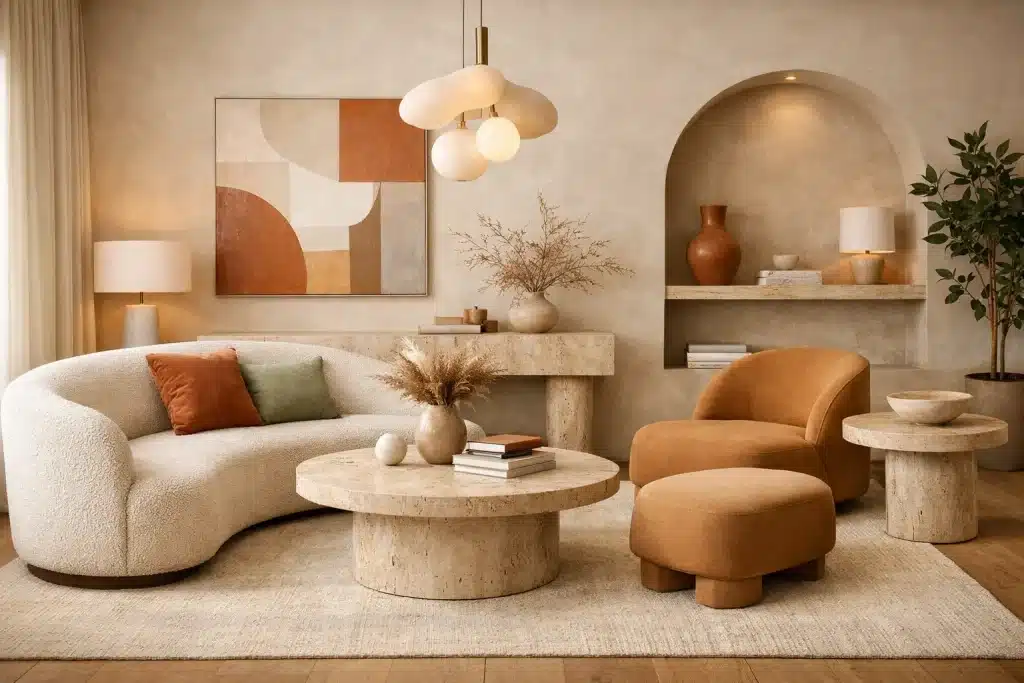
Contemporary style reflects what designers are creating right now it is fluid and changes over time. As of 2026, contemporary interiors feature curved furniture, warm neutrals (terracotta, camel, sage), layered lighting, and natural materials like travertine and boucle.
Unlike modern style, contemporary is not minimal by definition. It can incorporate color, pattern, and eclectic elements as long as they reflect current design thinking.
Compatible with: Coastal, rustic, transitional
Traditional Style
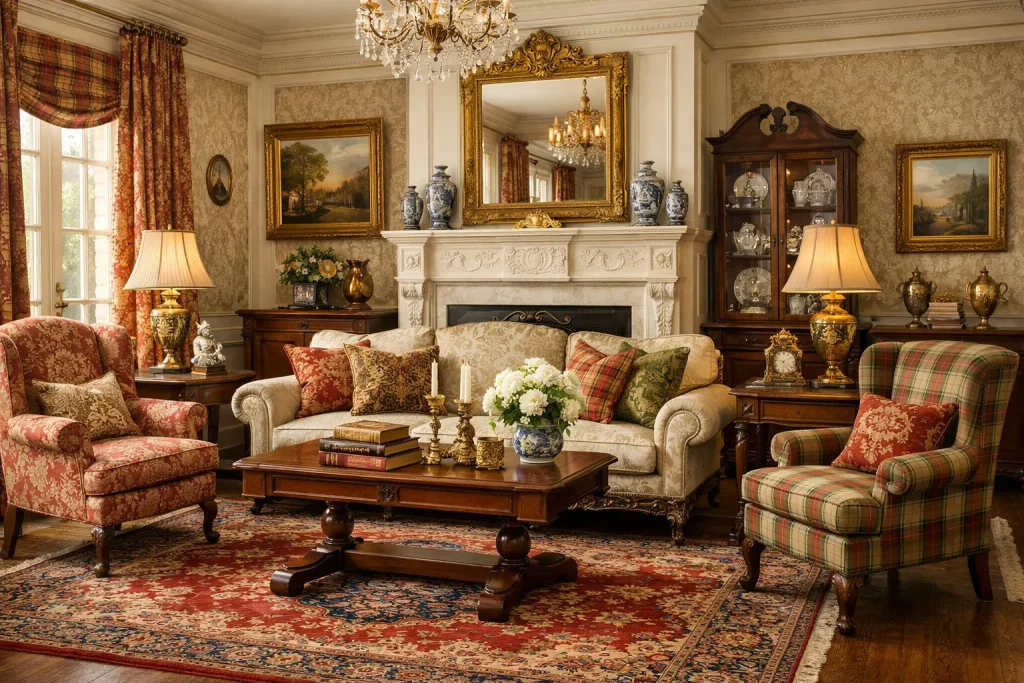
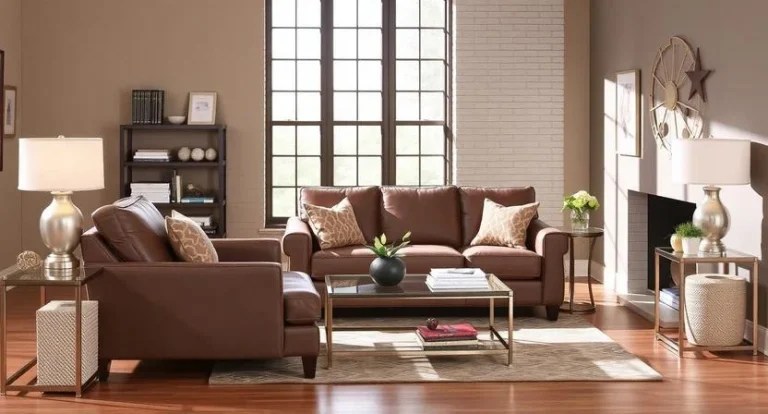
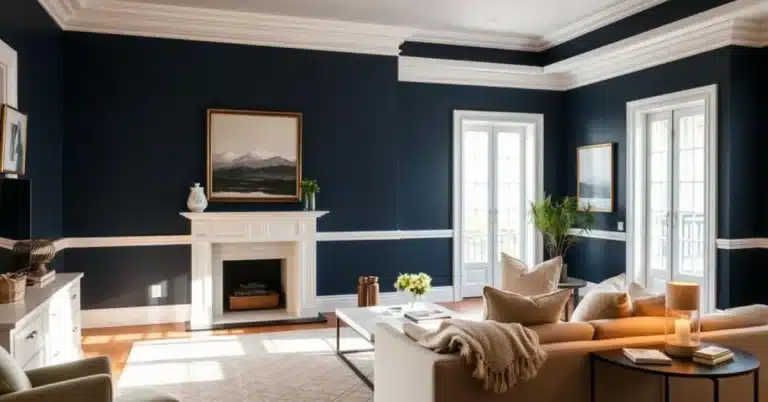
Traditional style draws from 18th- and 19th-century European design English, French, and American Georgian influences are most prevalent in U.S. homes. It features rich wood tones, symmetrical furniture arrangements, plush upholstery, ornate moldings, and pattern-on-pattern layering (damask, toile, plaid).
Color palettes lean toward jewel tones (navy, burgundy, forest green) and warm neutrals. Antiques and heirloom-quality reproductions are hallmarks.
Traditional style suits larger rooms where symmetrical arrangements and furniture scale do not overwhelm the space.
Compatible with: Rustic, coastal, Mediterranean
Transitional Style
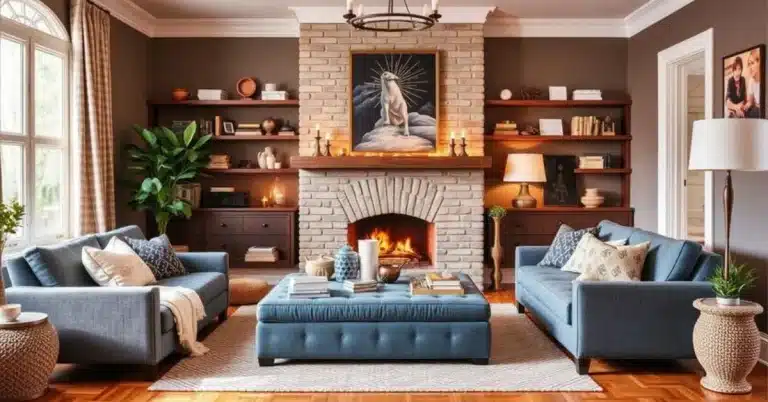
Transitional is the most widely used home decor style in U.S. homes, according to the National Kitchen and Bath Association. It blends traditional warmth (upholstered pieces, symmetry) with contemporary restraint (clean lines, neutral palettes, minimal accessories).
The result is a livable, broadly appealing aesthetic that avoids the formality of traditional and the austerity of strict modern. It works across virtually every room size and floor plan.
Compatible with: Coastal, farmhouse, contemporary
See also: Cozy Home Decor Ideas for Living Rooms
Farmhouse Style
Modern farmhouse style popularized in the U.S. largely through Joanna Gaines and Magnolia brand combines utilitarian rural architecture with comfortable, casual furnishings. Shiplap paneling, open shelving, galvanized metal, and white-painted wood are defining elements.
Color palettes run white, cream, warm gray, sage green, and muted navy. Textiles lean toward linen, cotton canvas, and washed denim. Hardware is typically matte black or wrought iron.
Modern farmhouse differs from rustic farmhouse in polish: surfaces are cleaner, palettes brighter, and the overall effect more refined.
Compatible with: Rustic, industrial, transitional
See also: Farmhouse Living Room Decor on a Budget
Scandinavian Style
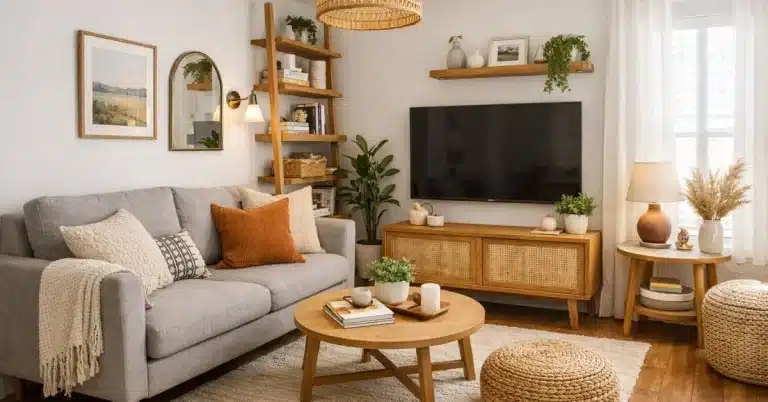
Scandinavian (or Nordic) design originated in the Nordic countries in the early 20th century and is anchored in the concept of “hygge” (Danish/Norwegian: the quality of coziness and comfortable conviviality). It prioritizes function, natural light, and simplicity.
Palettes are white-dominant with wood warm tones and soft muted accents (dusty blue, blush, sage). Furniture is low-profile, light-wood, and unadorned. Textural layers chunky knit throws, sheepskin, linen add warmth without clutter.
Compatible with: Modern, minimalist, Japandi
Japandi Style
Japandi is a fusion of Japanese wabi-sabi aesthetics and Scandinavian minimalism the fastest-growing home decor style in U.S. search trends between 2023 and 2026. It combines the Nordic emphasis on function and cozy simplicity with the Japanese principle of finding beauty in imperfection and natural materials.
Key traits: low furniture profiles, natural wood and stone, muted earth tones (warm white, clay, charcoal, moss), handmade ceramics, and deliberate negative space. Unlike pure Scandinavian style, Japandi leans warmer and incorporates more organic asymmetry.
Compatible with: Scandinavian, minimalist, contemporary
See also: Handcrafted Home Decor: How to Style with Artisan Pieces
Industrial Style
Industrial style draws from 19th- and early-20th-century factory and warehouse architecture. Exposed brick, raw concrete floors, steel structural beams, and salvaged wood are foundational. Color palettes are neutral charcoal, rust, aged leather, weathered wood.
Industrial works best in open-plan spaces with high ceilings. In smaller rooms, it can feel oppressive without softening elements: plants, warm-toned lighting (Edison filament bulbs), and textile accents break up the hardness.
Compatible with: Modern, rustic, farmhouse, midcentury modern
Midcentury Modern Style
Midcentury modern covers U.S. and European design from roughly 1945 to 1970. It is characterized by organic curves, tapered legs, graphic patterns, and the integration of indoor and outdoor living. Key designers include Eero Saarinen, Charles and Ray Eames, Hans Wegner, and Florence Knoll.
Original pieces command significant prices an authentic Eames Lounge Chair retails at $5,000-$6,500 new. Quality reproductions from brands like Article, Poly & Bark, and Modway range from $200-$800 and deliver the aesthetic at accessible price points.
Compatible with: Modern, industrial, Scandinavian
Bohemian (Boho) Style
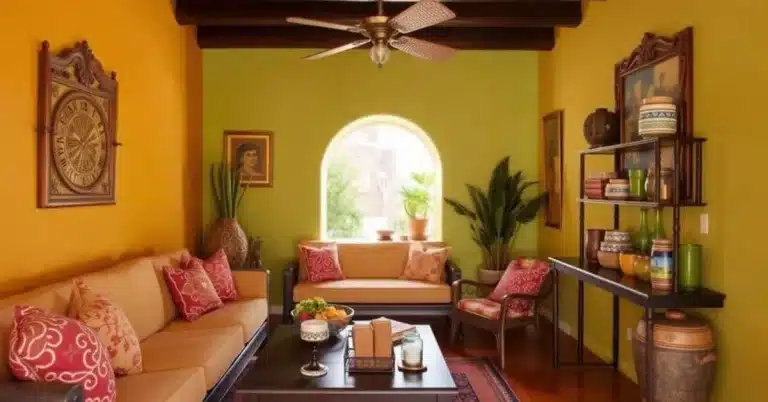
Bohemian style is the most eclectic of all recognized categories it actively resists strict rules. Layered textiles (kilim rugs, macrame, velvet), global patterns, mixed metals, trailing plants, and vintage finds coexist in a richly textured, color-saturated environment.
The organizing principle is personal meaning over visual uniformity. Successful boho interiors have an underlying color story (often warm earth tones or jewel-saturated palettes) that provides cohesion beneath the variety.
Compatible with: Rustic, global/eclectic, maximalist
Coastal Style
Coastal style references the visual palette of beaches and ocean environments: white, sandy beige, weathered driftwood gray, and ocean blue-green. Linen and cotton dominate textiles. Furniture is relaxed and casual — slipcover sofas, whitewashed wood, rattan, and wicker.
Coastal has two sub-variants: classic coastal (more nautical, striped, navy-and-white) and coastal grandmother (a 2022-2026 trend toward soft, aged linens, collected objects, and an effortlessly lived-in look).
Compatible with: Traditional, transitional, contemporary
Maximalist Style
Maximalism is the intentional opposite of minimalism it operates on the principle that “more is more” when curated deliberately. Bold wallpaper, gallery walls with dozens of pieces, jewel-tone palettes, layered patterns, and statement furniture define the style.
The critical distinction between maximalism and clutter is intentionality. A maximalist room has a governing color palette, a scale hierarchy among objects, and deliberate spatial composition.
Compatible with: Bohemian, eclectic, traditional
How to Identify Your Home Decor Style
The fastest diagnostic is a three-step process:
- Collect 20-30 room images that appeal to you (Pinterest, Houzz, or Architectural Digest). Look for common threads: palette, furniture shape, material types.
- Identify the 2-3 styles that appear most frequently in your collection.
- Cross-reference with your practical constraints: room size, existing architectural features, and budget.
Most people discover they are drawn to a primary style with elements of one complementary style this is the foundation for a personalized, cohesive interior.
See also: Take Our Interior Design Style Quiz to Find Your Style
Can You Mix Home Decor Styles?
Yes and most well-designed homes do. The key is intentional mixing, where one style is dominant (60-70% of design decisions) and one complementary style provides contrast (30-40%).
Styles that share tonal palettes or material families mix most naturally. Farmhouse and rustic work together because both rely on natural wood, neutral palettes, and utilitarian forms. Industrial and midcentury modern share clean lines and a preference for honest materials.
Styles with opposing visual logic maximalism and minimalism, for instance require a skilled eye to balance.
Home Decor Style Comparison Table
| Style | Color Palette | Key Materials | Furniture Profile | Best Room Size | Avg. Cost to Implement |
|---|---|---|---|---|---|
| Modern | White, black, gray | Steel, glass, concrete | Geometric, low | Any | $2,000-$8,000 |
| Traditional | Jewel tones, warm neutrals | Rich wood, velvet, marble | Ornate, upholstered | Large | $3,000-$12,000 |
| Transitional | Warm neutrals, soft tones | Mixed wood & metal | Streamlined, comfortable | Any | $1,500-$7,000 |
| Farmhouse | White, cream, sage | Shiplap, linen, matte black metal | Simple, sturdy | Any | $1,000-$6,000 |
| Scandinavian | White, light wood, muted accents | Pine, wool, linen | Low-profile, light | Small to medium | $800-$5,000 |
| Japandi | Clay, charcoal, warm white | Natural wood, stone, ceramic | Low, minimal | Any | $1,000-$6,000 |
| Industrial | Charcoal, rust, aged brown | Steel, concrete, reclaimed wood | Utilitarian, boxy | Large, open-plan | $2,000-$9,000 |
| Midcentury Modern | Warm neutrals, mustard, teal | Walnut, molded fiberglass | Tapered legs, organic | Any | $1,500-$8,000 |
| Bohemian | Earth tones, jewel palette | Rattan, kilim, velvet | Eclectic, layered | Any | $500-$4,000 |
| Coastal | White, sand, ocean blue | Linen, rattan, driftwood | Relaxed, casual | Any | $800-$5,000 |
| Maximalist | Bold, mixed | Velvet, brass, patterned fabrics | Statement, varied | Large preferred | $2,000-$10,000+ |
Conclusion
Home decor styles are not arbitrary labels they are practical frameworks that guide every purchasing and design decision in a space. Understanding the hallmarks of each style, which ones pair naturally, and what they cost to implement turns decorating from an overwhelming process into a structured, confident one. Whether your home leans farmhouse, Japandi, or traditional, clarity on style produces more cohesive, intentional results than shopping piece by piece without a plan.
FAQ: Home Decor Styles
1. What is the most popular home decor style in the U.S.?
Transitional is the most widely used style in U.S. homes, blending traditional warmth with contemporary clean lines.
2. What is the difference between modern and contemporary decor?
Modern refers to the early-to-mid 20th century design movement; contemporary describes whatever style is current right now.
3. What is Japandi style?
Japandi is a fusion of Japanese wabi-sabi and Scandinavian minimalism, characterized by natural materials, muted earth tones, and deliberate simplicity.
4. How do I find my home decor style?
Collect 20-30 room images you find appealing, identify recurring patterns in palette and furniture form, then match to established style categories.
5. Can you mix different home decor styles in one room?
Yes, use one dominant style for 60-70% of decisions and one complementary style for variety; shared palettes or materials make mixing cohesive.

As an admin, with a passion for transforming spaces and a sharp eye for design trends, I created Interior Design Style Quiz to help homeowners make confident, informed decisions about their homes from the curb all the way inside.