No Sofa, No Problem! Very Small Living Room ideas with TV
Very Small Living Room ideas with TV on the wall opposite the primary seating area, use a slim floating console or no console at all, and arrange furniture to maintain clear walking paths.
Wall mounting is the single most impactful change you can make in a very small living room with a TV. It removes the need for bulky TV units and instantly reclaims valuable floor space. In a 120-square-foot living room, removing a traditional console alone can make the space feel noticeably more open.
The ideal layout places the sofa directly facing the TV wall. If the room is too narrow for this, position the TV in a corner and angle the sofa diagonally. This approach works exceptionally well when the main wall is interrupted by windows or doors.
Where Should You Put a TV in a Very Small Living Room?
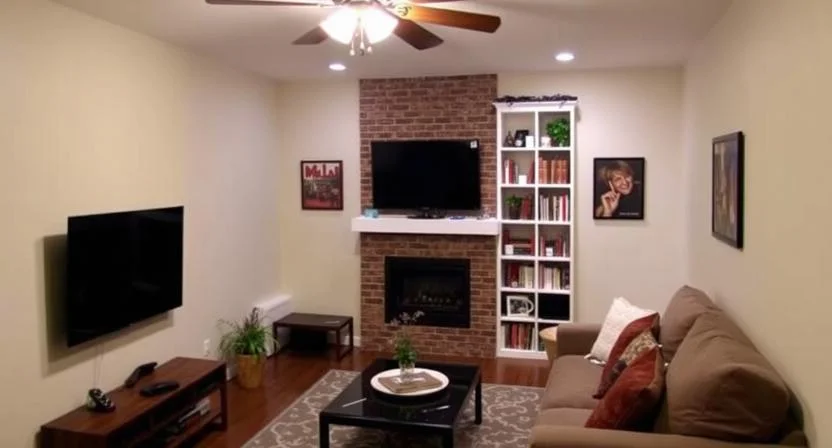
The best positions are centered on the main seating wall, in a corner with a swivel mount, or above a fireplace with a tilt mount.
Designers agree that furniture layout should dictate TV placement, not the other way around. Start by identifying where “life happens” in the room the primary seating position and how people move through the space.
For most small living rooms, a corner TV with a diagonal sofa maximizes usable area while keeping the room visually open.
What Size TV Fits a Very Small Living Room?
A 43- to 55-inch TV typically hits the sweet spot for most small living rooms.
Viewing distance is the primary factor. The general rule is to sit roughly 1.5 to 2.5 times the diagonal screen size away from the TV. For a 50-inch TV, that means sitting between 6.25 and 10.4 feet away.
In very small living rooms, choosing a TV that’s too large can overwhelm the space visually. A slim-bezel or “Frame TV” design helps the screen blend in like artwork. If you mount the TV, keep the screen’s center at approximately 40–44 inches from the floor for most sofas.
What Furniture Works Best in a Very Small Living Room ideas with TV?
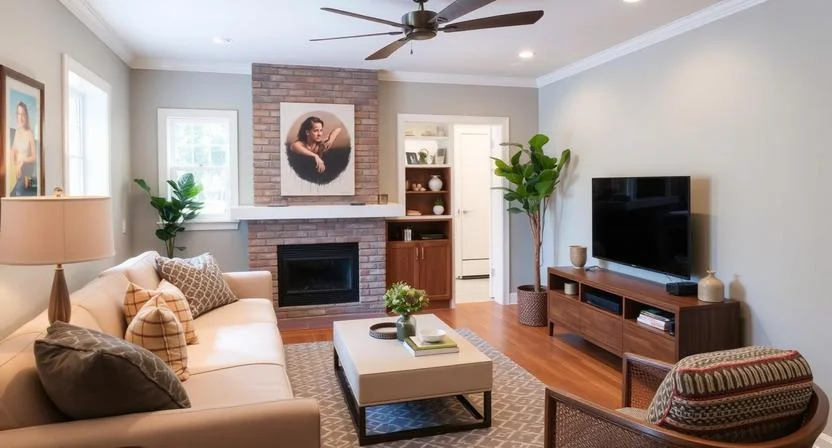
Choose slim-profile sofas, floating consoles, nesting tables, and ottomans with hidden storage.
Traditional bulky furniture is the enemy of small spaces. Here’s what works:
Sofas: A two-seater or loveseat with slim arms saves inches without sacrificing comfort. Modular sofas that can be reconfigured offer versatility they fold away to create open space when the TV is off.
TV Consoles: A floating cabinet mounted 12–14 inches deep provides storage without consuming floor space. Slimline media consoles keep the room feeling open while offering surface space for remotes and a soundbar.
Seating Extras: Ottomans with storage, poufs, and nesting tables provide flexible seating without permanent floor commitment.
Coffee Tables: Glass-top or acrylic tables maintain sightlines and make the room feel less crowded.
How Can You Add Storage Without Cluttering a Tiny Living Room?
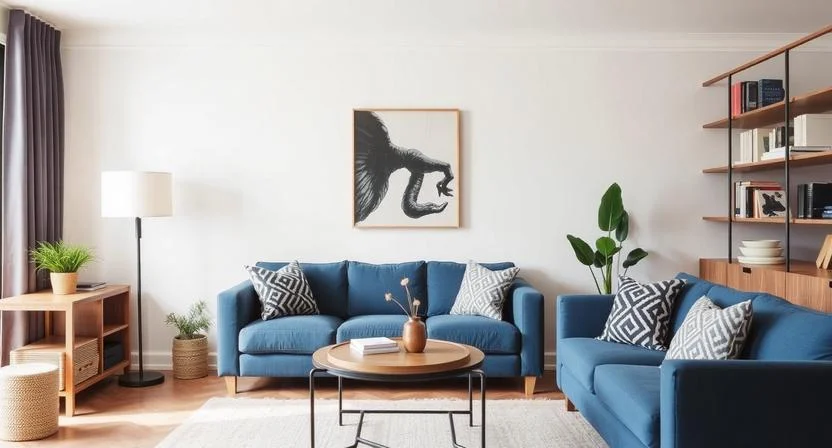
Use vertical shelving, floating cabinets, and built-in niches to store items without consuming floor space.
When floor space is limited, the only way to go is up. Strategic vertical shelving draws the eye upward, making the room feel more spacious.
Floating shelves flanking the TV provide display space without bulky furniture. Built-in shelving around the TV makes the room feel less cluttered while adding warmth and style.
Floating media walls hide remotes, consoles, and cables while visually lifting furniture off the floor. The downside is less deep storage, but the visual payoff is significant.
For renters, movable TV stands with wheels offer flexibility – you can roll the TV out of the way when not in use.
What Are the Best Small Living Room Layouts with a TV?
The five most effective layouts are: floating sofa with slim console, corner TV with diagonal sofa, wall-mounted TV with multi-use storage, symmetrical twin chairs, and TV behind sliding panels.
Layout 1: Floating Sofa + Slim Console – Place a slim sofa slightly away from the wall to create a circulation corridor behind it. Mount the TV on the opposite wall with a slim floating console underneath.
Layout 2: Corner TV + Diagonal Sofa – Position the TV in a corner and angle a small sofa diagonally. This opens up traffic flow and creates a cozy conversation zone.
Layout 3: Wall-Mounted TV + Multi-Use Storage – Mount the TV on a wall with integrated shelving and cabinets. This maximizes storage while keeping the floor clear.
Layout 4: Symmetrical Twin Chairs + Small Sofa – Instead of one large sofa, use two chairs and a small sofa. Symmetry gives a sense of order and makes the room feel larger.
Layout 5: TV Behind Sliding Panels – Mount the TV on a wall with sliding panels or cabinet doors that conceal the screen when not in use. This creates a calm, uncluttered look.
What Color Schemes Make a Small Living Room with a TV Feel Larger?
Light, neutral colors – white, beige, light gray, and soft pastels – make small rooms feel more spacious.
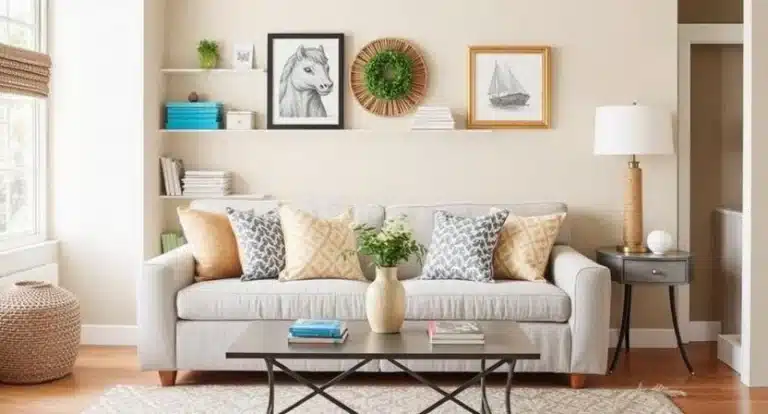
Light colors reflect more light, making walls recede visually. A light grey two-seater sofa paired with a built-in TV unit creates a compact yet stylish look.
Accent walls in darker colors can work if used sparingly – they add depth without overwhelming the space. Mirrors placed opposite windows reflect light and double the perceived space.
How Do You Hide Cables in a Small Living Room with a TV?
Use in-wall cable management kits, cord covers, or floating panels to hide cables completely.
Visible cables create visual clutter that makes small rooms feel chaotic. The cleanest solution is running cables through the wall using a recessed power kit. For renters, adhesive cord covers painted to match the wall are an effective alternative.
Floating panels behind the TV hide cables and outlets while creating a finished focal wall. This solves cable clutter, visual balance, and wall protection in one solution.
Can You Have a Big TV in a Very Small Living Room?
Yes, but only if the viewing distance allows and the TV is mounted flush to the wall.
A large TV in a small room can work if the screen is wall-mounted and the bezel is slim. The key is choosing a TV that doesn’t overwhelm the wall proportionally. A 55-inch TV in a 10×12-foot room is acceptable if the seating distance is at least 7 feet.
Swivel mounts allow you to angle the TV for different viewing positions, which is especially useful in open-plan layouts. Tilt mounts reduce neck strain when the TV is mounted higher, such as above a fireplace.
Comparison Table: TV Placement Options for Very Small Living Rooms
| Feature | Wall-Mounted (Center) | Corner Mount | Above Fireplace | Built-in Niche | Movable Stand |
|---|---|---|---|---|---|
| Floor space saved | High | High | High | Highest | Low |
| Installation cost | Low–Medium | Low | Medium | High | Low |
| Viewing flexibility | Fixed | Swivel option | Tilt option | Fixed | High |
| Best room shape | Rectangular | Square/Narrow | Any with fireplace | Any | Any |
| Rental friendly | No (holes) | No (holes) | No (holes) | No | Yes |
| Cable hiding | Easy | Moderate | Moderate | Excellent | Difficult |
| Visual impact | Minimal | Minimal | Moderate | Minimal | High |
Conclusion
Designing a Very Small Living Room ideas with TV is about making every inch count. Wall mounting the TV, choosing slim furniture, and using vertical storage are the three pillars of small-space TV design. Corner placement and floating consoles unlock floor space, while light colors and mirrors make the room feel larger. The right TV size – typically 43 to 55 inches – ensures comfortable viewing without overwhelming the space.
Start by mapping your room’s traffic patterns and primary seating position. From there, the TV placement becomes obvious. Whether you choose a centered wall mount, a corner setup, or a built-in niche, the goal is the same: a functional, stylish living room where the TV enhances rather than dominates the space.
FAQs
Q: What is the best TV position in a very small living room?
The best position is centered on the main seating wall with clear walking paths, or in a corner with a swivel mount if wall space is limited.
Q: What size TV should I get for a small living room?
A 43- to 55-inch TV typically works best for most small living rooms.
Q: How high should a TV be mounted in a small living room?
The center of the screen should be at seated eye level, approximately 40–44 inches from the floor for most sofas.
Q: How far should I sit from the TV in a compact space?

As an admin, with a passion for transforming spaces and a sharp eye for design trends, I created Interior Design Style Quiz to help homeowners make confident, informed decisions about their homes from the curb all the way inside.