25 Small Living Room Ideas with TV to Maximize Space
Small Living Room Ideas with TV require deliberate planning. The screen placement, furniture scale, and storage layout all affect how spacious the room feels. These 25 small living room ideas with TV cover every common constraint: low ceilings, narrow walls, awkward corners, and limited natural light.
How Do You Arrange a Small Living Room Ideas with TV?
Mount the TV on the focal wall, anchor seating 7 to 10 feet away, and eliminate furniture that blocks circulation.
The standard viewing distance for a 40 to 55-inch TV is 5 to 8 feet. In a small living room, this dictates where the sofa goes. Place seating directly across from the screen and avoid angling furniture unless the room is irregularly shaped.
25 Ideas Organized by Strategy
TV Placement Ideas
1. Wall-Mount the TV to Free Floor Space
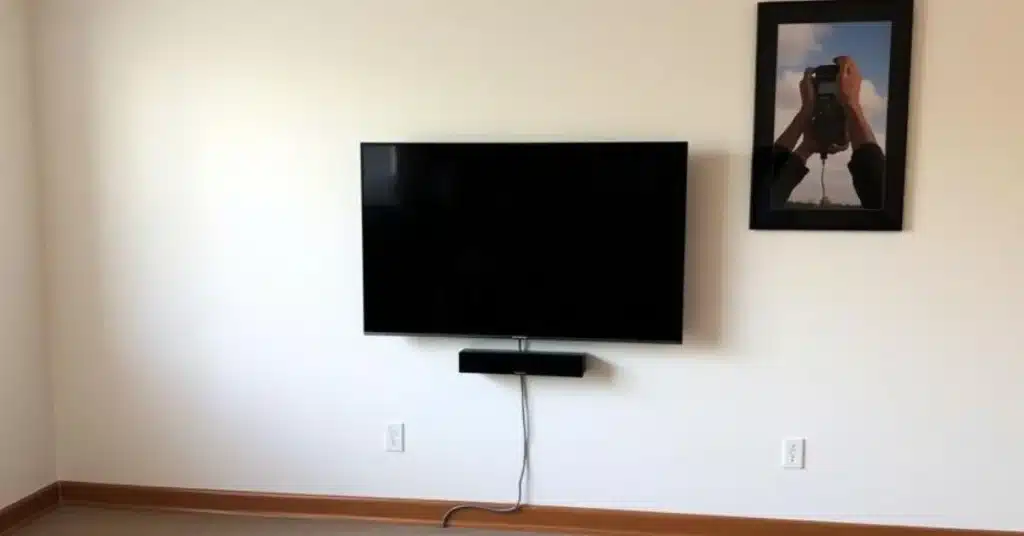
Wall mounting eliminates the need for an entertainment console entirely. A full-motion mount lets you adjust the angle from different seating positions. Standard mounting height centers the screen at seated eye level, typically 42 to 48 inches from floor to screen center.
2. Recess the TV Into the Wall
A recessed TV installation pushes the screen flush with the wall surface. This removes visual bulk and creates a built-in appearance. It requires a non-load-bearing wall or a custom niche frame, typically costing $200 to $600 in materials.
3. Use a Corner TV Mount
Corner mounting works in square rooms where no single wall functions as a natural focal point. A corner TV mount positions the screen at a 45-degree angle, opening up wall space on both primary walls. This setup works well in rooms under 150 square feet.
4. Place the TV Above a Low Fireplace
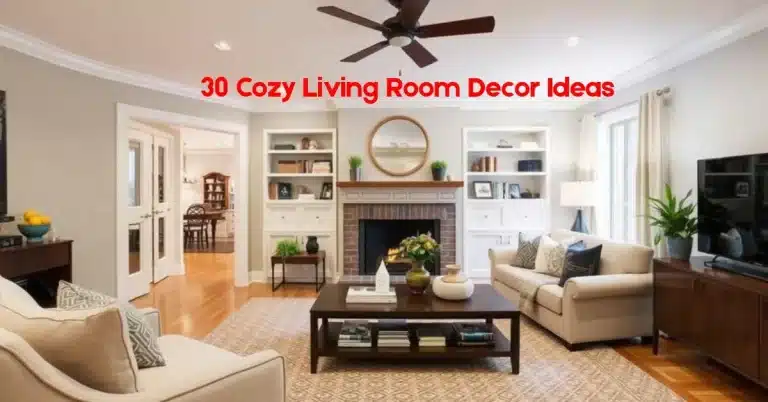
In rooms where a fireplace shares the focal wall, mounting the TV above it consolidates two features in one zone. Keep the screen bottom no higher than 55 inches from the floor to avoid neck strain. Electric fireplaces are easier to work with than gas units in tight spaces.
5. Use a TV Lift Cabinet
A TV lift cabinet hides the screen inside a piece of furniture when not in use. This is useful when the living room doubles as a guest space or home office. Units range from $800 to $2,500 depending on lift mechanism quality.
Storage and Shelving Ideas
6. Build Floating Shelves Around the TV
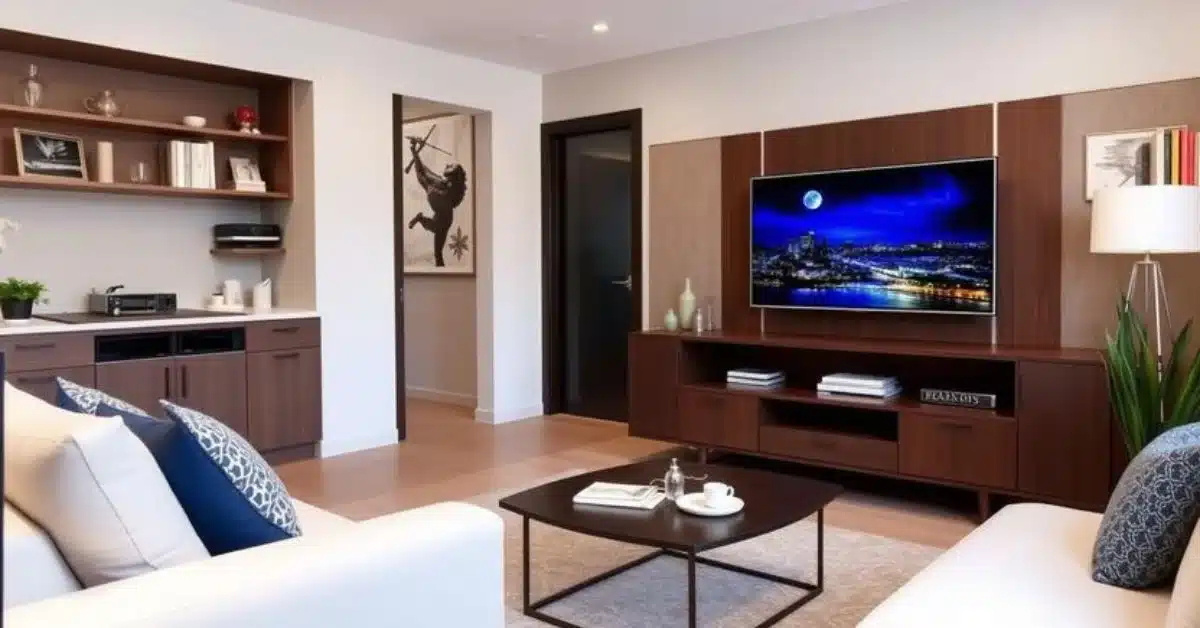
Floating shelves flanking a wall-mounted TV replace a console while adding vertical storage. Stagger shelf heights to create visual interest. Use closed baskets on lower shelves to hide cables and media equipment.
7. Install a Full-Wall Media Unit
A floor-to-ceiling built-in media wall consolidates storage, display, and the TV into one architectural element. This approach is the most space-efficient option for small rooms. Custom units cost $1,500 to $5,000; flat-pack alternatives from IKEA’s Besta system run $400 to $900.
8. Use a Narrow TV Console
If floor space allows a console, choose one under 18 inches deep and with open lower shelving rather than solid doors. Legs elevate the piece visually and make the floor feel larger. Look for consoles 48 to 60 inches wide to match a standard TV proportionally.
9. Add a Media Cabinet with Hidden Storage
Closed-door media cabinets keep equipment, remotes, and cables out of sight. Choose a cabinet at bench height (18 to 20 inches) to double as extra seating. Wicker and linen-door styles add texture without visual weight.
10. Hang a Pegboard Beside the TV Wall
A painted pegboard panel beside the TV provides flexible, rearrangeable storage for small items, remotes, and decorative objects. This works especially well in rentals where drilling is limited.
Furniture and Layout Ideas
11. Choose a Sofa with Raised Legs
Sofas with exposed legs create visual floor space by allowing light to pass underneath. In a small living room, this reduces the heaviness of large upholstered pieces. Aim for legs at least 5 inches tall.
12. Use a Loveseat Instead of a Full Sofa
A standard three-seat sofa runs 84 to 90 inches wide. A loveseat measures 52 to 60 inches. Swapping to a loveseat in rooms under 200 square feet immediately improves traffic flow and creates space for a side chair or small accent table.
13. Anchor Seating With a Small Area Rug
A rug sized 5×8 feet is the standard for small living rooms. It defines the seating area without overwhelming the floor plan. The front legs of all seating pieces should rest on the rug to connect the furniture zone visually.
14. Use Ottomans as Coffee Tables
An ottoman with a tray surface replaces a solid coffee table. It provides hidden storage inside and can be repositioned easily. Upholstered ottomans also add softness that balances hard-surfaced walls and floors.
15. Position Seating in an L-Shape Around the TV
An L-shaped arrangement seats more people in less floor space than a parallel sofa-and-loveseat setup. A sofa along one wall and a chaise or accent chairs perpendicular to it maximizes sightlines to the screen.
16. Try a Sectional with a Chaise on the Short Side
A right-arm or left-arm chaise sectional fits snugly into a corner and consolidates seating into one unit. Choose a sectional under 100 inches on its longest side for rooms under 250 square feet.
Color, Light, and Visual Space Ideas
17. Paint the TV Wall a Dark Accent Color
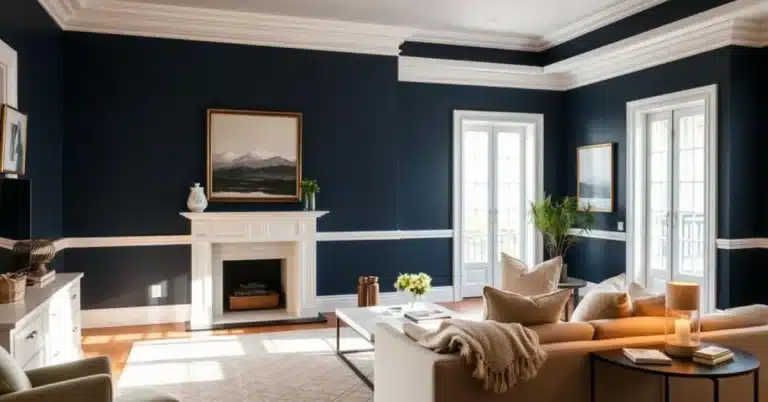
A dark accent wall behind the TV makes the screen disappear visually when off, and draws the eye intentionally when on. Deep charcoal, navy, or forest green work well. The contrast also makes the room feel deeper than it is.
18. Use Mirrors to Expand the Space
A large mirror on the wall adjacent to the TV reflects light and creates the illusion of a second room. Lean a full-length mirror or hang a 36 to 48-inch round mirror at eye level on a side wall, not directly opposite a window where glare on the TV becomes a problem.
19. Install Recessed Lighting Above the Seating Zone
Recessed ceiling lights eliminate the need for floor lamps that consume square footage. Space 4-inch cans 4 feet apart in a small room. Add dimmer switches to shift the room from bright daytime use to evening viewing without a separate lamp.
20. Use Bias Lighting Behind the TV
LED bias lighting strips mounted on the back of the TV panel reduce eye strain during viewing and add ambient depth to the wall. Kits cost $20 to $60 and connect to USB ports on most modern televisions.
21. Choose Sheer Curtains to Maximize Natural Light
Heavy drapes in a small room absorb light and reduce perceived square footage. Linen or cotton sheers maintain privacy while allowing diffused natural light to brighten the space. Hang rods close to the ceiling to make windows appear taller.
Style and Décor Ideas
22. Frame the TV as Wall Art
Samsung’s The Frame TV and similar products display artwork when the screen is off. If this is outside the budget, create a gallery wall around the TV using prints and frames that extend the screen visually into a larger composition.
23. Use Vertical Lines to Raise the Ceiling
Vertical stripes, tall narrow bookcases, or floor-to-ceiling curtains draw the eye upward and make low ceilings feel higher. This counteracts the horizontal dominance of the TV wall.
24. Keep the TV Zone Cable-Free
In-wall cable management kits ($25 to $50) route all cords through the drywall. Cable raceways painted to match the wall are a renter-friendly alternative. A clean TV wall immediately makes the room feel more intentional and less cluttered.
25. Add Plants to Soften the Technology Zone
A single large-leaf plant such as a fiddle-leaf fig, monstera, or snake plant beside or below the TV introduces organic texture that softens the hard lines of screens and mounts. Tall plants also draw the eye upward, adding perceived height.
Comparison Table: TV Placement Options for Small Living Rooms
| Placement Type | Space Saved | Cost Range | Best For | Drawback |
|---|---|---|---|---|
| Wall-mounted (flat) | High | $30–$150 | Most small rooms | Fixed position |
| Full-motion wall mount | High | $60–$300 | Corner or off-center walls | Heavier installation |
| Corner mount | High | $50–$200 | Square rooms | Limits furniture layout |
| TV lift cabinet | Medium | $800–$2,500 | Multi-use rooms | Expensive |
| Recessed in-wall | Very High | $200–$600 | Permanent installs | Requires wall work |
| Narrow console | Low | $150–$600 | Renters | Uses floor space |
| Built-in media wall | Very High | $400–$5,000 | Long-term homeowners | Cost and commitment |
Conclusion
Small Living Room Ideas with TV demand spatial awareness over decoration instinct. The most effective solutions mount the screen to free the floor, scale furniture to the actual room dimensions, and use storage that earns its space. Apply two or three of these 25 ideas in combination rather than one at a time for the most significant visual and functional improvement.
FAQ Section
What is the best TV size for a small living room?
A 43 to 55-inch TV suits most small living rooms. The ideal screen size follows a 1.5 to 2.5 times rule: multiply the viewing distance in inches by 0.535 to find the recommended diagonal screen size. At 8 feet (96 inches), a 50-inch screen is appropriate.
Where should a TV be placed in a small living room?
Mount the TV on the main focal wall, centered at seated eye level (42 to 48 inches from floor to screen center). Avoid placing it where windows create direct glare. In square rooms, a corner mount is a strong alternative.
How do you hide TV wires in a small living room?
Use an in-wall cable management kit for permanent installs or a paintable cable raceway for rentals. Both solutions route HDMI, power, and audio cables invisibly along the wall surface. Kits are available at hardware stores for $20 to $80.
Can you put a TV in a small living room without it looking cluttered?
Yes. Wall mounting, cable management, and replacing bulky consoles with floating shelves or a slim console all reduce visual clutter. Keeping surfaces around the TV mostly clear reinforces a cleaner, larger feel.
What furniture works best in a small living room with a TV?
Loveseats, two-seat sofas with raised legs, modular sectionals scaled under 100 inches, and ottomans with storage perform best. Avoid overstuffed pieces with thick arms and low bases that crowd the floor plane.
Should the TV be centered on the wall in a small room?
Ideally yes. Centering the TV creates symmetry and makes furniture placement easier. If the room is irregularly shaped or has a corner fireplace, centering may not be possible. Use a full-motion mount to compensate for off-center placement.
How high should a TV be mounted in a small living room?
Mount the TV so the center of the screen is at seated eye level, approximately 42 to 48 inches from the floor. Mounting too high causes neck strain during extended viewing. The “above the fireplace” setup often puts screens 10 to 15 inches too high.
What color should a small living room with a TV be?
Light neutrals on three walls with a deeper accent color on the TV wall is the most effective approach. Warm whites, soft greiges, and pale sage greens expand space visually. The dark TV wall creates depth and prevents the screen from dominating the room when off.

As an admin, with a passion for transforming spaces and a sharp eye for design trends, I created Interior Design Style Quiz to help homeowners make confident, informed decisions about their homes from the curb all the way inside.