Home Decor Fabric: Types, Uses & How to Choose the Best
Home decor fabric is any textile used to furnish, cover, or accessorize interior spaces including upholstery, drapery, pillows, and slipcovers. The most common types include cotton, linen, polyester, velvet, chenille, and outdoor performance fabrics. Choosing the right home decor fabric depends on durability needs, sun exposure, cleaning requirements, and room function. Prices range from $3 to $60+ per yard depending on fiber content and weave. Home decor fabrics differ from fashion fabrics in weight, width (typically 54″–60″), and performance-based finishing treatments.Key Takeaways
- Home decor fabric is heavier and wider than apparel fabric typically 54″–60″ wide versus 44″–45″ for garment fabric.
- Cotton and linen are best for breathability and natural texture; polyester and olefin for durability and budget projects.
- Upholstery fabric needs a double rub count of at least 15,000 for light residential use and 30,000+ for heavy daily use.
- Pattern repeat affects yardage always buy 10–15% extra to account for matching at seams.
- Performance fabrics like Sunbrella and Crypton resist stains, moisture, and UV fading for demanding environments.
- Cost ranges: budget ($3–$8/yd), mid-range ($10–$25/yd), premium ($30–$60+/yd).
- The finish (preshrunk, Scotchgard, flame-retardant) matters as much as fiber content for home use.
Home Decor Fabric: Types, Uses & How to Choose the Best
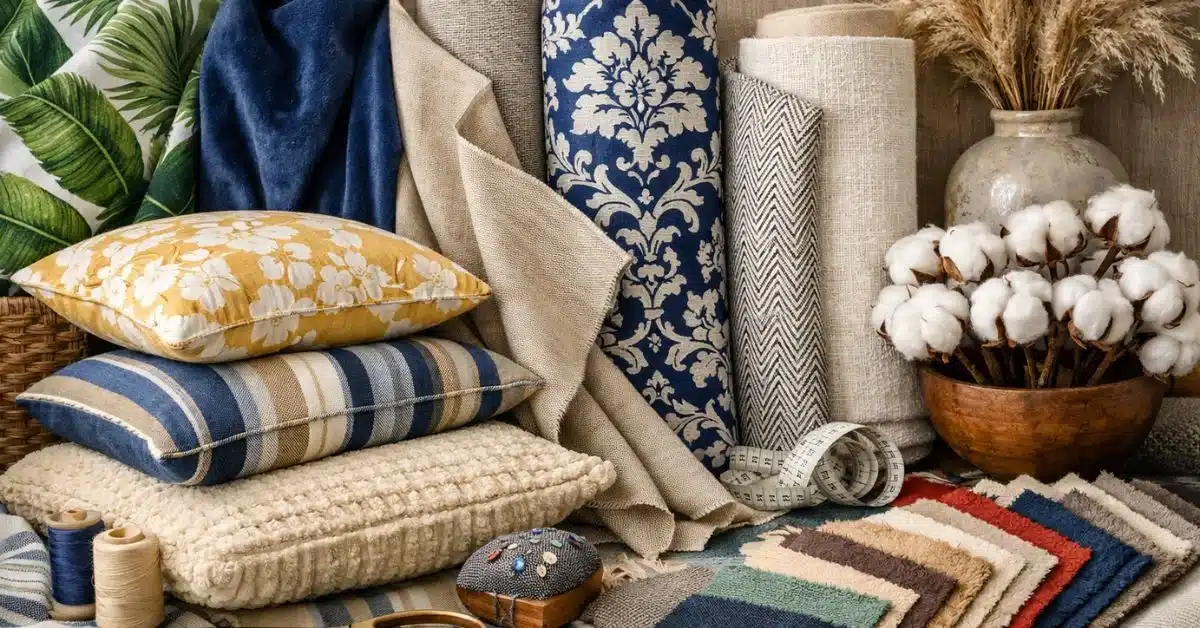
Home decor fabric is any textile designed specifically for use inside the home on furniture, windows, walls, and accessories. Unlike garment fabric, home decor fabric is engineered for durability, cleanability, and dimensional stability. Whether you’re reupholstering a sofa, sewing custom drapes, or making throw pillows, the fabric you choose determines both the look and the lifespan of your project.
What Is Home Decor Fabric?
Home decor fabric is a category of textile manufactured for interior furnishing applications rather than clothing. It is typically woven at a heavier weight than fashion fabric and sold in widths of 54″ to 60″ sometimes up to 118″ for sheeting or specialty drapery panels.
These fabrics are treated at the mill level for specific performance characteristics: resistance to fading, moisture, abrasion, or flame. This sets them apart structurally and chemically from fabrics sold in the garment section of fabric stores.
Types of Home Decor Fabric
Each fabric type has a different fiber composition, hand feel, and performance profile. Matching the fabric type to the end use is the single most important decision in any home decor project.
Cotton
Cotton is the most widely used home decor fabric. It breathes well, takes dye evenly, and is easy to sew. Cotton duck and cotton canvas are common choices for slipcovers and casual upholstery. The main drawback: it wrinkles easily and fades with direct sun exposure unless treated with a UV-resistant finish.
Linen
Linen is made from flax fibers and has a natural, textured appearance. It’s stronger than cotton and becomes softer with each wash. Linen is a popular choice for drapery and decorative pillow covers. It wrinkles more than cotton and is best used in low-traffic decorative applications.
Polyester and Polyester Blends
Polyester is the most durable synthetic option for home decor. It resists wrinkles, fading, and shrinkage. Polyester blends cotton-poly, linen-poly combine the aesthetic of natural fibers with the performance of synthetics. Most budget upholstery fabrics are polyester-based.
Velvet
Velvet is a cut-pile fabric with a distinctive soft sheen. It can be made from cotton, silk, polyester, or mohair. Crushed velvet and performance velvet are popular for accent chairs and headboards. Velvet shows pressure marks easily and requires careful cleaning most varieties should be dry-cleaned or spot-cleaned only.
Chenille
Chenille has a fuzzy, velvety texture created by a specialized yarn structure. It’s commonly used in sofa upholstery, blankets, and accent pillows. Chenille is comfortable and visually warm, but the pile can flatten over time in high-traffic seating. Look for chenille with a tight, dense weave for better durability.
Outdoor and Performance Fabrics
Performance fabrics like Sunbrella (acrylic-based) and Crypton (proprietary finish) are engineered for heavy use. Sunbrella is UV-resistant, mold-resistant, and fade-proof originally designed for marine applications. Crypton resists stains, moisture, and bacteria. Both cost significantly more than standard upholstery fabric but deliver multi-year durability in demanding environments.
Jacquard and Brocade
Jacquard is a weave method not a fiber that creates intricate woven patterns directly in the textile structure. Brocade is a type of jacquard with raised, multi-colored designs. These are premium options for formal drapery, decorative pillows, and accent furniture. Pattern complexity increases cost and requires careful cutting to match at seams.
Home Decor Fabric Comparison Table
| Fabric | Best For | Durability | Care | Avg. Cost/Yd | Key Drawback |
|---|---|---|---|---|---|
| Cotton | Slipcovers, pillows | Moderate | Machine wash | $5–$18 | Fades in sun |
| Linen | Drapes, pillows | Moderate | Hand wash/dry clean | $8–$25 | Wrinkles easily |
| Polyester | Upholstery, drapes | High | Machine wash | $4–$15 | Less breathable |
| Velvet | Accent chairs, headboards | Moderate | Dry clean | $15–$45 | Shows pressure marks |
| Chenille | Sofas, throws | Moderate–High | Spot clean | $10–$30 | Pile flattens |
| Sunbrella | Outdoor/heavy use | Very High | Bleach-safe | $20–$55 | Higher cost |
| Jacquard/Brocade | Formal drapes, pillows | High | Dry clean | $18–$60+ | Pattern matching cost |
How to Choose Home Decor Fabric by Room
Room function should drive fabric selection. A family room sofa needs a completely different fabric than a formal dining chair or a bedroom curtain panel.
Living Room
Prioritize durability and cleanability. For sofas and sectionals, look for fabrics with a double rub count of at least 30,000 for heavy daily use. Microfiber, performance velvet, and tightly woven polyester blends are the most practical choices. Avoid silk or loosely woven linens in rooms with children or pets.
Bedroom
Softness and light control matter most here. For drapery, choose lined linen, velvet, or blackout-lined polyester panels. For upholstered headboards, cotton velvet or linen blends work well since bedroom furniture sees far less friction than living room seating.
Dining Room
Chair seats face food spills and heavy use. Performance fabrics or tightly woven cotton with a stain-resistant finish are the safest choices. Pattern direction matters too seat fabric should have the pattern running vertically. Railroaded fabric can resolve this on tight seat cushions without adding seams.
Outdoor Spaces
Only use fabrics rated for outdoor use. Sunbrella and similar solution-dyed acrylic fabrics are the industry standard. They resist mold, mildew, and UV fading, and can typically be cleaned with a diluted bleach solution without damage to the fiber or color.
Understanding Fabric Weight and Weave for Home Use
Fabric weight is measured in ounces per yard (oz/yd) or grams per square meter (GSM). For upholstery, fabrics under 10 oz/yd are generally too light for seating surfaces. Drapery fabric can be lighter but benefits from lining to improve drape, thermal performance, and UV protection.
Weave structure directly affects durability. Plain weaves are durable but can snag. Twill weaves are stronger and resist abrasion better. Cut-pile weaves like velvet and chenille are softer but more vulnerable to crushing and snagging over time.
What Is Double Rub Count and Why It Matters
Double rub count measures abrasion resistance using the Wyzenbeek or Martindale test. One “double rub” simulates a person sitting down and standing up once. Industry benchmarks:
- Under 9,000: Decorative use only (pillows, drapery)
- 9,000–15,000: Light residential use (guest rooms, low-traffic seating)
- 15,000–30,000: General residential use (family living rooms)
- 30,000+: Heavy residential or light commercial use
- 100,000+: Contract/commercial grade (offices, hospitality)
How Much Home Decor Fabric Do You Need?
Yardage depends on the project type, fabric width, and pattern repeat. General estimates for standard 54″-wide fabric:
- Standard 3-seat sofa (no pattern): 14–18 yards
- Armchair: 5–7 yards
- Pair of curtain panels (84″ long): 6–8 yards
- Throw pillow cover (18″x18″): 0.5–0.75 yards
- Standard square ottoman: 2–3 yards
Always add 10–15% for cutting waste and seam allowance. For patterned fabric, calculate extra based on the repeat size a 24″ repeat on a sofa can add 3–5 yards to the total.
Where to Buy Home Decor Fabric in the U.S.
Home decor fabric is available at national chains (JOANN, Mood Fabrics), online retailers (Fabric.com, Spoonflower, Etsy), wholesale fabric warehouses, and specialty upholstery suppliers. For large projects, buying directly from a fabric wholesaler or mill outlet can reduce cost significantly.
When buying online, always order a swatch before purchasing full yardage. Color calibration varies between screens and printed material what appears taupe on a monitor may look gray or beige in person.
Conclusion
Choosing the right home decor fabric comes down to matching fiber, weave, and finish to the specific demands of each application. Upholstery needs high abrasion resistance. Drapery needs drape weight and UV protection. Outdoor fabric must resist moisture and fading.
Understanding the practical specifications — double rub count, fabric weight, pattern repeat removes the guesswork and prevents costly mistakes. Start with the room’s function, narrow by durability requirement and cleaning preference, then finalize by budget. Sampling before committing to full yardage is always the right call.
FAQs
What is the difference between home decor fabric and regular fabric?
Home decor fabric is heavier, wider (54″–60″ vs 44″–45″ for apparel), and treated for durability. It’s designed for upholstery, drapery, and furnishing not garment construction. The weave, finish, and fiber specs are engineered for furniture wear rather than body movement.
What fabric is best for upholstering a couch?
Performance microfiber, solution-dyed acrylic (Sunbrella indoor versions), tightly woven polyester blend, and Crypton-treated fabric are the top choices. All offer high double rub counts and easy cleaning. For households with pets or children, Crypton and performance velvet are the most forgiving options.
How do I know if fabric is suitable for outdoor use?
Look for fabrics specifically labeled for outdoor or UV-resistant use. Sunbrella and solution-dyed acrylics are the benchmark. Standard cotton, linen, or polyester even in bright colors will fade, mildew, or degrade with direct sun and moisture exposure within one season.
What does “railroaded” fabric mean?
Railroaded fabric has its pattern running horizontally (perpendicular to the selvage) rather than vertically. This allows upholsterers to cover wide furniture pieces without seams. It’s especially useful for sofas, banquettes, and ottomans where vertical pattern placement would require visible seaming.
Can I use drapery fabric for upholstery?
Not usually. Drapery fabric is lighter and not woven to withstand friction or compression. Using it on seating will cause premature wear, sagging, or pilling. For anything that gets sat on daily, use fabric with an upholstery-rated double rub count.

As an admin, with a passion for transforming spaces and a sharp eye for design trends, I created Interior Design Style Quiz to help homeowners make confident, informed decisions about their homes from the curb all the way inside.