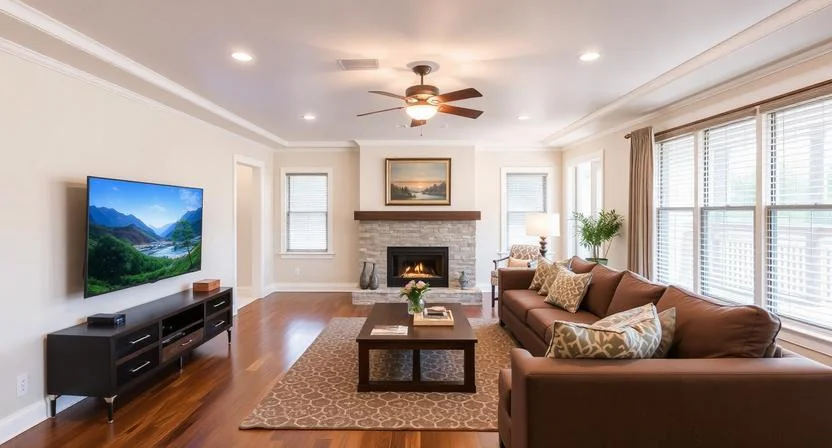
Cozy vs. Cold? Long Living Room ideas with TV
The best layout divides the Long Living Room ideas with TV into distinct functional zones while maintaining a clear sightline to the television. Most designers recommend creating a primary TV viewing zone at one end and a secondary zone (reading nook, dining area, or conversation pit) at the other.
Place your TV on the shorter end wall and arrange seating perpendicular to the long axis of the room. This configuration counteracts the “bowling alley” effect and makes the space feel more square and inviting.
Where Should You Place the TV in a Long Living Room?
Option 1: TV on the Short Wall
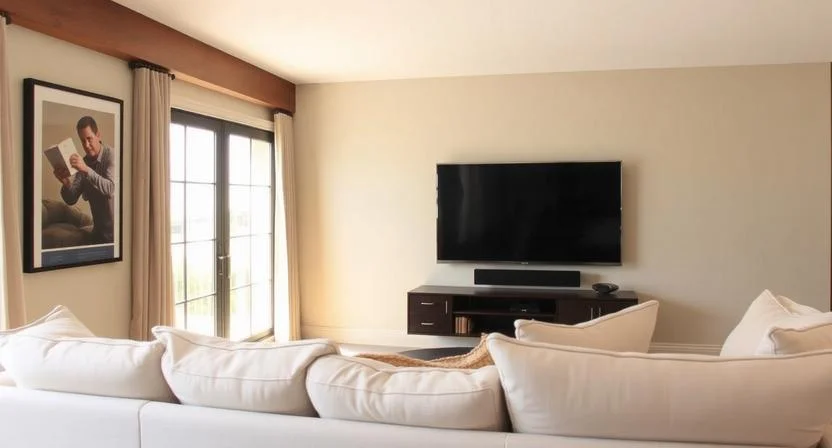
Mounting the television on one of the short end walls is the most effective solution for rectangular spaces. This placement naturally creates width rather than emphasizing length. Position the sofa directly across from the screen at an appropriate viewing distance.
Best for: Rooms where you want a dedicated, cozy media area and don’t need to divide the space further.
Option 2: TV on the Long Wall
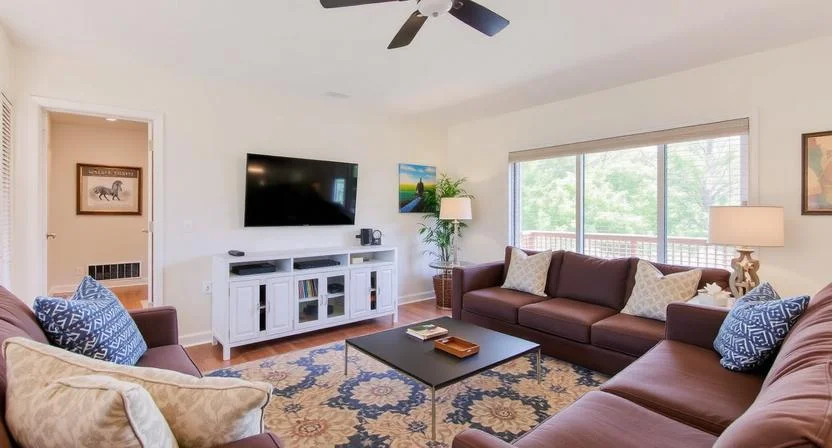
Placing the TV on one of the long walls keeps viewing distance comfortable and allows you to flank it with storage. A low media console helps maintain sightlines and can double as extra seating during gatherings.
Best for: Narrow rooms where the short walls are too close together for comfortable viewing, or when you want to incorporate extensive storage.
Option 3: Corner TV Placement
Positioning the TV in a corner opens up surprising possibilities for furniture arrangement in tight rectangular spaces. Use a corner stand or swivel mount to ensure optimal viewing angles from various seating positions.
Best for: Very narrow rooms where wall space is limited, or when you want to maximize floor space in the center.
Option 4: TV Over the Fireplace
In rooms with a fireplace, mounting the TV above the mantel creates a stunning dual focal point. Position the seating area to face both elements, allowing comfortable viewing of the TV while enjoying the fireplace.
Best for: Rooms with a central fireplace where wall space is limited, provided the mantel height allows ergonomic viewing.
What Furniture Works Best in a Long Living Room with a TV?
Choose low-profile, slim-depth furniture that preserves sightlines and doesn’t overwhelm the space.
Sofa Selection
Opt for a long, low-profile sofa or a sectional with one short chaise these maintain flow and offer comfortable seating without making the room feel cramped. Slim-depth sofas (80–90 cm deep) work better than oversized sectionals. Lower backs (under 85 cm) help preserve sightlines to the TV.
Coffee Tables
Choose narrow coffee tables (under 50 cm wide) to keep pathways clear. Round or oval shapes can improve traffic flow in tight spaces.
Additional Seating
Use armchairs, ottomans, or benches that can be easily moved or tucked away when not in use. Modular seating offers flexibility rearrange pieces to open up a path or create a larger conversation group.
How Do You Divide a Long Living Room into Zones?
Use area rugs, furniture placement, and low dividers to create distinct zones without building walls.
Zone 1: TV Viewing Area
Anchor this zone with an area rug placed under the main seating. Position the sofa and chairs to face the TV, creating a clear media area. A low console or media unit beneath the TV provides storage and visual grounding.
Zone 2: Secondary Space
At the opposite end, create a reading nook with an armchair and floor lamp, a compact dining area, or a home office setup. A narrow console table or low bookshelf placed midway can subtly split the room.
Zone 3: Circulation Path
Maintain a clear walking path at least 80–90 cm wide along one side of the room. This prevents the space from feeling cramped and ensures comfortable traffic flow.
What Is the Ideal TV Viewing Distance for a Long Living Room?
Multiply your TV’s diagonal screen size by 1.5 to 2.5 to find the optimal viewing distance in inches.
| TV Size | Minimum Distance (1.5x) | Maximum Distance (2.5x) |
|---|---|---|
| 55-inch | 82.5 inches (6.9 ft) | 137.5 inches (11.5 ft) |
| 65-inch | 97.5 inches (8.1 ft) | 162.5 inches (13.5 ft) |
| 75-inch | 112.5 inches (9.4 ft) | 187.5 inches (15.6 ft) |
| 85-inch | 127.5 inches (10.6 ft) | 212.5 inches (17.7 ft) |
For 4K TVs, you can sit closer—divide the viewing distance in inches by 1.5 to determine ideal screen size. For Full HD TVs, divide by 2.5.
What Is the Correct TV Mounting Height?
The center of the TV screen should sit 42–48 inches from the floor, aligning with seated eye level.
Mounting the TV too high creates an uncomfortable upward viewing angle, especially during long viewing sessions. If you have a fireplace mantel, ensure the TV isn’t placed so high that it strains your neck.
Pro tip: Measure from the floor to your eye level while seated on your sofa—this is your ideal screen center height.
How Can Lighting Improve a Long Living Room with a TV?
Layer ambient, task, and accent lighting to reduce glare, define zones, and create depth.
Ambient Lighting
Use dimmable overhead fixtures or track lighting that follows the room’s length. This provides general illumination without harsh shadows.
Task Lighting
Add floor lamps near seating areas and table lamps on consoles for reading or activities that don’t require the TV.
Accent Lighting
Backlighting behind the TV reduces eye strain and creates a cinematic feel. Wall sconces or picture lights can highlight artwork and add depth.
Glare Reduction
Position the TV on a wall perpendicular to windows to minimize glare. Use adjustable blinds, blackout curtains, or matte-finish TV screens to control reflections.
What Are the Most Common Design Mistakes in Long Living Rooms?
Pushing furniture against walls, relying solely on overhead lighting, ignoring walkways, and choosing oversized furniture are the top mistakes.
Mistake 1: Pushing All Furniture Against the Walls
This creates a “bowling alley” effect and wastes the room’s potential. Instead, float furniture away from walls to create intimate seating zones.
Mistake 2: Relying Solely on Overhead Lighting
Overhead lighting alone makes a long room feel flat and uninviting. Layer different light sources for warmth and depth.
Mistake 3: Ignoring Walkways
Blocking natural pathways with furniture makes the room feel cramped and difficult to navigate. Keep paths clear and at least 80–90 cm wide.
Mistake 4: Choosing Oversized Furniture
Large sectionals and bulky coffee tables overwhelm narrow spaces. Choose slim, scaled pieces that respect the room’s proportions.
Mistake 5: Poor TV Placement
Placing the TV too high, too far, or in a location that creates glare ruins the viewing experience. Follow the height and distance guidelines above.
Comparison Table: Long Living Room TV Layout Options
| Layout Type | Best For | Pros | Cons | Ideal Room Width |
|---|---|---|---|---|
| TV on Short Wall | Creating a cozy focal point | Counteracts bowling alley effect; feels more square | May limit seating capacity | 12–16 ft |
| TV on Long Wall | Flexible viewing distances | Comfortable viewing; allows flanking storage | Can emphasize length | 10–14 ft |
| Corner TV | Very narrow rooms | Saves wall space; maximizes floor area | Limited screen size options | 8–12 ft |
| TV Over Fireplace | Rooms with existing fireplace | Dual focal point; space-efficient | May be too high for comfortable viewing | 12–18 ft |
| Floating TV Wall | Modern, minimalist aesthetics | Clean sightlines; frees floor space | Requires cable management | 10–16 ft |
| Zoned Layout | Multi-purpose rooms | Creates functional areas; maximizes space | Needs careful visual cohesion | 14–20 ft |
What Color Schemes Work Best in Long Living Rooms?
Light colors make the space feel more open, while accent walls add visual interest without overwhelming the room.
- Walls: Whites, soft grays, and pastels help the room feel larger and brighter
- Accent wall: A single bold wall (behind the TV or at the far end) creates a focal point without closing in the space
- Furniture: Consistent, light-toned upholstery maintains visual flow
- Rugs: Use rugs to define zones choose pieces that share a color family but differ in pattern or texture
How Do You Decorate Around the TV in a Long Living Room?
Integrate the TV into a gallery wall, use built-in shelving, or flank it with plants and decorative objects to reduce its visual dominance.
Gallery Wall Approach
Design a gallery wall around the TV to integrate it into the decor rather than making it the obvious focal point. This adds personality and reduces the visual dominance of the screen.
Built-in Shelving
Frame the TV with backlit built-ins that offer hidden storage for remotes and media equipment. Soft lighting adds ambiance and reduces eye strain in dark rooms.
Flanking Decor
Place tall plants, floor lamps, or vertical artwork on either side of the TV to balance the composition.
What Budget Options Exist for Long Living Room TV Layouts?
| Budget Level | Solutions | Estimated Cost |
|---|---|---|
| Low | Area rugs, floor lamps, rearranging existing furniture | $100–$500 |
| Medium | New media console, slim-profile sofa, wall mount | $500–$2,500 |
| High | Built-in shelving, custom cabinetry, recessed TV niche | $2,500–$10,000+ |
| Premium | Full wall media system with integrated lighting and storage | $10,000+ |
Low-budget tip: Use a simple area rug and reposition your existing furniture to create zones before buying anything new.
Medium-budget tip: Invest in a wall mount and low-profile media console these two changes make the biggest visual impact.
High-budget tip: Built-ins add resale appeal and tailored storage, especially if you plan to stay in the home.
Conclusion
Designing a Long Living Room ideas with TV doesn’t have to be a challenge. The key is strategic zoning, proper TV placement, and scaled furniture. Start by identifying your primary TV viewing area, then create secondary zones using rugs, lighting, and furniture arrangement. Mount your TV at eye level (42–48 inches from the floor) and maintain a viewing distance of 1.5–2.5 times the diagonal screen size. Choose low-profile, slim-depth furniture and keep walkways clear. With these principles, your long living room can become a functional, stylish, and inviting space for both entertainment and relaxation.
FAQs
Q1: What is the best layout for a long narrow living room with a TV?
Arrange seating along the longer walls and place the TV on the shorter end wall to improve sightlines and traffic flow.
Q2: How high should a TV be mounted in a long living room?
The center of the screen should sit 42–48 inches from the floor, aligning with seated eye level.
Q3: What is the ideal viewing distance for a TV in a long living room?
Multiply the diagonal screen size by 1.5 to 2.5 for example, a 65-inch TV works best at 8 to 10.5 feet away.
Q4: Should the TV go on the short wall or long wall in a long living room?

As an admin, with a passion for transforming spaces and a sharp eye for design trends, I created Interior Design Style Quiz to help homeowners make confident, informed decisions about their homes from the curb all the way inside.