Luxurious Sculptures for Home Decor That Demand Attention
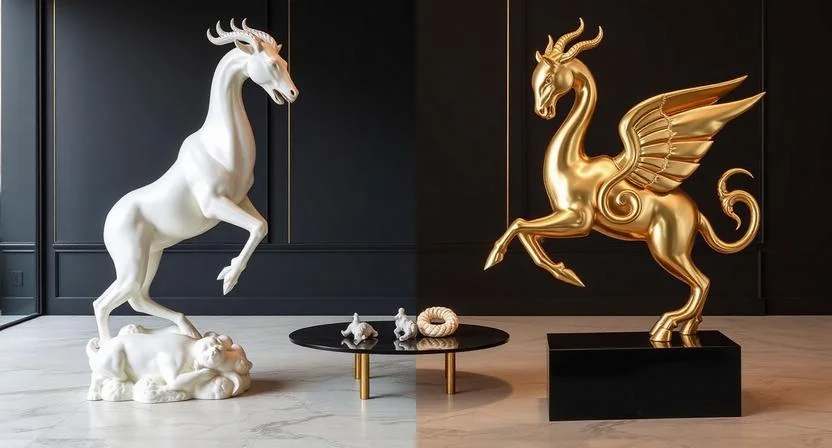
Sculptures for home decor are freestanding or tabletop art objects that bring three-dimensional shape, texture, and shadow into a room, something flat art and prints cannot do. They work as focal points on small living room decor surfaces, shelving, and entryways, and they matter because a room without dimensional objects tends to feel visually flat regardless of how good the furniture is.
Interior designers use sculptural decor the same way they use lighting: to create depth and draw the eye across a space rather than letting it land flat on walls and upholstery.
What Counts as a Sculptures for Home Decor?
A home decor sculpture is any three-dimensional decorative object, abstract, figurative, or organic, displayed for its form rather than its function. This excludes purely functional objects like vases or bowls, though the line blurs with sculptural vases.
Common categories include:
- Abstract geometric pieces — angular or curved shapes with no literal subject
- Organic forms — shapes inspired by nature, driftwood, stone, or bone
- Figurative sculptures — human or animal figures, from realistic to stylized
- Kinetic sculptures — pieces with moving parts, often wind- or motor-driven
- Wall-mounted sculptural decor — dimensional pieces that hang rather than sit
Why Sculptural Decor Matters in a Room
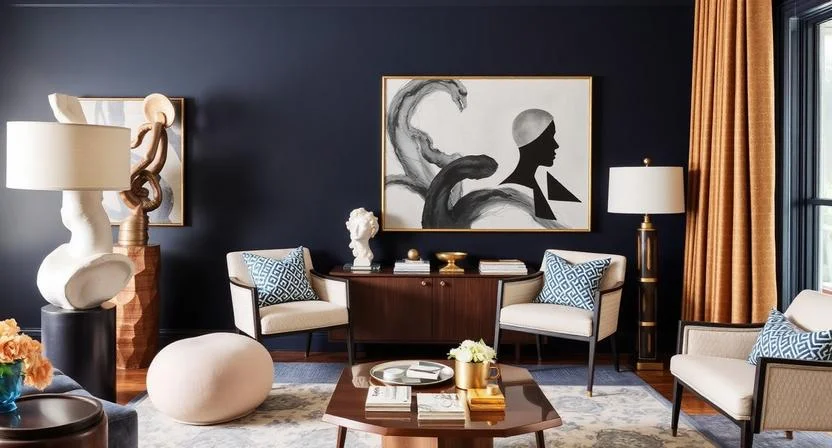
Sculptures matter because they solve a problem flat decor cannot: they cast real shadow and change appearance depending on viewing angle and light. A single well-placed sculpture can do the work of three flat accessories.
Designers frequently cite the “rule of three planes”, floor, tabletop, and wall, as the framework for a fully layered room. Sculpture is usually the only category of object that can occupy all three.
Sculpture Materials Compared
Metal and resin sculptures cost less and resist damage better; stone and ceramic cost more but hold value and patina beautifully over time.
| Material | Typical Cost Range | Durability | Care Level | Best For |
|---|---|---|---|---|
| Metal (brass, bronze, steel) | $80–$400 | High | Low (occasional polish) | Modern, industrial styles |
| Stone / Marble | $150–$600+ | Very high | Medium (avoid acidic cleaners) | Traditional, minimalist |
| Ceramic | $40–$250 | Low to medium (fragile) | Medium (gentle dusting) | Coastal, bohemian styles |
| Wood | $60–$300 | Medium (avoid direct sun) | Low | Rustic, farmhouse, mountain styles |
| Resin / Mixed media | $30–$150 | Medium | Low | Budget-friendly, trend pieces |
How to Choose the Right Sculpture Size
Match sculpture size to surface size, small pieces (6–12 inches) for side tables and shelves, medium (12–18 inches) for coffee tables and consoles, large (18–24+ inches) for substantial surfaces or the floor.
A sculpture that’s too small on a large surface reads as clutter; one that’s too large overwhelms the vignette. As a working rule, a tabletop sculpture should occupy no more than one-third of the surface’s visible width when styled alongside other objects.
Floor sculptures should generally start at 24 inches to register as intentional statement pieces rather than an afterthought in a corner. This pairing works especially well in small studio apartment layouts where vertical objects add height without consuming floor space.
Where to Place Sculptures by Room
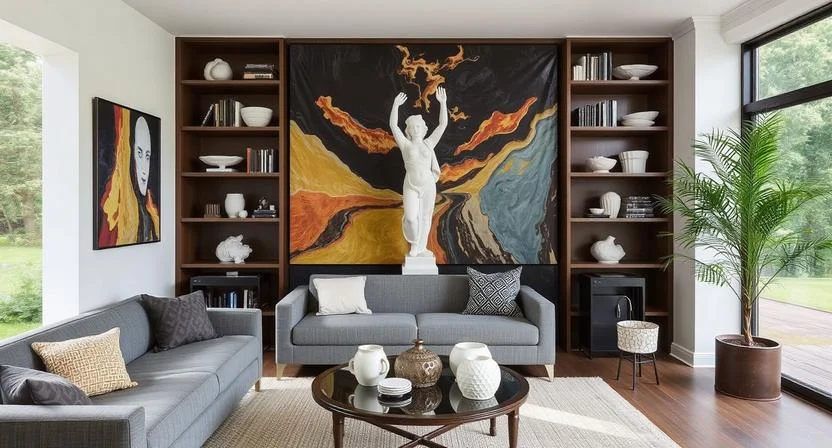
Living Room
Coffee tables, console tables, bookshelves, and mantels are the primary spots. Pair a medium sculpture with books and a bold internal link candle holder set to build a layered vignette.
Bedroom
Nightstands and dressers work best with smaller pieces (6–10 inches) since bedroom surfaces are typically shallower.
Entryway
A floor-standing sculpture beside a console table creates an immediate focal point without requiring wall space.
Outdoor Spaces
Weather-resistant materials, cast stone, treated metal, or resin, are required. Ceramic and untreated wood degrade quickly outdoors.
Indoor vs Outdoor Sculptures: Key Differences
Indoor sculptures prioritize material variety and finish; outdoor sculptures prioritize weather resistance above style.
| Factor | Indoor Sculptures | Outdoor Sculptures |
|---|---|---|
| Material priority | Aesthetic finish | UV and moisture resistance |
| Common materials | Ceramic, resin, wood, glass | Cast stone, treated metal, fiberglass |
| Maintenance | Dusting, occasional polish | Sealing, seasonal covering |
| Cost | Lower on average | Higher due to weatherproofing |
How to Style Multiple Sculptures Together
Group in odd numbers, vary height by roughly 30 percent between pieces, and mix at least two materials or textures per vignette.
- Start with an anchor piece, usually the largest.
- Add a medium piece offset in height, not lined up evenly.
- Add a small piece or stack of books to fill negative space.
- Leave visible gaps; overcrowded vignettes read as clutter, not curation.
- Rotate pieces seasonally to keep the arrangement feeling intentional rather than static.
What Do Sculptures Cost? A Realistic Budget Guide
Budget $30–$150 for small accent pieces, $150–$500 for mid-size statement sculptures, and $500 or more for artisan, marble, or large floor sculptures.
- Entry-level ($30–$150): Resin or small metal tabletop pieces
- Mid-range ($150–$500): Bronze, ceramic sets, or 18–24 inch statement pieces
- High-end ($500+): Hand-carved stone, artisan bronze, or large floor sculptures
Sculptures and Design Style Compatibility
Abstract geometric sculptures suit modern and minimalist interiors, organic forms fit coastal and bohemian rooms, and figurative or carved wood pieces complement rustic and traditional spaces. Metallic finishes bridge modern and transitional styles most easily, making them a safe default when a room mixes aesthetics.
Conclusion
Sculptures for Home Decor dimensional interest that wall art and soft furnishings cannot replicate on their own. Choosing the right size, material, and placement, and following a simple grouping formula, turns a single object into a designed focal point rather than clutter. Match material to location first (indoor versus outdoor), then size to surface, and the rest of the styling follows naturally.
FAQs
What is the best material for indoor sculptures?
Ceramic, resin, and metal are the most popular indoor materials because they offer varied finishes without weatherproofing costs.
How many sculptures should I put in one vignette?
Group sculptures in odd numbers, typically three, with varied heights for visual balance.
Can sculptures go outside?
Yes, but only in weather-resistant materials like cast stone, treated metal, or fiberglass; ceramic and untreated wood will degrade outdoors.
How big should a floor sculpture be?
Floor sculptures should generally be 24 inches or taller to register as an intentional statement piece.
Do sculptures work in small rooms?
Yes, a single vertical sculpture adds height and focal interest without consuming floor space, making it ideal for small rooms.

As an admin, with a passion for transforming spaces and a sharp eye for design trends, I created Interior Design Style Quiz to help homeowners make confident, informed decisions about their homes from the curb all the way inside.