Stop Overthinking! Simple Small Living Room Ideas With TV
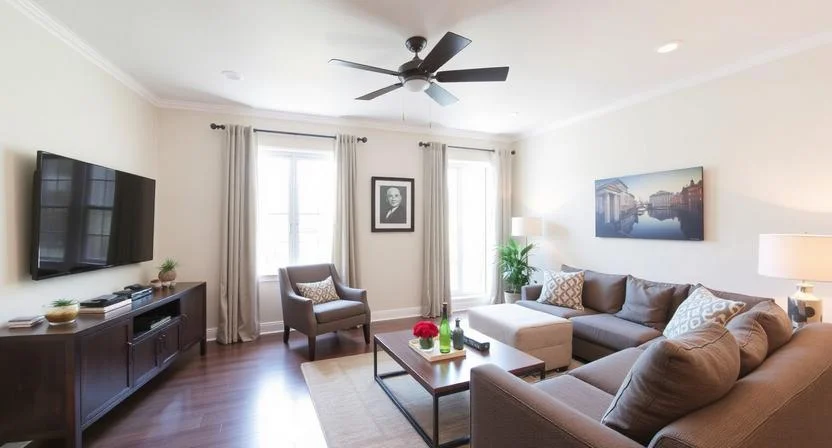
A Simple Small Living Room Ideas With TV works best when the screen is wall-mounted or placed on a low-profile floating unit, the sofa is replaced with a loveseat to maintain clearance, and the TV wall uses a dark accent color to absorb the screen visually. Keep furniture scaled to the room (32–50″ screens suit rooms under 12 ft), use transparent or glass tables to preserve sightlines, and add floating shelves for storage without bulk.
Simple Small Living Room Ideas With TV
Simple small living room ideas with a TV start with one rule: the screen should feel like it belongs, not like it’s the problem. In a room under 200 square feet, every decision where the TV goes, what furniture surrounds it, how the walls are finished affects how spacious and livable the space feels. These ideas cover layout, furniture, storage, and wall treatments, with specifics on TV sizing, renter options, and budget ranges.
What Is the Best TV Placement in a Small Living Room?
Mount the TV on the wall opposite the primary seating, centered at eye level (roughly 42–48″ from floor to screen center) with at least 7 feet of viewing distance.
Wall-mounting is the most effective placement strategy for compact rooms. It eliminates the media console footprint, which typically runs 48–60 inches wide and 16–20 inches deep. That recovered floor space changes how furniture can be arranged. According to Houzz’s 2023 home design report, floating wall-mounted setups can visually expand a room’s perceived size by up to 15%.
Avoid placing the TV in front of a window. Backlight glare creates eye strain and reduces contrast to near-unusable levels. If the only available wall faces a window, use blackout or light-filtering curtains and a matte-finish screen.
Corner placement works well in narrow rooms where no single wall provides adequate viewing distance. A swivel TV mount allows flexible angles without rearranging furniture.
How to Choose the Right TV Size for a Small Living Room
Use the 1.5× rule multiply your screen diagonal by 1.5 to get the minimum viewing distance in feet. For most small living rooms, a 43–50″ screen is the practical sweet spot.
| TV Size | Min. Viewing Distance | Max. Viewing Distance | Best Room Depth |
|---|---|---|---|
| 32″ | 4 ft | 6.5 ft | Under 10 ft |
| 43″ | 5.5 ft | 9 ft | 10–12 ft |
| 50″ | 6.5 ft | 10 ft | 12–14 ft |
| 55″ | 7 ft | 11.5 ft | 13–15 ft |
| 65″ | 8 ft | 13.5 ft | 14 ft+ |
A 65″ screen in a 10-foot living room creates visual fatigue you’re constantly moving your eyes across the screen rather than taking it in as a whole. The SMPTE (Society of Motion Picture and Television Engineers) recommends a 30-degree viewing angle for comfort, which translates to the distances above.
For 4K TVs, the minimum effective viewing distance shrinks because pixel density is higher. You can sit closer roughly 1× the diagonal without seeing individual pixels.
10 Simple Small Living Room Ideas With TV
1. Wall-Mount the TV With a Swivel Arm
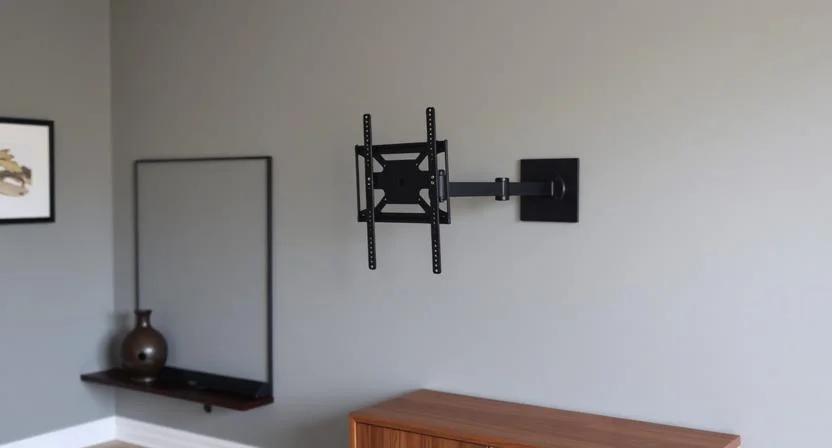
Wall-mounting saves the floor footprint of a media console and lets you angle the screen toward any seating position. A full-motion swivel arm costs $40–$150 and works on standard drywall with stud anchors. Run cables through an in-wall cable channel ($25–$60) or a surface-mount raceway for a clean finish.
For renters, no-drill TV mounts using tension floor-to-ceiling poles are available from $80–$200 and support screens up to 55″.
2. Use Floating Shelves on Either Side of the TV
Open shelving flanking the TV creates a built-in look without the cost or permanence of custom cabinetry. Keep no more than two-thirds of each shelf filled a crowded shelf plus a TV reads as visual chaos. [Explore our guide to living room cabinet storage ideas] for shelf-styling ideas that balance decor and function.
Floating shelves cost $15–$60 per shelf and install in under an hour with basic wall anchors.
3. Paint the TV Wall Dark
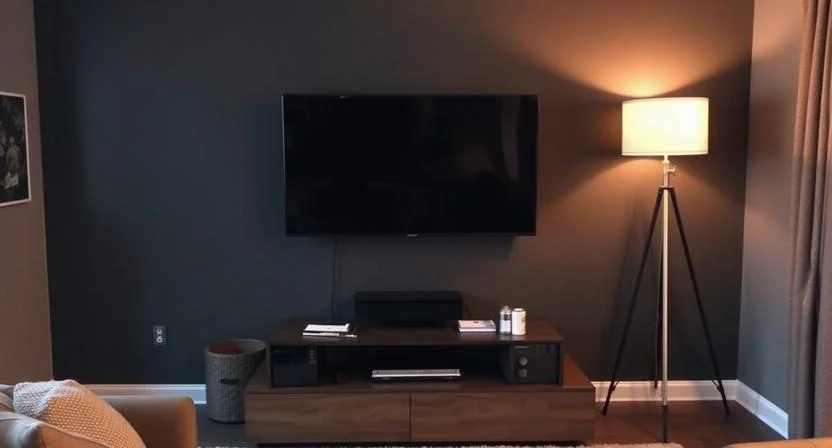
A deep accent wall charcoal, navy, forest green, or espresso makes the black TV screen absorb into the background when off and reduces distracting contrast when on. Designers at firms like Sissy + Marley and Brexton Cole Interiors use this technique routinely in compact media rooms.
The rest of the room stays light. High contrast (dark wall, light furniture) creates depth and makes the room read as larger than a uniformly dark palette would.
4. Replace the Sofa With a Loveseat
A standard three-seat sofa runs 84–96 inches wide and 34–38 inches deep. A loveseat runs 52–64 inches wide and 30–34 inches deep saving up to 18 inches of floor depth. Pair a loveseat with one or two accent chairs to maintain seating capacity without the bulk. [See our full guide to swivel chairs for living rooms] a swivel accent chair adds flexible viewing angles in tight corners.
L-shaped sectionals with narrow arms work in corner configurations and can actually provide more seats than a standard sofa while using corner space that would otherwise sit empty.
5. Use a Glass or Acrylic Coffee Table
Transparent surfaces take up zero visual space. A glass or acrylic coffee table allows sightlines to pass through it, making the floor area visible and the room feel open. In a 2021 interior design case study published by Architectural Digest, a designer noted that swapping a wood coffee table for an acrylic alternative made a 180-square-foot living room feel approximately 20% more open to residents.
Acrylic nesting tables ($60–$180) offer the same visual lightness plus flexibility pull one out for drinks, tuck it away after.
6. Add a Low-Profile Floating Media Console
If you prefer not to wall-mount, a wall-hung media console (floating TV stand) gives the appearance of a wall-mounted setup without fully committing to bracket installation. These units mount flush to the wall at 20–24 inches from the floor, keeping the TV at a natural viewing height while leaving the floor completely clear.
Floating consoles range from $150–$600 and typically offer two to four storage compartments for cable boxes, gaming systems, and remotes.
7. Create a Gallery Wall Around the TV
Framing the TV within a gallery wall neutralizes it visually the screen becomes one element among many rather than the single focus of a bare wall. Use frames of varying sizes in a consistent finish (all black, all natural wood). Keep the frames within 3–4 inches of the TV’s edges to create a cohesive panel effect.
Budget option: dollar store frames, printed photos, and free museum-quality printable art from institutions like the Metropolitan Museum of Art’s open-access collection. [Explore cozy living room decor ideas] for full gallery wall styling guides.
8. Layer Rugs to Define the TV Zone
In open-plan layouts or studio apartments where the living room flows into dining or work space, an area rug anchors the seating arrangement and signals the TV zone. A rug that extends 18 inches past each side of the sofa and 12 inches in front of the coffee table proportionally defines the space without walls.
Rug sizing guide for small living rooms: a 5×8 rug works for a loveseat setup; an 8×10 rug handles a full sofa arrangement.
9. Use Wood Slat Panels Behind the TV
Vertical wood slat wall panels installed on the TV wall add texture, warmth, and depth all qualities that make a screen feel architecturally integrated. Peel-and-stick versions ($80–$250 for a feature wall) require no tools and no wall damage, making them the best renter-friendly finish for a TV wall.
The vertical lines also draw the eye upward, making low-ceiling rooms feel taller.
10. Install Bias Lighting Behind the TV
LED bias lighting (a light strip mounted on the back of the TV panel) reduces eye strain in dark rooms, improves perceived contrast, and creates a soft ambient glow that makes the TV wall look intentional rather than institutional. Full kits cost $20–$60, clip directly onto most flat-panel TVs, and sync with screen content on smart kits.
This is one of the highest-impact, lowest-cost improvements in any small living room media setup.
TV Placement Options: Pros, Cons, and Cost
| Placement Option | Pros | Cons | Estimated Cost |
|---|---|---|---|
| Wall-mounted bracket | Saves floor space, flexible height | Requires drilling; cable management needed | $40–$150 bracket |
| Floating media console | Clean look, built-in storage | Adds wall depth (~12 in.) | $150–$600 |
| Standard TV stand | Portable, no installation | Bulky footprint, reduces floor space | $60–$400 |
| Corner TV mount | Maximizes narrow rooms | Limited wall space for decor | $50–$200 |
| No-drill tension mount | Renter-friendly | Heavier aesthetic, limited screen size | $80–$200 |
| Built-in shelving unit | Maximum storage + integration | Expensive, permanent | $800–$4,000+ |
Small Living Room With TV: Common Mistakes to Avoid
Oversized TV: A screen that exceeds the 1.5× viewing distance rule dominates the room visually and creates fatigue. Measure your seating distance before purchasing.
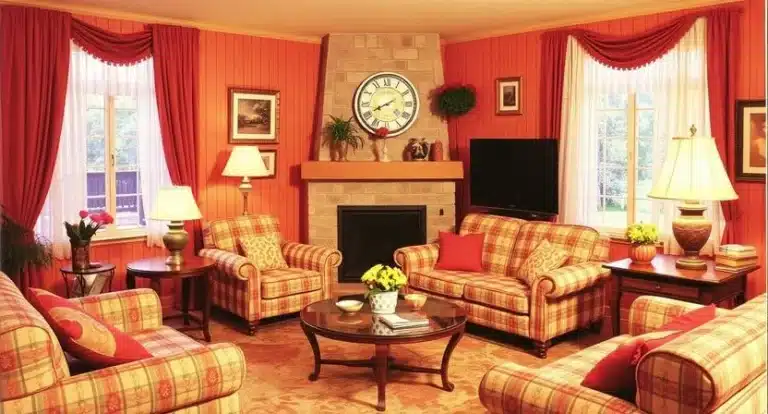
TV above the fireplace: This placement forces upward neck tilt and causes glare from fire reflection. If unavoidable, use an articulating mount that tilts down 15–20 degrees.
No cable management: Visible cables are the fastest way to make a thoughtfully designed room look cluttered. Plan cable routing before mounting.
Too much furniture: In rooms under 150 square feet, three large pieces of furniture (sofa, coffee table, entertainment unit) is typically the maximum before the room feels cramped. [Read our guide to cheap living room sets] for right-sized furniture bundles built for compact spaces.
Matching everything: Rooms with identical finishes across all furniture read as flat. Mix materials wood, metal, fabric, glass for a layered look that photographs well and feels intentional.
Conclusion
The key to a Simple Small Living Room Ideas With TV that works with a TV not against it is treating the screen as part of the design rather than an afterthought. Wall-mount where you can, scale the TV to the actual viewing distance, use a loveseat instead of an oversized sofa, and finish the TV wall with a dark accent or wood slat panels so the screen feels anchored. Lighting, transparent furniture, and floating storage round out a setup that feels spacious, functional, and designed on purpose.
FAQs
What is the best TV size for a small living room?
A 43–50 inch TV works best for rooms with 7–10 feet of viewing distance, following the 1.5× diagonal-to-distance rule.
Should I wall-mount my TV in a small living room?
Yes, wall-mounting eliminates the media console footprint, saves floor space, and allows flexible furniture arrangements.
How can I hide TV cables in a small living room?
Use an in-wall cable channel kit ($25–$60) for permanent installs, or a surface-mount cable raceway for renter-safe setups.
What color should I paint behind my TV in a small living room?
Deep navy, charcoal, forest green, or espresso absorb the screen visually and create a cinematic focal point without overwhelming the room.
Can a small living room have both a TV and a fireplace?
Yes, but avoid mounting the TV directly above the fireplace due to neck strain and heat damage. Place them on adjacent walls instead.

As an admin, with a passion for transforming spaces and a sharp eye for design trends, I created Interior Design Style Quiz to help homeowners make confident, informed decisions about their homes from the curb all the way inside.