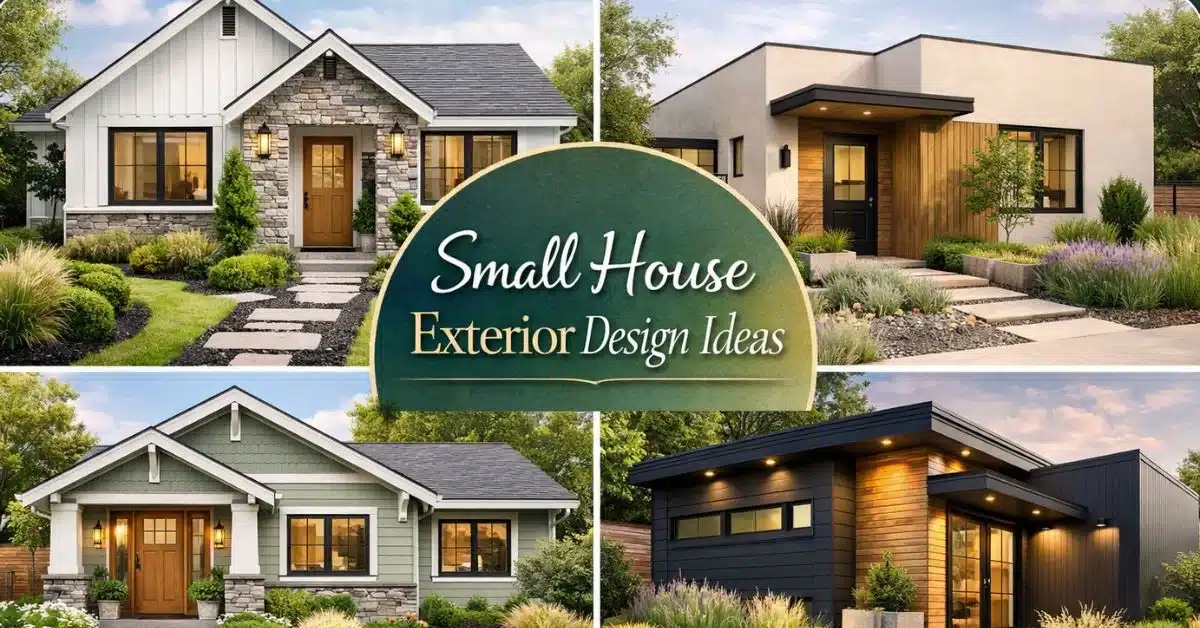
Small House Exterior Design Ideas for Single Story Homes (That Actually Work)
There’s something quietly satisfying about a well-designed single story house. No imposing second floor, no awkward rooflines fighting each other, just a clean, grounded structure that, with the right design choices, can look more polished than homes twice its size.
The challenge most homeowners face isn’t imagination. It’s knowing which ideas work together, which materials hold up over time, and how to make a modest footprint feel intentional rather than undersized.
This guide covers 25+ practical exterior design ideas organized by category specifically for single story homes. Whether you’re building from scratch, renovating a 1960s ranch, or just trying to boost curb appeal before selling, you’ll find something actionable here.
Why Single Story Exterior Design Deserves More Attention
Single story homes, ranches, bungalows, cottages, and modern farmhouses represent a huge share of the U.S. housing stock. According to the National Association of Home Builders (NAHB), single story homes accounted for roughly 57% of new single-family home starts in 2023, driven by aging-in-place preferences and rising land costs in suburban areas.
Despite their popularity, these homes often get overlooked in design conversations dominated by two-story colonial revivals and multi-story craftsman builds. That’s a missed opportunity.
A thoughtfully designed single story exterior doesn’t just look better it sells better. Remodeling Magazine’s Cost vs. Value Report consistently shows that exterior improvements like new siding, stone veneer, and entry door replacements deliver some of the highest returns on investment of any home upgrade.
1. Roof Design: The Single Biggest Visual Decision
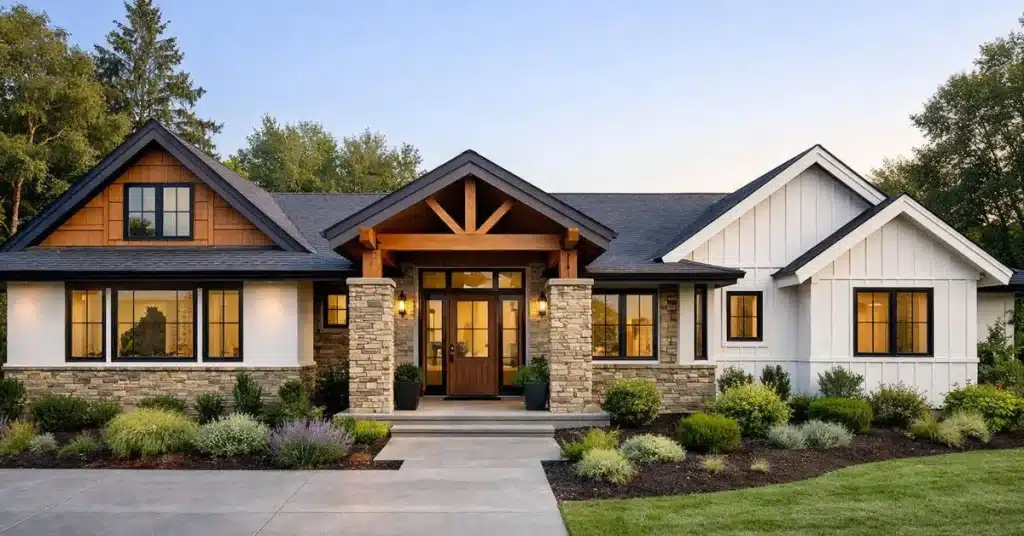
On a single story home, the roofline is everything. It defines the silhouette, creates visual height, and sets the architectural tone before anyone gets to the front door.
Gable Roofs
The classic inverted-V shape works beautifully on cottages, craftsman bungalows, and traditional ranch homes. Front-facing gables where the triangular end of the roof faces the street add instant visual interest and make a home feel taller than it is.
Hip Roofs
All four sides slope downward to the walls, creating a low-profile look that reads as deliberately modern. Hip roofs are common on Acadian-style homes and work exceptionally well in coastal and Southern climates where wind resistance matters.
Shed Roofs (Mono-pitch)
A single sloping plane from high to low. This is the signature look of contemporary single story builds think West Coast modern or desert minimalist homes in areas like Scottsdale, Arizona or Palm Springs, California. The asymmetry creates movement and allows for dramatic clerestory windows.
Mixed Rooflines
Combining a primary gable with a shed-roof porch or a lower hip section over a garage creates depth and complexity without going vertical. This is one of the most underused tricks in single story design.
Pro tip: Dark roofing shingles (charcoal, deep brown, or black) on a light-colored home create strong contrast and visual anchoring. Architectural shingles from brands like GAF Timberline or Owens Corning Duration add texture that flat 3-tab shingles simply can’t match.
2. Exterior Color Palettes That Work for Single Story Homes
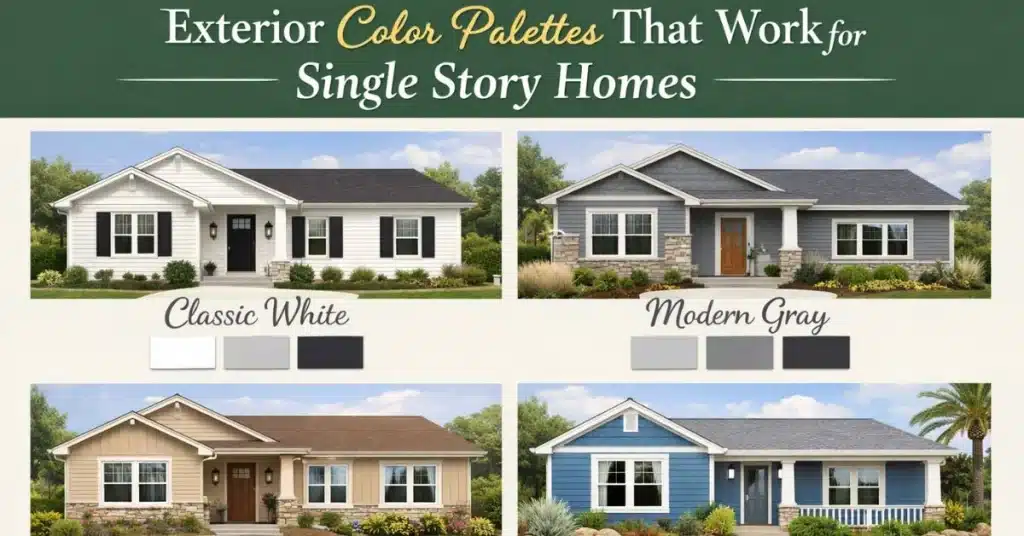
Color is the fastest, most affordable exterior upgrade and also the most consequential. The wrong palette makes a small home disappear into the street. The right one makes it look curated and confident.
Light + Dark Contrast
A crisp white or light gray body with dark window frames, shutters, and a painted front door is a tried-and-true formula. It works because the dark accents create definition on a home that might otherwise read as one undifferentiated mass.
Popular combos:
- White body / black windows / navy door (classic Hamptons cottage feel)
- Greige body / white trim / forest green door (popular in Pacific Northwest designs)
- Light blue-gray / charcoal trim / red door (traditional New England character)
Earthy, Nature-Inspired Tones
Warm beiges, soft ochres, terracotta, and sage green have replaced cool gray as the dominant palette in new construction since around 2021. These tones connect the home visually to its landscaping and age gracefully.
Benjamin Moore’s Pale Oak (OC-20), Revere Pewter (HC-172), and Sherwin-Williams’ Accessible Beige (SW 7036) remain perennially popular for single story exteriors for exactly this reason.
Bold, Monochromatic Schemes
Painting a small home in a single bold color deep olive, burnt sienna, even black is having a significant moment in residential architecture. The mono approach reads as intentional and architecturally confident rather than timid.
Black exterior homes, popularized partly by designers like Robert Gurney and showcased extensively on platforms like Houzz and Architectural Digest, work particularly well on contemporary ranch homes with clean geometric lines.
3. Siding Materials: What Looks Good, What Lasts
Choosing the wrong siding material doesn’t just affect aesthetics, it affects maintenance schedules, insurance rates, and long-term home value.
Fiber Cement (James Hardie, Allura)
The most popular siding choice in new construction for good reason. Fiber cement resists rot, fire, insects, and impact. James Hardie’s HardiePlank lap siding and HardieShingle products offer the look of wood without the maintenance. Available pre-primed or in the ColorPlus line of pre-painted finishes.
| Material | Cost per sq ft (Installed) | Lifespan | Maintenance |
|---|---|---|---|
| Fiber Cement | $6 – $13 | 30 – 50 years | Low |
| Vinyl | $3 – $8 | 20 – 40 years | Very Low |
| Cedar Wood | $8 – $15 | 20 – 40 years (with upkeep) | High |
| Brick | $14 – $22 | 50+ years | Very Low |
| Stone Veneer | $10 – $18 | 20 – 75 years | Low |
| Stucco | $6 – $10 | 50 – 80 years | Medium |
Board and Batten
Vertical siding with alternating wide boards and narrow “battens” covering the seams. Originally a barn style, board and batten has been completely reclaimed by modern farmhouse design and looks particularly strong on single story homes because the vertical lines counteract horizontal spread.
Cedar Shingles and Shakes
The quintessential material for Nantucket-style cottages and Pacific Northwest craftsman homes. Natural cedar weathers to a beautiful silver-gray over time (or can be stained to maintain a warm tone). Higher maintenance than fiber cement but unmatched in texture and authenticity.
Brick and Stone Accents
Full brick is expensive. But using brick or natural stone as an accent material on the chimney, around the front entry, or as a water table running along the foundation adds permanence and visual weight that makes a single story home feel grounded and substantial.
Eldorado Stone and Cultured Stone are the leading manufactured stone veneer brands, both offering products that are difficult to distinguish from real quarried stone at a fraction of the cost.
4. Front Entry Design: Where First Impressions Are Made
On a single story home, there’s no grand staircase to create drama. The front entry does all that work.
Front Porch
A covered front porch is the single most effective addition to a single story home’s curb appeal. It adds depth, provides architectural layering, creates functional outdoor space, and signals hospitality. Even a modest 6-foot-deep porch changes the entire character of a facade.
Craftsman-style front porches with tapered columns, exposed rafter tails, and a stained wood ceiling (painted Haint Blue is a Southern tradition that repels insects) photograph beautifully and add significant resale value.
Entry Door
The front door is the focal point of the facade. A bold color, interesting material, or distinctive hardware elevates the entire exterior. Current design trends favor:
- Black steel and glass doors (modern, Mies van der Rohe-influenced)
- Solid wood doors in painted jewel tones (emerald, deep red, cobalt)
- Dutch doors (practical and charming, especially on cottage-style homes)
- Pivot doors (architectural statement for contemporary ranch homes)
Transom and Sidelights
Adding a transom window above the door or narrow sidelights on either side does two things: it brings natural light into the entry and makes the door feel more monumental in scale both important on a low-profile single story home.
5. Window Treatments and Placement
Windows break up wall mass, control scale, and add architectural character. On single story homes, window decisions carry more visual weight because everything is viewed at eye level.
Black Window Frames
Black-framed windows offered by Andersen, Pella, Marvin, and others have become the defining feature of new construction and high-end renovation. They create crisp lines, photograph extremely well, and work with virtually every exterior color.
Window Groupings
Instead of isolated windows spaced evenly across a facade, grouping windows in pairs or triples (mulled windows) creates visual interest and rhythmic pattern. A band of three windows reads as intentional architectural composition, not just punched openings.
Casement vs. Double-Hung
Casement windows swing outward and have cleaner sight lines with fewer interrupting muntins. They’re better suited to modern and contemporary designs. Double-hung windows (the classic slide-up-and-down type) have more traditional character appropriate for craftsman, colonial revival, and cottage styles.
Clerestory Windows
A row of small windows placed high on a wall near the roofline is a hallmark of modern single story design. They bring in abundant diffuse light, maintain privacy, and create a visual transition between wall and roof that adds sophistication.
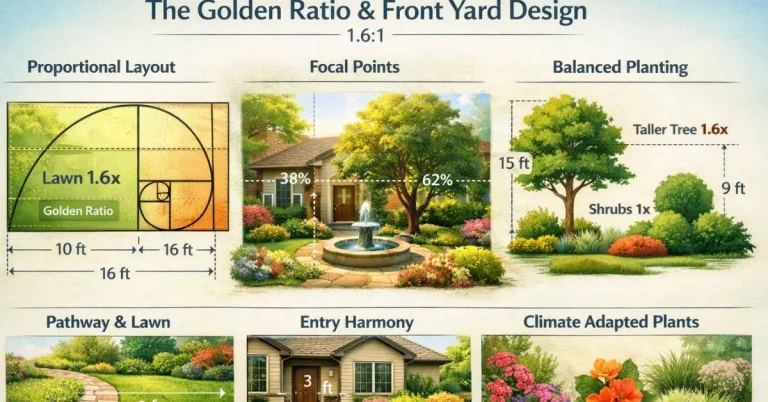
6. Landscaping and Curb Appeal
Landscaping is often an afterthought in exterior design conversations, which is strange given how dramatically it affects first impressions. The right landscaping strategy for a single story home differs from what works on taller structures.
Low-Profile, Horizontal Planting
Match the architecture. A single story home benefits from low, spreading plantings ornamental grasses, creeping juniper, boxwood hedges, lavender borders rather than tall vertical specimens that compete with the roofline.
Foundation Planting
A band of shrubs and plants at the foundation line softens the hard transition between structure and ground. Without it, a single story home can look like it’s just sitting on the dirt. With it, the home appears anchored and intentionally sited.
Recommended plants (varies by climate zone):
- Low zones (1–3 ft): Knock Out roses, dwarf nandina, ornamental grasses
- Mid zones (3–5 ft): Loropetalum, Sky Pencil holly, compact burning bush
- Accent plants: Japanese maple, crape myrtle, star magnolia
Defined Pathways
A clear, well-designed path from sidewalk to front door does more for curb appeal than most homeowners realize. Materials options include:
- Concrete pavers (clean, modern, low-maintenance)
- Flagstone set in gravel (cottage character, excellent drainage)
- Brick (classic, suits craftsman and colonial styles)
- Decomposed granite (budget-friendly, informal, Western character)
Outdoor Lighting
Path lights, uplighting on architectural features, and a statement pendant or lantern at the entry transform a home at night. Up-lighting trees near the entry creates drama without requiring any structural changes.
7. Garage Door Design
The garage door often covers 30–40% of a single story home’s street-facing wall. Treating it as a functional afterthought is a design mistake that’s surprisingly easy to correct.
Carriage House Style
Steel carriage house doors with decorative hardware mimic the look of old swing-out barn doors. They add warmth and craft to a facade that might otherwise feel flat. CHI Overhead Doors and Clopay’s Canyon Ridge line offer well-regarded options.
Full-View Aluminum Glass Doors
Floor-to-ceiling aluminum-framed garage doors with frosted or clear glass panels are the modern approach. They bring light into the garage, look architectural from the street, and pair beautifully with contemporary ranch homes.
Matching the Palette
The garage door should either match the body color of the home (for a clean, unified look) or be treated as a feature in the same dark accent color as the windows and shutters. Randomly contrasting garage doors undermine even excellent exterior design decisions elsewhere.
8. Architectural Styles That Suit Single Story Homes
Understanding architectural vocabulary helps you make consistent choices across all the design elements above.
Ranch Style
Low-pitched roofs, horizontal lines, deep overhangs, and attached garages. The quintessential American single story form, popularized in the postwar years by builders like Joseph Eichler and architects like Cliff May. Ranch homes reward minimal, nature-connected design approaches.
Craftsman Bungalow
Wide front porches, tapered columns, exposed structural details, and natural materials wood, stone, brick. The craftsman movement, rooted in the work of Gustav Stickley and architects like Charles and Henry Greene, emphasized honest craftsmanship and connection to nature. Still one of the most beloved residential styles.
Modern Farmhouse
A hybrid of agricultural vernacular and clean contemporary lines. Popularized by designers like Joanna Gaines and the Magnolia brand, modern farmhouse combines board and batten siding, metal roofing, black window frames, and wrap-around porches in a warm, approachable package.
Mid-Century Modern
Flat or slightly pitched roofs, post-and-beam construction, large windows, and clean geometric forms. Eichler homes in the Bay Area and Palm Springs modernism represent the classic version. The style has experienced a major revival, with architects like Barbara Bestor and firms like Marmol Radziner doing influential work in the modern continuation of this tradition.
Cottage and Cape Cod
Steep gabled roofs, dormer windows, natural materials, and a storybook quality. These styles achieve charm through architectural detail and material richness rather than scale making them perfect for modest single story footprints.
9. Budget-Friendly Curb Appeal Upgrades
You don’t need a full renovation to significantly improve a single story home’s exterior.
High-impact, lower-cost improvements:
- Repaint the front door and shutters ($50–$200 DIY) biggest ROI per dollar spent
- Replace house numbers with modern, oversized numerals ($20–$80)
- Update light fixtures at the entry and garage ($100–$400 per fixture)
- Add or replace mailbox with a distinctive design ($50–$250)
- Install window boxes with seasonal plantings ($30–$120 per window)
- Power wash the driveway, walkway, and siding ($100–$300 if hired)
- Paint the garage door to match or complement the new color scheme ($50–$100 DIY)
- Add shutters or replace worn ones for instant character ($200–$600 for typical home)
10. Common Design Mistakes to Avoid
Even experienced homeowners make exterior design errors that undermine otherwise good decisions.
Over-scaling architectural details. Oversized columns on a small porch, giant window trim on a modest facade scale matters. Details should be proportional to the home’s overall size.
Ignoring the sides and back. Curb appeal doesn’t end at the front facade. Inconsistent material choices on side elevations create a “stage set” quality that reads as cheap.
Trend-chasing without regard for style coherence. Board and batten siding looks great on a modern farmhouse. It looks confusing on a mid-century ranch. Match design choices to the home’s architectural DNA.
Planting too close to the foundation. Plants that are the right size when planted often grow to obscure windows, damage siding, and retain moisture against the foundation. Follow recommended spacing guidelines.
Mixing too many materials. One or two primary cladding materials, used with intention, read as sophisticated. Four or five competing materials read as chaotic.
Conclusion
A single story home has a design advantage that’s easy to overlook: everything happens at human scale. There’s no façade fighting for attention across three floors just one cohesive surface where every choice you make is visible, readable, and meaningful.
The homes that stand out on any street aren’t necessarily the largest. They’re the ones where the roofline, materials, color, and landscaping all feel like they belong together where someone clearly thought about the whole picture, not just the front door.
Start with one change. A repainted entry door, a new set of window frames, a defined pathway to the porch. Good exterior design compounds. One deliberate decision makes the next one easier to see.
FAQ
What is the best exterior color for a small single story home?
Light, warm neutrals like greige or soft white make small homes feel larger, especially when paired with darker trim for definition.
How do I add height to a single story home’s exterior?
Front-facing gables, board and batten vertical siding, tall narrow windows, and a statement chimney all draw the eye upward.
What siding material is best for a small house?
Fiber cement (James Hardie) offers the best balance of durability, appearance, and low maintenance for most climates and budgets.
Does a front porch add value to a single story home?
Yes a covered front porch improves curb appeal, adds functional square footage, and consistently returns strong value at resale.
What landscaping works best with a ranch-style single story home?
Low-spreading shrubs, ornamental grasses, and defined pathways complement the horizontal lines of a ranch without competing with the roofline.

As an admin, with a passion for transforming spaces and a sharp eye for design trends, I created Interior Design Style Quiz to help homeowners make confident, informed decisions about their homes from the curb all the way inside.