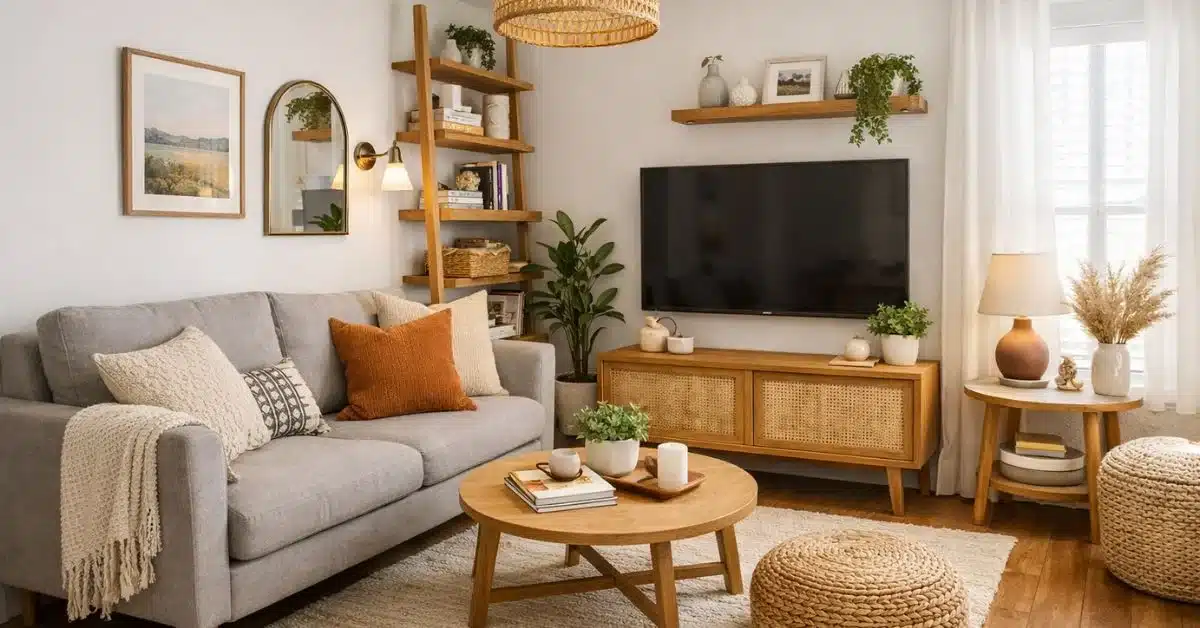
Small Living Room Decor Ideas That Actually Work
Small living room decor ideas focus on space-saving furniture, strategic lighting, mirrors, vertical storage, and a cohesive color palette to make compact rooms feel larger and more functional. Key strategies include multifunctional furniture, light wall colors, built-in shelving, and minimizing visual clutter. These approaches apply to apartments, condos, and any room under 250 square feet.
Key Takeaways
- Light, neutral wall colors visually expand a small living room
- Multifunctional furniture (storage ottomans, sleeper sofas, nesting tables) reduces clutter
- Mirrors placed opposite windows amplify natural light and perceived space
- Vertical storage draws the eye upward, making ceilings feel taller
- A defined color palette of two to three tones creates visual cohesion
- Rugs anchor a seating area and define zones without walls
- Floating shelves preserve floor space while adding storage and display room
- Proper lighting layering (ambient, task, accent) eliminates dark corners that shrink a room
Small Living Room Decor Ideas: Complete Guide
Small living room decor ideas help homeowners and renters transform compact spaces into stylish, functional rooms. The average American apartment living room measures between 150 and 200 square feet. With the right layout, furniture choices, and design principles, even the smallest space can feel intentional and open.
What Colors Make a Small Living Room Look Bigger?
Light, cool-toned neutrals are the most effective colors for making a small living room look larger.
Off-white, soft gray, pale beige, and sage green reflect natural light and push walls outward visually. Painting walls, trim, and ceiling the same color or very close shades eliminates contrast breaks that make a room feel chopped up. Benjamin Moore’s “Simply White” and Sherwin-Williams’ “Alabaster” consistently rank among designers’ top picks for small spaces.
Avoid dark accent walls as a focal point in a room under 200 square feet. They can work in larger rooms but tend to close off compact spaces.
What Furniture Works Best in a Small Living Room?
Multifunctional, appropriately scaled furniture is the foundation of good small living room design.
Top furniture choices for small living rooms:
| Furniture Piece | Function | Space Benefit |
|---|---|---|
| Storage ottoman | Seating + storage | Replaces coffee table and side chest |
| Sofa with chaise | Seating + lounging | Eliminates need for a separate accent chair |
| Nesting tables | Occasional tables | Tuck away when not in use |
| Floating media console | TV stand + storage | Keeps the floor visible, making the room feel larger |
| Sleeper sofa | Seating + guest bed | Eliminates the need for a separate guest room setup |
| Loveseat (vs. full sofa) | Seating | Right-sized for rooms under 180 sq ft |
Furniture legs matter. Pieces with exposed legs allow sightlines to pass under them, which makes a room feel more open. Solid, skirted furniture cuts off those sightlines and visually weighs down the space.
How to Arrange Furniture in a Small Living Room
Float furniture away from walls. This is counterintuitive but effective. Pulling a sofa six to twelve inches from the wall creates breathing room and makes the space feel intentional rather than crammed against the perimeter.
Define a focal point, whether a fireplace, window, or TV wall, and arrange seating toward it. Avoid pushing all pieces to the edges of the room.
How Do Mirrors Help a Small Living Room?
Mirrors reflect light and create the illusion of depth, effectively doubling the perceived size of a room.
Place a large mirror directly opposite a window to bounce natural light across the room. A floor-to-ceiling mirror on one wall creates the impression of an additional room beyond it. Mirrored furniture (console tables, side tables) adds the same effect in smaller doses without committing to wall installation.
What Lighting Works Best for Small Living Rooms?
Layered lighting with multiple sources eliminates dark corners and makes a room feel larger and more inviting.
A single overhead fixture casts shadows and flattens the space. Instead, combine:
- Ambient lighting: recessed lights or a ceiling fixture for general illumination
- Task lighting: a floor lamp or table lamp beside reading areas
- Accent lighting: LED strips behind a TV console or under floating shelves
Wall sconces are particularly effective in small rooms because they provide light without consuming floor or table space. Dimmers on all fixtures give full control over the room’s atmosphere throughout the day.
How to Use Vertical Space in a Small Living Room
Drawing the eye upward makes ceilings feel taller and frees up floor space for movement.
Install floating shelves from mid-wall to ceiling height. Use the upper shelves for decorative objects and the lower ones for functional storage like books and baskets. A tall bookcase, ideally seven feet or higher, anchors a wall and provides substantial storage without expanding the room’s footprint.
Hanging curtains close to the ceiling (rather than at the window frame) is one of the highest-impact, lowest-cost tricks in small room design. Curtains that run from ceiling to floor elongate the wall visually.
Small Living Room Decor Ideas by Style
Minimalist Small Living Room
Keep only what serves a purpose. Choose a sofa, one accent chair, a small coffee table, and one storage unit. Limit decorative objects to three to five intentional pieces. A neutral palette with one texture layer (a chunky knit throw, a natural fiber rug) keeps the space calm.
Bohemian Small Living Room
Layer textiles, plants, and collected objects without overwhelming the space. Use a consistent warm color palette (terracotta, ochre, dusty rose) to unify varied patterns. Keep furniture low-profile to maintain openness while stacking visual interest through pillows and rugs.
Modern Small Living Room
Prioritize clean lines and functional hardware. Choose a streamlined sofa in a solid color, a glass or acrylic coffee table (transparent furniture takes up visual space without physical weight), and recessed or track lighting. Limit wall art to one oversized piece rather than a gallery wall.
Traditional Small Living Room
Use furniture with legs to keep sight lines open. A pair of armchairs can replace a sectional in a very small room. Crown molding draws the eye upward. A classic neutral rug in a traditional pattern anchors the seating area.
What Rugs Should You Use in a Small Living Room?
A rug that is too small is one of the most common mistakes in small living rooms.
Use a rug large enough that the front legs of all seating pieces rest on it. In most small living rooms, this means an 8×10 foot rug is more appropriate than a 5×7. A properly sized rug defines the seating zone, grounds the furniture, and makes the room look intentionally designed. Light-colored rugs with low piles reflect light; dark rugs with heavy piles absorb it.
How to Reduce Visual Clutter in a Small Living Room
Clutter is the fastest way to make a small room feel smaller.
Designate closed storage for everyday items: remote controls, chargers, books, and throw blankets. Baskets, drawers, and ottomans with internal compartments hide clutter in plain sight. Limit the number of throw pillows to three or four per sofa. A cluttered surface reads as a cluttered room, regardless of actual square footage.
Storage solutions that work in small living rooms:
- Built-in cabinetry flanking a fireplace or TV
- Storage benches along an entryway wall
- Floating shelves above the sofa
- Baskets under a console table
- TV console with closed cabinet doors
Comparison: Open vs. Closed Storage in Small Living Rooms
| Feature | Open Shelving | Closed Cabinets |
|---|---|---|
| Visual weight | Lighter if styled well | Heavier, but hides clutter |
| Maintenance | Requires consistent styling | Low maintenance |
| Cost | Lower (floating shelves) | Higher (cabinetry) |
| Best for | Books, plants, decor | Everyday items, electronics |
| Risk | Looks cluttered if messy | Can feel heavy in small rooms |
Conclusion
A small living room is not a design limitation. It is a constraint that forces intentional decisions. The most effective small living room decor ideas share a common thread: every element earns its place. Light colors, properly scaled furniture, vertical storage, layered lighting, and mirrors work together to create a room that feels larger, functions better, and looks deliberate. Apply these principles systematically rather than decorating reactively, and a compact living room becomes one of the most considered spaces in a home.
FAQ: Small Living Room Decor Ideas
What is the best layout for a small living room?
The most effective layout positions the sofa as the anchor piece facing the room’s focal point, with seating floating six to twelve inches from the wall. Avoid blocking natural light sources and keep pathways at least thirty inches wide.
How do you make a small living room look luxurious?
Use quality textiles, a single large piece of art, layered lighting with dimmers, and consistent hardware finishes. Fewer, better-quality pieces signal luxury more effectively than many inexpensive accessories.
What size sofa fits in a small living room?
A sofa between seventy and eighty-four inches wide is appropriate for most small living rooms. Loveseats (fifty to sixty inches) work in rooms under 150 square feet. Avoid sofas over ninety inches unless the room exceeds 200 square feet.
Should small living rooms have curtains or blinds?
Floor-to-ceiling curtains make small rooms feel taller and add softness. Use sheer or light-filtering fabric to preserve natural light. Mount curtain rods three to six inches above the window frame and as close to the ceiling as possible.
What plants work well in a small living room?
Tall, narrow plants like snake plants, fiddle-leaf figs, and bird of paradise add vertical interest without occupying much floor space. Trailing plants on shelves (pothos, heartleaf philodendron) add greenery without requiring a separate surface.

As an admin, with a passion for transforming spaces and a sharp eye for design trends, I created Interior Design Style Quiz to help homeowners make confident, informed decisions about their homes from the curb all the way inside.