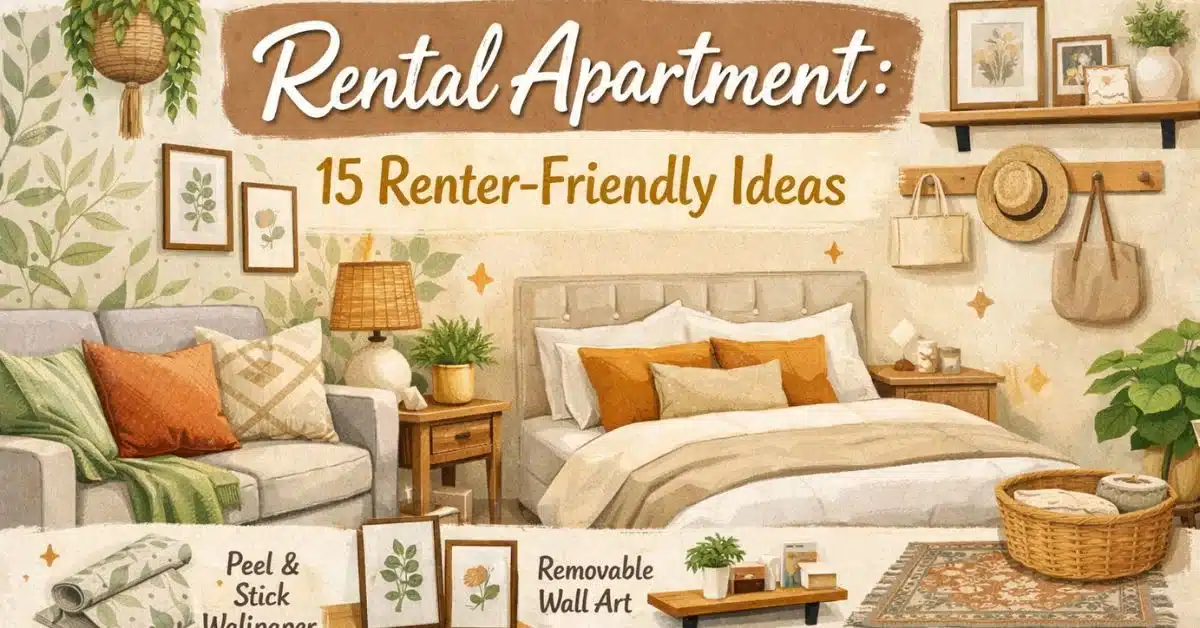
How to Decorate a Rental Apartment: 15 Renter-Friendly Ideas
Decorating a rental apartment means personalizing your space without making permanent changes that violate your lease. The most effective approach combines removable products (peel-and-stick wallpaper, command strips, tension rods), smart furniture choices, textiles, and lighting upgrades. Most renters can transform a plain apartment for $200 to $1,000 depending on space size and design goals, with zero damage to walls or floors.
Key Takeaways
- Use removable, damage-free products: peel-and-stick wallpaper, command strips, and adhesive hooks
- Area rugs are the single highest-impact decor item in a rental
- Furniture arrangement and scale matter more than quantity
- Lighting upgrades (floor lamps, plug-in sconces) instantly change room mood
- Curtains hung high and wide make small rooms appear larger
- Avoid permanent fixtures, paint, or hardware unless your landlord gives written permission
- A cohesive color palette of 2 to 3 colors creates a designer look on any budget
How to Decorate a Rental Apartment
Decorating a rental apartment is entirely possible without painting walls, drilling holes, or violating lease terms. The core strategy is layering removable, non-damaging products over the apartment’s existing surfaces while using furniture, textiles, and lighting to define the space. Renters across the U.S. spend an average of $300 to $800 on initial apartment decor, according to home furnishing industry surveys.
Why Rental Decorating Requires a Different Approach
Rental apartments come with restrictions. Most leases prohibit painting, permanent wall anchors, and modifications to fixtures. Violating these terms can result in losing part or all of your security deposit, which averages $1,000 to $2,000 in most U.S. cities.
Renter-friendly decorating focuses on:
- Removable products that leave no residue
- Freestanding furniture and decor
- Textiles that add color and warmth without touching walls
- Strategic lighting to compensate for poor fixture placement
Start with a Plan: Define Your Style and Color Palette
Before purchasing anything, decide on a 2 to 3 color palette and a general style direction (minimalist, bohemian, mid-century modern, etc.). Apartments with a cohesive palette look intentional and larger than spaces decorated without a theme.
A simple formula: pick one neutral (white, beige, gray), one anchor color (navy, terracotta, sage), and one accent (brass, blush, black). Apply this across textiles, furniture, and decor for a pulled-together look.
The 15 Best Ways How to Decorate a Rental Apartment
1. Lay Down Area Rugs
Area rugs are the highest-ROI investment in any rental. They define zones in open-plan spaces, cover worn flooring, and add color and texture instantly. In a living room, a rug should be large enough for all furniture legs to rest on it or at least the front legs. Standard sizes run 5×8 feet for smaller rooms and 8×10 or 9×12 feet for larger spaces.
2. Use Removable Peel-and-Stick Wallpaper
Peel-and-stick wallpaper has transformed rental decorating. Major brands like Tempaper, Chasing Paper, and Walls Need Love offer hundreds of patterns that apply in hours and remove cleanly. Use it on an accent wall, inside a bookcase, or even on a backsplash. Prices range from $25 to $60 per roll, and one wall typically requires 3 to 5 rolls depending on pattern repeat.
3. Hang Curtains High and Wide
Standard rental curtains hang at window height and make ceilings look low. Use a tension rod or a damage-free curtain rod mounted with adhesive strips, and hang curtains 4 to 6 inches above the window frame and extend the rod 6 to 12 inches past the window on each side. This visually raises ceilings and makes windows look larger.
4. Layer Lighting
Most apartments come with overhead fixtures only. Floor lamps, table lamps, and plug-in pendant lights or sconces completely change the mood of a room. Aim for three light sources per room at varying heights. Warm-toned bulbs (2700K to 3000K) make spaces feel cozy; cooler bulbs (4000K) work better for home offices.
5. Use Command Strips and Adhesive Hooks for Wall Decor
Command strips from 3M hold up to 16 pounds depending on the product. Use them to hang framed art, mirrors, and floating shelves. Adhesive hooks work for lighter decor. Always test on a small area first, especially on textured or painted drywall, which can pull paint when removed.
6. Create a Gallery Wall with Removable Products
A gallery wall adds personality to any blank surface. Use a mix of frames in similar finishes, prints, and small mirrors. Plan the layout on the floor first, trace each frame on kraft paper, and tape the templates to the wall before committing to placement. This avoids excess holes and gives you a precise map.
7. Invest in Statement Furniture
In a rental, your furniture is your permanent decor. One quality sofa, a distinctive coffee table, or a bold bookshelf becomes the anchor of the room. Prioritize scale: furniture that is too small makes a room look empty; furniture that is too large makes it feel cramped. Allow 18 to 24 inches of clearance between a sofa and coffee table for comfortable movement.
8. Add a Temporary Backsplash in the Kitchen
Peel-and-stick tile and backsplash panels are available at Home Depot and Amazon for $3 to $8 per square foot. They work especially well on flat, smooth kitchen walls. Brands like Smart Tiles are specifically designed for renters and remove without adhesive residue when applied correctly.
9. Upgrade Cabinet Hardware Temporarily
Replacing cabinet pulls and knobs transforms a dated kitchen or bathroom without permanent changes. Keep the original hardware in a labeled bag so you can swap it back before moving out. New hardware costs $2 to $15 per pull at hardware stores.
10. Use Mirrors to Amplify Light and Space
A large mirror opposite a window reflects natural light and makes a room feel significantly larger. Lean an oversized mirror against a wall instead of hanging it for a zero-damage option. Mirror sizes above 24×36 inches provide the most noticeable spatial effect.
11. Incorporate Plants
Greenery adds life to neutral rental walls. Low-maintenance options like pothos, snake plants, and ZZ plants thrive in lower light and require watering only once or twice a week. Use plant stands at varying heights to create visual layering. A grouping of three plants in different sizes looks more intentional than a single plant.
12. Add Open Shelving with Freestanding Units
Freestanding shelving units (IKEA’s KALLAX and BILLY lines are popular) add storage and display space without drilling. Style shelves with a mix of books, small plants, candles, and personal objects. The general rule: fill two-thirds of shelf space with items and leave one-third open to avoid a cluttered look.
13. Use Textiles to Add Color and Softness
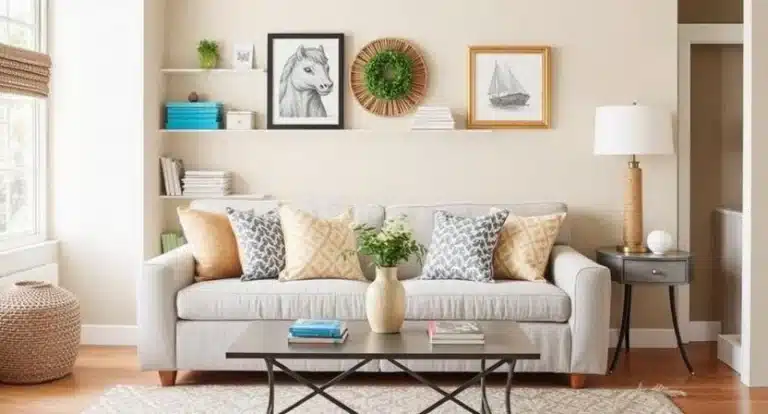
Throw pillows, blankets, and curtains are the easiest and most affordable way to change a room’s color scheme. A sofa with neutral upholstery can shift from minimalist to bohemian with a different set of throw pillows. For bedrooms, layering a duvet, quilt, and throw creates a hotel-style look that reads as high-end.
14. Define Spaces in Open Floor Plans
Open-plan apartments benefit from visual zone definition. Use an area rug to define the living area, a console table or sofa back to separate the living and dining space, and pendant lighting over a dining table to anchor that zone. These visual dividers do the work of walls without any construction.
15. Personalize with Art and Objects
Art transforms blank rental walls faster than anything else. You do not need expensive original work. Print shops, Society6, and Etsy offer affordable art prints in any style. Frame a collection of postcards, vintage maps, or architectural drawings for a curated look. Prints in 11×14 or 18×24 inch sizes make the most visual impact.
Rental Decorating: Cost Comparison Table
What to Avoid When Decorating a Rental
Certain decorating choices create problems at move-out. Avoid these unless you have written landlord approval:
- Painting walls any color (even light ones)
- Installing permanent light fixtures or ceiling fans
- Removing or altering cabinet doors
- Using nails or anchors in plaster walls (which crack easily)
- Applying contact paper to surfaces without testing removal first
- Using double-sided foam tape on wood surfaces (it pulls finish on removal)
Conclusion
How to Decorate a Rental Apartment comes down to working with what you cannot change and maximizing what you can. Area rugs, lighting, textiles, removable wallpaper, and well-chosen furniture do the heavy lifting. A $500 budget applied strategically across these categories will transform a generic apartment into a space that feels intentional and livable. Keep all original hardware, document your changes with photos, and follow manufacturer removal instructions on any adhesive products before you move out.
FAQ Section
1. Can I paint a rental apartment?
No, unless your landlord gives written permission. Unauthorized painting is one of the most common reasons renters lose security deposit deductions. If your landlord agrees, get it in writing and confirm the required return color before move-out.
2. How do I hang art in a rental without damaging walls?
Use 3M Command strips rated for the weight of your frame. For heavier pieces (over 10 pounds), use two strips side by side. Always follow the removal instructions exactly: pull the tab slowly at a 45-degree angle. Avoid using standard picture hooks with nails on drywall.
3. What is the best flooring solution for a rental with ugly carpet or vinyl?
Area rugs are the most practical solution. They cover most of the floor without any modification. For hard surface areas, peel-and-stick vinyl plank flooring can be laid directly over existing flooring and removed when you move out, though results vary based on existing floor flatness.
4. How do I make a small rental apartment look bigger?
Use light colors for textiles, hang curtains high and wide, place a large mirror opposite a window, choose furniture with legs (which shows floor and creates visual space), and avoid overcrowding surfaces. Maintaining clear pathways of at least 36 inches through a room also makes it feel more open.
5. Is peel-and-stick wallpaper safe for rental apartments?
Yes, when applied correctly to smooth, clean walls. It removes cleanly in most cases. Test a small corner area first, especially on flat paint (which is more porous than satin or eggshell). Never apply it to fresh paint (wait at least 30 days) or textured walls.

As an admin, with a passion for transforming spaces and a sharp eye for design trends, I created Interior Design Style Quiz to help homeowners make confident, informed decisions about their homes from the curb all the way inside.