DIY Home Decor Ideas on a Budget: 30 Creative Ways to Make Your Home Look Expensive
You don’t need a designer’s budget to have a designer’s home.
That’s not a motivational slogan.DIY Home Decor Ideas on a Budget something thousands of homeowners prove every weekend in their local thrift stores, dollar stores, and hardware aisles. The gap between a room that looks pulled-together and one that feels unfinished often has nothing to do with money. It comes down to knowing what to change, what to leave alone, and where a single $12 can of paint does the work of a $1,200 furniture piece.
This guide covers 30 real, tested DIY home decor ideas that work on tight budgets. Whether you’re renting a studio, decorating your first home, or just tired of a space that no longer feels like yours, there’s something here that fits.
What “DIY Home Decor Ideas on a Budget” Actually Means (And What to Avoid)
Before diving into the ideas, a quick calibration.
Budget home decor doesn’t mean cheap-looking decor. The goal isn’t to fill space. It’s to make intentional choices that have visual impact without financial strain. The most common mistake people make is buying too many small, inexpensive items that compete with each other and create clutter rather than style.
A better approach: do fewer things, but do them well. One large statement mirror from a thrift store, properly cleaned and hung, beats a shelf of $3 knickknacks every time.
With that in mind, here’s how to work smarter with whatever your budget allows.
Part 1: Wall Transformations on Almost No Budget
1. Paint One Wall, Just One
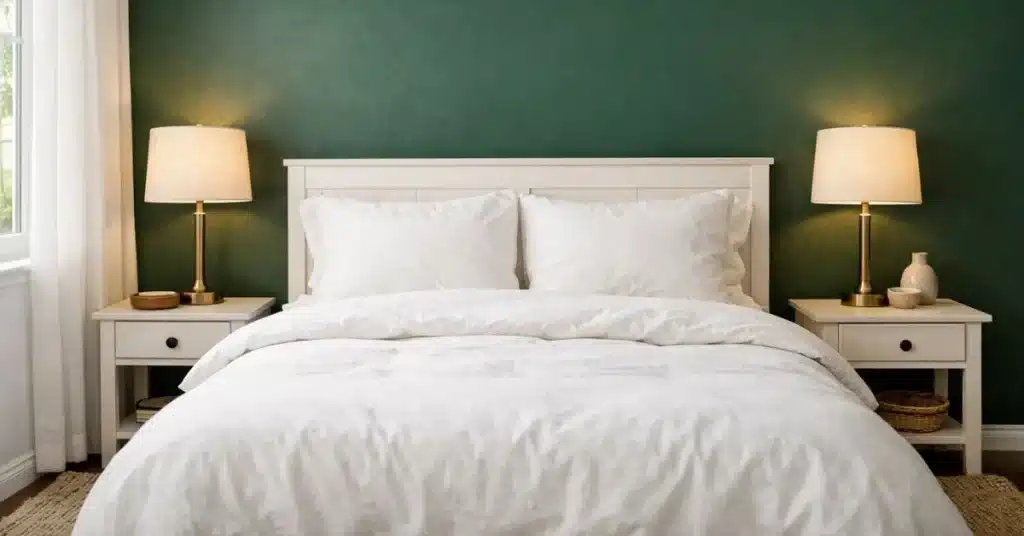
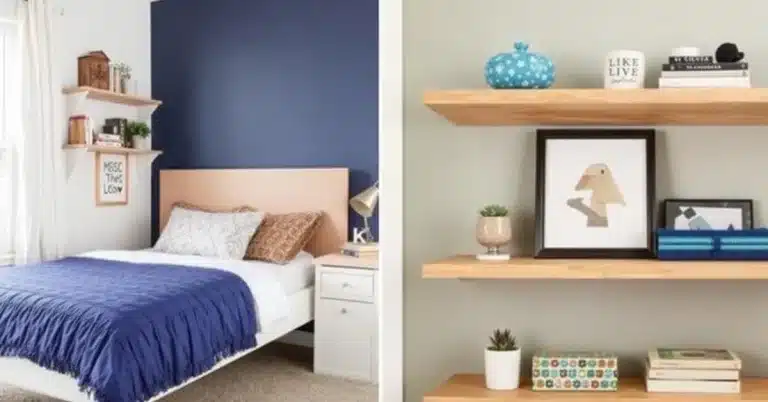
A full room repaint costs money and time. A single accent wall costs a quart of paint (typically $15 to $25) and a Saturday afternoon.
The key is choosing the right wall, usually the one your bed, sofa, or main furniture piece sits against. Deep tones like slate blue, forest green, terracotta, or charcoal read as intentional and sophisticated. Brands like Behr, Sherwin-Williams, and Benjamin Moore all offer sample quarts, which can be enough for a standard accent wall.
One wall changed can make the entire room feel redesigned.
2. Try Limewash or Roman Clay Paint
Limewash paint creates a textured, Old World finish that looks like it belongs in a Mediterranean villa. Portola Paints produces one of the most well-regarded versions, and Rust-Oleum offers budget-friendly limewash-effect alternatives that perform well for DIYers.
Application is forgiving because the slightly inconsistent finish is the entire point. Even a beginner can get a result that looks professionally done.
3. Create a Gallery Wall Using Thrifted Frames
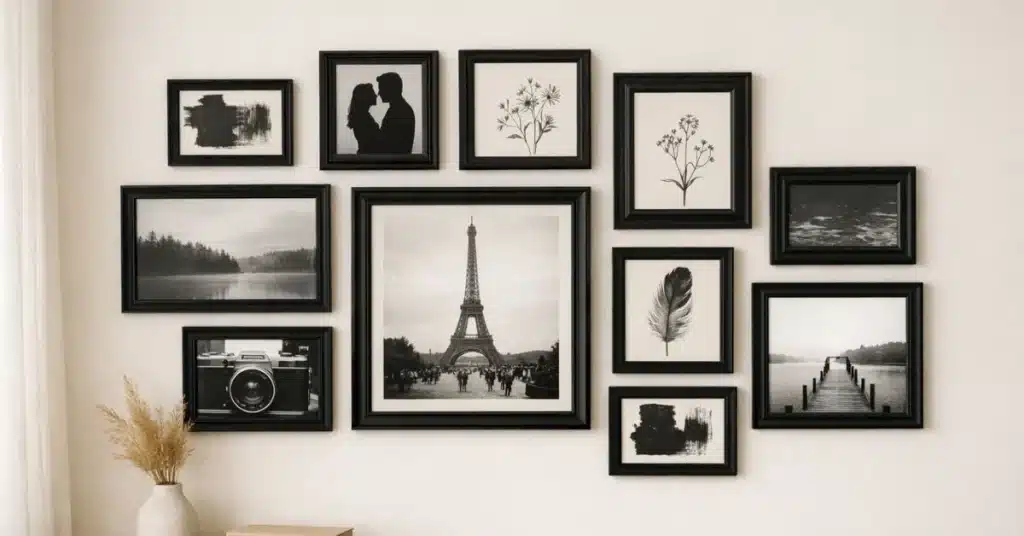
Gallery walls are one of the few decor elements that genuinely benefit from mismatched, imperfect frames. Pick up frames at Goodwill, Salvation Army, or Facebook Marketplace, then spray paint them a uniform color to tie them together. Matte black, warm gold, and bright white all work. Fill them with printed black-and-white photography, pages from art books or vintage magazines, botanical prints from free public domain archives, fabric swatches, or your own sketches.
The result looks like a carefully curated collection. The total cost usually stays under $30.
4. Add Peel-and-Stick Wallpaper to a Small Section
Peel-and-stick wallpaper quality has improved significantly in recent years. Brands like NuWallpaper, Tempaper, and RoomMates offer options that read nearly identical to traditional wallpaper from a few feet away. A half-wall, the inside of a bookshelf, or a narrow bathroom wall can become a real visual feature for $40 to $80.
This is especially practical for renters who cannot make permanent wall changes.
5. Use Washi Tape for Faux Wall Panels or Geometric Shapes
Applied carefully in straight lines, washi tape can simulate board and batten paneling, geometric wall art, or a grid pattern. It removes cleanly without damage, making it one of the few options that carries zero risk.
A roll costs $3 to $8. The only investment is time and a level.
Part 2: Furniture Fixes That Cost Almost Nothing
6. Paint Old Wood Furniture
If you have a dresser, bookshelf, or side table that looks dated, paint is the fastest fix. Chalk paint requires minimal prep and adheres to most surfaces without priming. Rust-Oleum Chalked and Krylon both offer accessible versions of the formula that Annie Sloan popularized. A quart covers most small furniture pieces.
A piece that looked tired reads as a stylish vintage find after a coat or two.
7. Swap Hardware on Cabinets and Dressers
New knobs and drawer pulls deliver one of the highest effort-to-impact ratios in home decor. Cabinet hardware from brands like Amerock or Liberty Hardware can be found for $2 to $5 per knob. Switching out eight or ten knobs on a bathroom vanity or kitchen cabinet set takes under an hour and changes the entire character of the piece.
Brushed gold and matte black are the most popular finishes right now. Ceramic and colored options are also making a strong return.
8. Reupholster a Chair Seat With Fabric From the Remnant Bin
Dining chair cushions and bench seats are typically held in place with four screws. Remove the seat, wrap it in new fabric from a remnant bin at JOANN Fabrics, Hobby Lobby, or any fabric store, staple it in place with a staple gun, and screw the seat back. Total fabric cost for four chairs usually runs $15 to $30.
This single change makes an entire dining set look like a new purchase.
9. Add Legs to Furniture
Attaching hairpin legs or tapered wooden legs to a short, squat dresser or cabinet instantly modernizes it. Hairpin legs are available on Amazon and at IKEA for $15 to $40 per set. The change is structural. Lifting the piece off the ground makes a room feel less heavy and more open.
Part 3: Lighting Changes That Look Expensive
10. Replace Basic Light Switch Plates
This is a detail almost no one thinks about, and one that costs $2 to $5 per plate. Swapping builder-grade beige plastic plates for brushed nickel, brass, or matte black covers makes outlets and switches look intentional rather than leftover. It takes two minutes per switch.
11. Add Dimmer Switches
A dimmer switch costs $15 to $25 and changes the emotional tone of a room. Most standard light fixtures are compatible. The ability to lower overhead light from harsh to warm during evenings improves how any room feels, without touching the furniture or walls.
12. Layer Lighting With Table Lamps and Floor Lamps
Overhead lighting alone creates flat, institutional light. Adding table and floor lamps builds layers, a design principle called lighting zones, that gives a room depth and warmth. Thrift stores regularly stock lamps. A $5 thrifted lamp with a new $12 shade from IKEA or Target looks like a $90 retail fixture.
13. Install LED Strip Lights Under Shelving or Behind a TV
LED strips mounted behind a television reduce eye strain and create an ambient glow that high-end home setups use as a matter of course. The same strips under open kitchen shelving make storage look like an intentional feature. Brands like Govee and Philips Hue Lightstrip both offer options starting around $20.
Part 4: Textiles That Change How a Room Feels
14. Layer Rugs Over Existing Floors
Rug layering is a designer technique that works on any budget. A neutral jute or sisal rug as a base layer, with a smaller patterned rug centered on top, creates depth and visual interest. This works equally well on hardwood, tile, and wall-to-wall carpet. Jute rugs are among the most affordable and durable options, often $30 to $80 for a 5×8 at IKEA.
15. Use Curtains to Make Ceilings Look Taller
Hang curtain rods as close to the ceiling as possible, not just above the window frame. Let curtains that touch or puddle slightly on the floor hang from that higher point. The vertical drop makes the room read as taller than it actually is. Inexpensive linen-look curtains from IKEA, Amazon, or H&M Home work fine. The rod placement matters more than the curtain brand.
16. Add Throw Pillows in Odd Numbers
Interior designers follow an informal rule: style things in odd numbers. Three pillows on a sofa instead of two, five items on a shelf rather than four. On a sofa, one large pillow, one medium, and one lumbar gives more visual interest than a matching pair. Pillowcases can be swapped seasonally without buying new inserts.
17. Fold and Display Blankets Intentionally
A rolled throw blanket in a woven basket, or a folded blanket draped over the arm of a chair, signals comfort and thoughtfulness. It costs nothing if you already own blankets, and it’s a staging technique visible in virtually every professional home shoot.
Part 5: Plant-Based Decor (Low Cost, High Impact)
18. Use Propagated Plants as Decor
Pothos, spider plants, and tradescantia are among the easiest plants to propagate from cuttings. A single stem in a glass jar of water looks genuinely beautiful on a windowsill or shelf, and costs nothing if you know someone who has one. Mason jars from Dollar Tree work just as well as the $25 propagation stations sold at lifestyle boutiques.
19. Buy Plants From Hardware Stores
Home Depot and Lowe’s consistently sell common houseplants like pothos, snake plants, ZZ plants, and peace lilies for 30 to 50 percent less than specialty garden centers. A 6-inch snake plant runs about $6 to $10 at Home Depot versus $20 to $30 in a plant shop.
20. Create a Herb Garden on a Windowsill
A row of terracotta pots with fresh basil, rosemary, and mint on a kitchen windowsill serves as both decor and a functional pantry resource. Terracotta pots from Walmart or Dollar Tree cost $1 to $3. Seeds cost even less.
Part 6: Storage as Decor
21. Use Open Baskets for Visible Storage
Woven baskets in seagrass, rattan, or hyacinth turn messy storage into visible decor. Blankets, remotes, magazines, spare cables: anything that would otherwise look like clutter becomes intentional when it lives in a basket. IKEA and Target’s Threshold basket collection both offer solid options under $20.
22. Install Floating Shelves to Display Objects
Floating shelves create storage while revealing personality. IKEA’s LACK shelf, at $20 to $25 per piece, installs in under 30 minutes. Style them with books turned spine-in, a plant, a small candle, and one or two personal objects for a balanced look.
23. Decant Pantry Items Into Clear Containers
Moving dry goods like pasta, rice, flour, and coffee into matching clear or glass containers is a low-cost visual improvement that has a strong organizing effect on any kitchen shelf. OXO Good Grips, Rubbermaid, or basic Amazon canisters all work. Start with one shelf and observe the difference before committing further.
Part 7: Thrift Store and Secondhand Finds Worth Seeking Out
24. Mirrors: Always Buy Them Secondhand
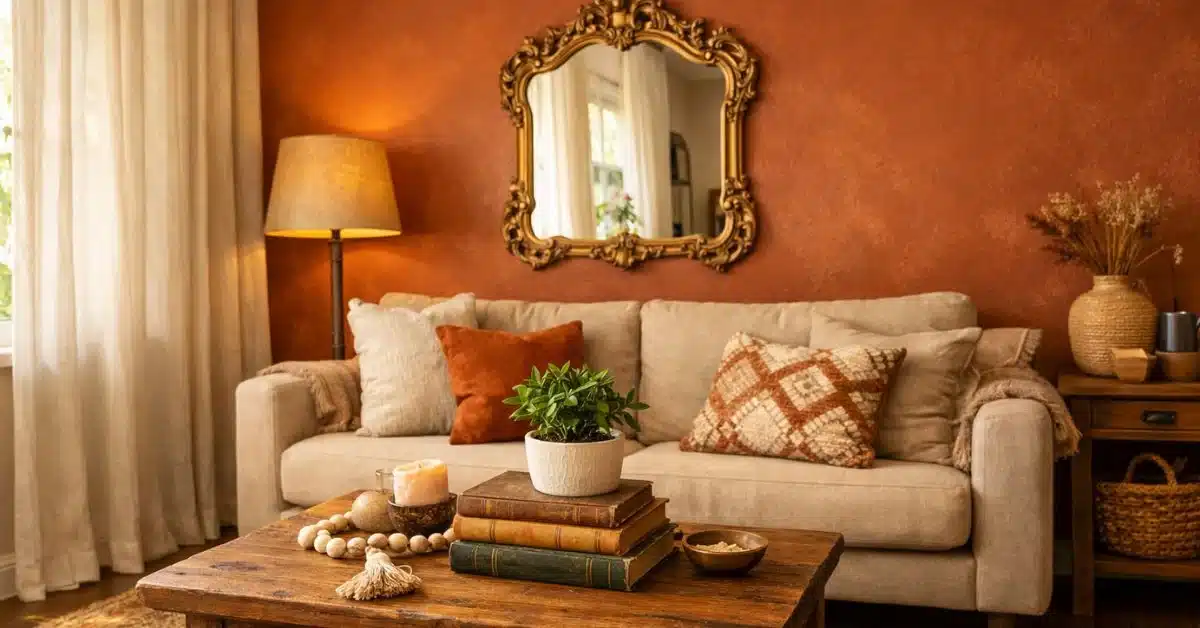
Mirrors are the most reliably rewarding thrift store purchase in home decor. A large mirror, especially ornate or arched in shape, can cost $200 to $600 new. The same mirror at Goodwill or Facebook Marketplace typically runs $10 to $40. Mirrors make rooms feel larger, brighter, and more considered. Few single objects deliver as much visual return.
25. Vintage Books for Styling Surfaces
Coffee table books, vintage encyclopedias, and oversized art books are available at thrift stores for $0.50 to $2 each. Stack three of varying sizes on a coffee table or shelf, spine-out if the colors clash, and place a small object such as a candle, figurine, or plant on top. This is a foundational interior styling technique used in virtually every professional photo shoot.
26. Ceramic and Pottery Pieces
Handmade-looking ceramic vases, bowls, and dishes are among the most fashionable home objects in current design, and they’re consistently overlooked at thrift stores. A grouping of three ceramic vessels in earthy tones creates the kind of artisanal display that appears in every current interior design publication.
Part 8: Scent and Sound as Decor
27. Use Candles and Diffusers as Both Decor and Ambient Scent
A candle on a tray with a small plant and a book creates a styled vignette while also serving as ambient scent. IKEA, TJ Maxx, and HomeGoods all carry candles in simple glass vessels for $3 to $12. The way a home smells is one of the first things guests register, and one of the last things most decorators think about.
28. Add a Sound Element
A small Bluetooth speaker styled into a shelf display, or a tabletop water fountain ($20 to $40 on Amazon), adds a sensory quality that photographs cannot capture but visitors feel the moment they enter. It’s a genuine differentiator between spaces that feel good and spaces that only photograph well.
| Decor Change | Avg. Cost | Visual Impact | Difficulty |
|---|---|---|---|
| Accent wall paint | $15–$25 | ⭐⭐⭐⭐⭐ Very High | Easy |
| Cabinet hardware swap | $20–$50 | ⭐⭐⭐⭐ High | Easy |
| Gallery wall (thrifted frames) | $15–$40 | ⭐⭐⭐⭐⭐ Very High | Moderate |
| Curtains hung high | $25–$60 | ⭐⭐⭐⭐ High | Easy |
| Thrifted mirror | $10–$40 | ⭐⭐⭐⭐⭐ Very High | Easy |
| New lamp shade | $12–$25 | ⭐⭐⭐ Medium | Easy |
| Floating shelves (IKEA LACK) | $20–$50 | ⭐⭐⭐⭐ High | Moderate |
| Peel-and-stick wallpaper | $40–$80 | ⭐⭐⭐⭐⭐ Very High | Moderate |
| Woven storage baskets | $10–$25 | ⭐⭐⭐ Medium | None |
| Plant propagation station | $0–$15 | ⭐⭐⭐ Medium | Easy |
Part 9: Room-by-Room Quick Wins
Living Room on a Budget
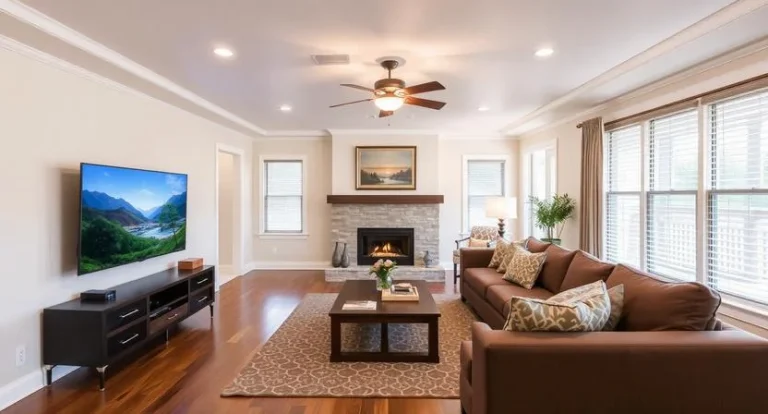
Focus on the sofa wall (accent color or gallery), the coffee table styling (books, tray, plant), and lighting layers. These three elements account for the majority of how a living room reads visually. A rug change is the single highest-impact purchase if the floor is an issue.
Bedroom on a Budget
The headboard wall is the focal point. A coat of paint behind the bed, a DIY fabric headboard (plywood, foam, and fabric for $40 to $70 total), and matching bedside lamps transform a bedroom faster than any other combination of changes. A white duvet cover is the most cost-effective way to make a bed look hotel-quality.
Bathroom on a Budget
Swap the mirror or add a frame around an existing builder-grade one, replace the toilet hardware, and add a simple tray on the counter with a candle, small plant, and hand soap in a glass dispenser. Fresh grout caulk around the tub ($5 at any hardware store) makes a bathroom look renovated when nothing structural has changed.
Kitchen on a Budget
Open shelving, decanted pantry goods, and new cabinet hardware are the three levers here. If the cabinets are in good structural shape, a fresh coat of cabinet paint is the most impactful budget renovation in the home. Rust-Oleum Cabinet Transformations and Benjamin Moore Advance paint are both well-regarded for this application.
Common Mistakes to Avoid
Buying too small. The most frequent decor mistake is a rug that doesn’t reach under the furniture, art that’s too small for the wall it’s on, or pillows that look like accessories rather than part of the composition. When uncertain, size up.
Ignoring scale. A tiny lamp on a large side table looks like an afterthought. A large vase on a small shelf looks crowded. Scale awareness separates rooms that look intentional from rooms that look random.
Matching everything too precisely. A room where every wood tone, metal finish, and style matches feels stiff and catalog-generic. Mixing metals, woods, and textures creates warmth and the visual sense of a space built up over time.
Neglecting the floors. Bare floors or an undersized rug undermine even beautifully decorated walls and furniture. The floor is the room’s visual foundation.
Conclusion
DIY Home Decor Ideas on a Budget isn’t about settling for less. It’s about being more deliberate with every choice you make. The ideas in this guide prove that a fresh coat of paint on the right wall, a thrifted mirror in the right spot, or curtains hung a few inches higher can do more for a room than a cart full of new furniture. Start with one space, pick two or three changes that feel manageable, and build from there. A home that feels intentional and personal doesn’t happen all at once. It happens one good decision at a time, and none of those decisions have to be expensive.

As an admin, with a passion for transforming spaces and a sharp eye for design trends, I created Interior Design Style Quiz to help homeowners make confident, informed decisions about their homes from the curb all the way inside.