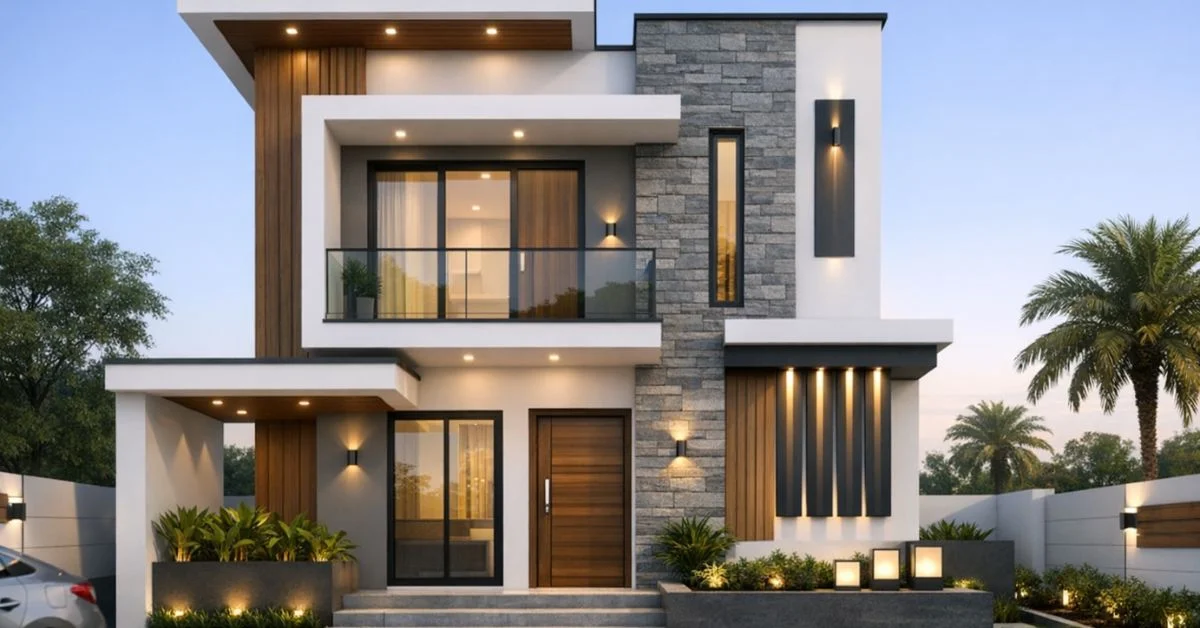
24 Modern Small House Front Elevation Design Ideas for 2026
Small houses are no longer “settling for less.” In fact, they are having a serious moment right now and the front elevation is where all the personality lives. Whether you are building fresh or renovating, the facade of your home is the first handshake with the world.
This guide covers 24 modern small house front elevation design ideas for 2026 that architects and homeowners are actually using, not just pinning on a mood board and forgetting.
Let’s get into it.
What Is a Front Elevation in House Design?
Before the list, a quick note for the newcomers.
A front elevation is the exterior-facing view of your home walls, windows, doors, roof lines, and all finishing materials. It defines your home’s visual identity from the street. According to the National Association of Home Builders (NAHB), curb appeal directly influences property value, with strong first impressions adding measurable resale value.
So yes, the facade actually matters.
Why Small House Elevation Design Is Trending in 2026
Urban land costs have pushed residential plots smaller. At the same time, homeowners want bold, high-end looks without the sprawling footprint. The result? A boom in creative small house front elevation design that punches well above its square footage.
Sustainability, smart material use, and biophilic design are the three pillars driving 2026 trends backed by the World Green Building Council and architectural research from bodies like the American Institute of Architects (AIA).
24 Modern Small House Front Elevation Design Ideas
1. Flat Roof Minimalist Box Design
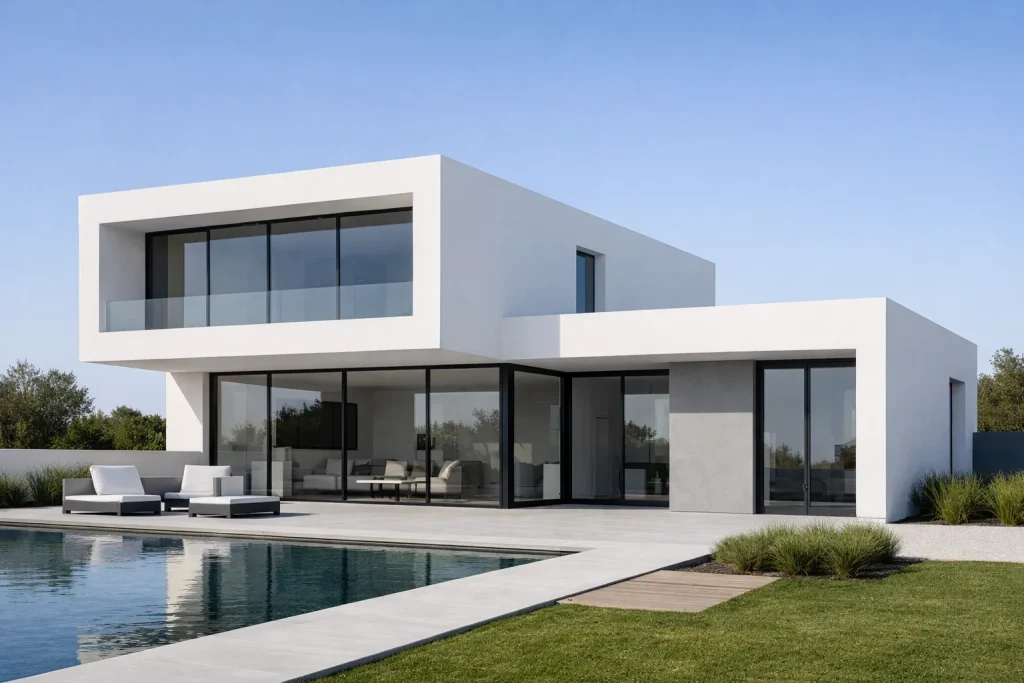
Clean lines, zero drama well, architecturally speaking. The flat roof box style strips everything back to geometry. Concrete or plastered walls in white or grey work perfectly here. This style is low on maintenance and high on modern appeal.
2. Sloped Roof with Exposed Timber Beams
A pitched or sloped roof paired with visible timber accents brings warmth to an otherwise sharp design. Natural wood at the roofline softens the hard edges and connects the home to its landscape. This works brilliantly in suburban and semi-rural plots.
3. Mixed Material Facade — Brick and Plaster
Combining exposed brick panels with smooth white plaster creates visual texture without going overboard. Architects use the 70/30 rule here 70% plaster, 30% brick to keep it balanced and modern rather than rustic.
4. Dark Monochromatic Elevation
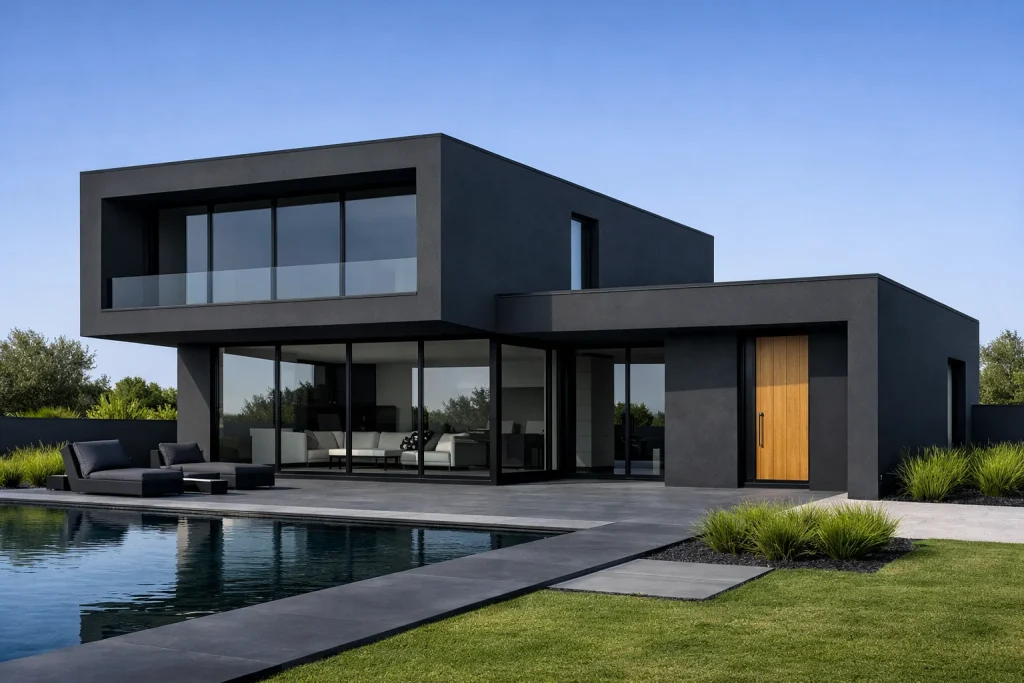
Charcoal grey or deep navy exteriors are trending heavily in 2026. The key is consistency: dark walls, dark frames, dark roof trim. Contrast comes from greenery or a lighter front door. Bold, dramatic, and surprisingly low-maintenance with modern exterior paints.
5. White Minimalist with Large Windows
Crisp white walls and oversized windows are a timeless combination. Large glazed panels flood interiors with light while making the facade feel open and generous even on a compact footprint. This design photographs beautifully, which is a genuine bonus in the digital age.
6. Stone Cladding Accent Wall
Stone is making a strong comeback in 2026, but not as a full coverage. Use it as an accent for a single wall column or the area framing the entrance. Natural stone or quality stone-look panels add texture and permanence without weighing down the design.
7. Vertical Wood Cladding
Vertical timber battens or engineered wood cladding give height to a small house facade. This is a popular Scandinavian-influenced design that is now widely adapted globally. Treated hardwood or composite cladding ensures the look lasts without constant upkeep.
8. Glass and Steel Entry Canopy
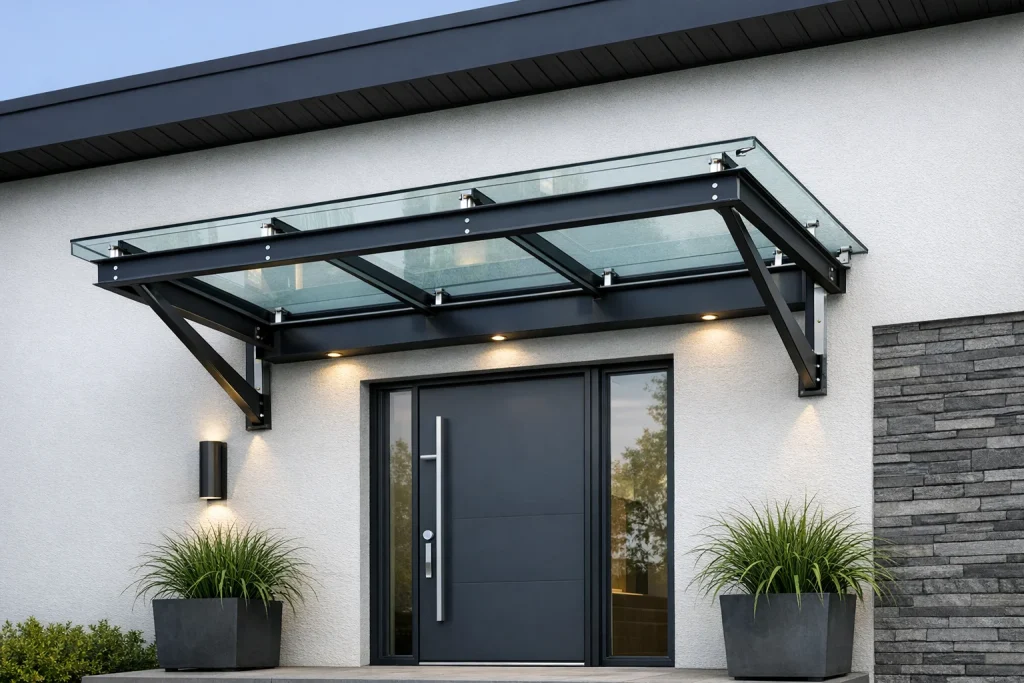
A steel-framed glass canopy above the main entrance transforms a plain door into a focal point. It signals architecture, protects from weather, and adds a commercial-grade elegance to residential builds. Works best with contemporary flat or mono-pitch roof designs.
9. Green Wall or Vertical Garden Facade
This is where architecture meets ecology. Vertical gardens on the front wall are not just aesthetic; they improve air quality, reduce heat absorption, and make a striking first impression. The Journal of Urban Planning and Development has documented the thermal benefits of green facades in urban homes.
10. Biophilic Design with Planter Beds
Recessed planter beds built into the elevation itself bring greenery flush with the facade. Unlike potted plants placed in front, these are designed to give the home an organic, living quality that you cannot fake with decor.
11. Cantilevered Porch or Overhang
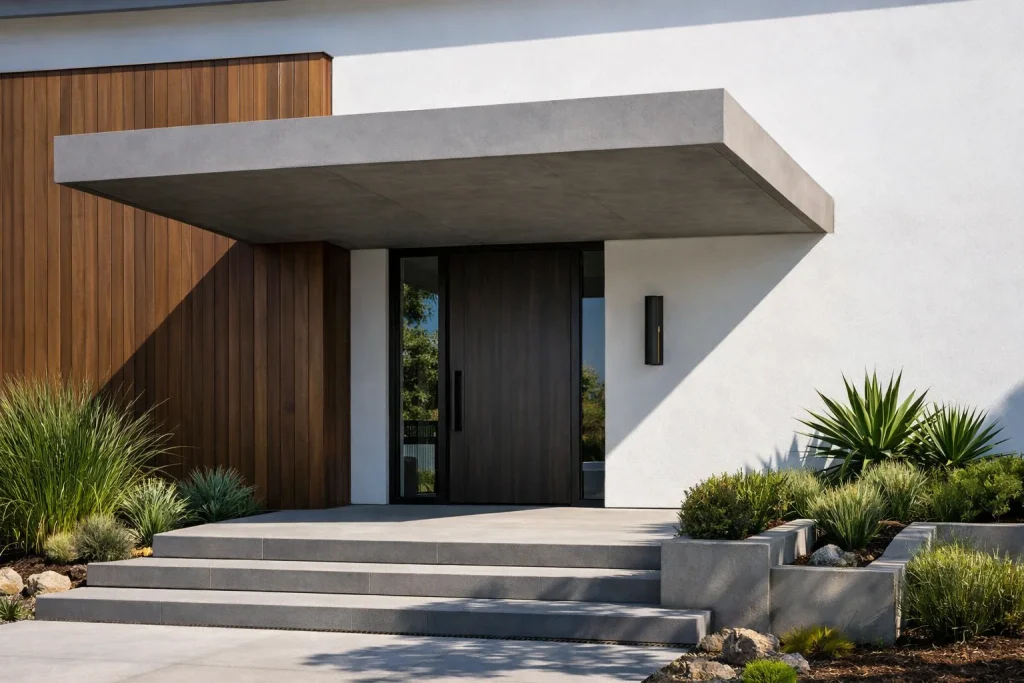
A cantilevered roof slab extending over the entrance creates depth and shadow on the facade. Shadows are the architect’s best friend. They make flat surfaces look dimensional and give the elevation a layered look without adding complexity to the actual structure.
12. Industrial Style — Exposed Concrete
Raw concrete with clean formwork textures suits the industrial-modern aesthetic. Combine it with black window frames and metal cladding details. This look is particularly effective on tight urban plots where you want the house to make a statement without apology.
13. Mediterranean Influence with Arched Elements
Arched doorways or window openings are a subtle nod to Mediterranean architecture, a style that has persisted for good reason. On a modern small house, a single arched element in an otherwise contemporary elevation creates a focal point that reads as custom and considered.
14. Textured Plaster Finish
Not all plaster is equal. Textured or sand-finish plaster walls in earthy tones terracotta, warm beige, dusty rose give the elevation depth and warmth. This is an inexpensive upgrade over smooth plaster that dramatically changes the character of a home.
15. Split-Level Facade
Where the site has a natural slope, a split-level elevation design uses the gradient creatively. Different floor levels show on the facade as staggered volumes creating visual interest that flat-site designs simply cannot replicate. Work with the land, not against it.
16. Monopitch Roof Design
A single-slope roof higher at the front, lower at the rear gives a small house an instantly modern profile. The tall front facade creates space for large windows and visual impact on the street. This is one of the most cost-effective ways to modernize a small home.
17. Scandinavian-Inspired Symmetry
Symmetry, muted colour palettes, and a human scale define Scandinavian residential design. Think identical windows flanking a centred door, matching planters, and a simple colour story. This style suits cold and temperate climates and delivers on quiet confidence rather than loud drama.
18. Colour Blocking on the Facade
Two-toned elevations where different volumes are painted in contrasting but complementary colours are very much a 2026 trend. Think warm white on the upper floor and a deep terracotta or olive on the lower. Colour blocking helps define the architecture without additional material cost.
19. Perforated Screen or Jali Panel Feature
A perforated screen or lattice panel often in metal or cast concrete adds a layer of privacy and visual interest at the entrance. It casts beautiful shadow patterns on the wall behind it. This technique is widely used in South Asian and Middle Eastern contemporary architecture for both functional and decorative effect.
20. Flush Garage Door Integration
When the garage is part of the front elevation, making its door flush with the wall the same colour, the same texture keeps the facade unified. A visible, contrasting garage door breaks the composition. Integrated panel-lift or flush doors dissolve it.
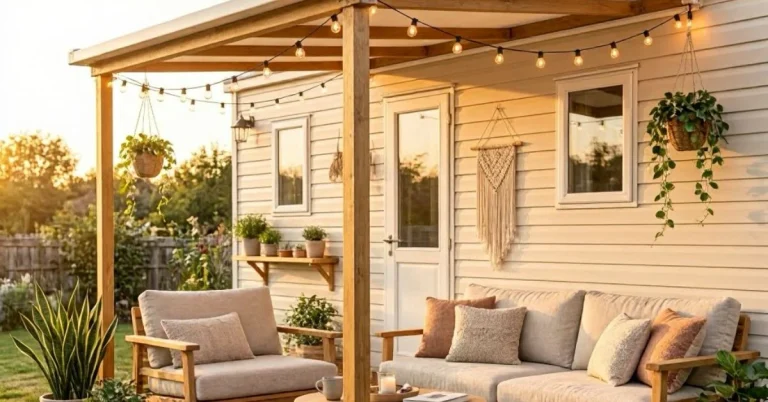
21. Wooden Pergola at the Entrance
A timber pergola framing the front door adds dimension and warmth to the facade. In climates where plants thrive, growing a climbing plant over it adds natural texture over time. It is a detail that reads as crafted and considered rather than builder-standard.
22. Stacked Stone Base with Plaster Upper
Separating the facade into horizontal zones, a stone or brick base from ground level to window sill height, and smooth plaster above is a grounded, traditional detail delivered in a modern way. It anchors the house visually and gives the elevation a natural, tiered composition.
23. Asymmetric Facade Design
Intentional asymmetry: a larger window on one side, a recessed entry on the other creates movement and visual energy. It suggests that the architecture was thoughtfully designed rather than produced off a template. Asymmetry is harder to get right but more rewarding when it works.
24. Smart Facade with Integrated Lighting
The 2026 elevation is no longer just about daytime appearance. Architectural lighting strip lights under the canopy, uplights on the facade, backlit house numbers turns the front elevation into a night-time feature too. Well-placed lighting also improves security, which is a genuine practical benefit beyond the aesthetics.
Key Material Choices for Small House Elevations in 2026
| Material | Key Benefits | Best For |
|---|---|---|
| Textured Plaster | Affordable, highly versatile, adds depth and modern texture | Any architectural style |
| Natural Stone Cladding | Extremely durable, premium look, weather-resistant, timeless appeal | Accent walls, luxury facades |
| Engineered Timber | Warm aesthetic, eco-friendly, blends modern + natural design | Cladding, pergolas, feature sections |
| Exposed Concrete | Strong industrial look, low maintenance, modern urban feel | Urban homes, minimalist designs |
| Metal Cladding | Long-lasting, low maintenance, sleek contemporary appearance | Modern & contemporary exteriors |
Common Mistakes to Avoid in Small House Elevation Design
Over-cluttering the facade. More materials, more colours, more details this is a trap. Small elevations benefit from restraint.
Ignoring proportions. A window that is slightly too small or a door that is slightly too large throws off the entire composition. Always work with scaled drawings before committing to construction.
Forgetting the night view. Architectural lighting is often an afterthought. Plan it into the design, not as a retrofit.
Choosing materials for trends only. A material you cannot maintain or a colour that will date in two years is a liability. Always ask: will this look good in ten years?
Conclusion
A small house front elevation in 2026 is your opportunity to say something authentic about who you are without spending a fortune. The best designs on this list share one thing: they are deliberate. Every material, every line, every opening is a considered choice.
FAQs
Q1. What is the most popular small house front elevation style in 2026?
The flat roof minimalist box design with large windows is the most popular choice for modern small homes in 2026.
Q2. Which material is best for a small house front elevation?
Textured plaster is the most versatile and budget-friendly material for small house front elevations.
Q3. How can I make my small house front look bigger?
Use vertical cladding, large windows, and a monopitch roof to add height and create the illusion of a larger facade.
Q4. Does front elevation design affect property value?
Yes, strong curb appeal through a well-designed front elevation directly increases your home’s resale value according to the NAHB.
Q5. Can I add modern elevation design to an existing small house?
Absolutely textured plaster, stone accent walls, a pergola, or integrated lighting can modernize an existing facade without full reconstruction.

As an admin, with a passion for transforming spaces and a sharp eye for design trends, I created Interior Design Style Quiz to help homeowners make confident, informed decisions about their homes from the curb all the way inside.