1970s Home Decor: Style, Colors & Key Trends
Meta Description
Explore 1970s home decor — from earth-tone color palettes and shag rugs to rattan furniture and macramé. Learn what defined the era and how to use it today.
AI Overview Summary
1970s home decor is defined by warm earth tones, natural textures, bold geometric patterns, and low-profile furniture. Key elements include avocado green and burnt orange color palettes, shag carpeting, rattan and teak wood furniture, macramé wall hangings, wood paneling, and sunken conversation pits. The style rejects minimalism in favor of warmth, comfort, and self-expression. Today, the 1970s aesthetic is experiencing a major revival, with designers selectively incorporating its signature warmth into modern interiors.
Key Takeaways
- The dominant 1970s color palette includes burnt orange, avocado green, mustard yellow, and harvest gold
- Shag carpeting, rattan furniture, teak wood, and macramé are the most recognizable material signatures
- Sunken conversation pits, wood wall paneling, and popcorn ceilings were defining architectural features
- 70s furniture was low-slung, curved, and built for lounging — not formal living
- The style is distinct from mid-century modern (1950s–60s): it’s earthier, heavier, and more casual
- Incorporating 1–2 statement pieces is the most effective way to bring the look into a modern home without dating it
What Is 1970s Home Decor?
1970s home decor is an interior design style that dominated American homes between roughly 1968 and 1979. It moved away from the clean lines of mid-century modern and toward earthier, warmer, more tactile interiors. The defining characteristics are bold color, natural material, heavy texture, and a strong emphasis on comfort over formality.
This is not the same as mid-century modern. Mid-century modern (roughly 1945–1969) favored sleek lines and lighter palettes. By the 1970s, the home got earthier, heavier, and more informal — materials got rougher, color got louder, and plans got more casual.
1970s Color Palette: What Colors Were Popular?
The 1970s color palette centers on warm, saturated earth tones pulled from the natural world.
The core colors are:
| Color | Common Application |
|---|---|
| Burnt orange | Sofas, accent walls, ceramics |
| Avocado green | Kitchen appliances, upholstery, tile |
| Mustard yellow | Throw pillows, rugs, drapes |
| Harvest gold | Carpeting, kitchenware |
| Chocolate brown | Wood paneling, furniture frames |
| Rust red | Accent decor, bedding |
These were not used sparingly. The 1970s can be described as loud, funky and fun — homes were set up with bright patterns and wood paneling. Entire rooms were painted or carpeted in a single bold color, often layered with a complementary pattern on the wallpaper or upholstery.
What Furniture Defined 1970s Home Decor?
Low-Profile and Modular Seating
Furniture became relaxed and futuristic — low-profile modular sectionals, curved furniture, and sunken “conversation pits” encouraged lounging, while sculptural pod chairs and dome lighting added a Space Age touch.
The conversation pit — a recessed seating area built directly into the floor — was the decade’s most dramatic statement. It replaced the formal living room arrangement and prioritized social gathering.
Materials: Rattan, Teak, and Velvet
Key 70s interior decor includes shag rugs, velvet, and corduroy, alongside natural materials like rattan, teak wood, and brick for a layered, organic feel using natural fibers.
Rattan and wicker showed up everywhere: chairs, headboards, plant stands, room dividers. Teak wood dominated dining sets and credenzas. Velvet upholstery — in burnt orange, mustard, or chocolate — was the premium seating choice.
What Patterns and Textiles Were Used in 1970s Interiors?
Bold Geometric and Floral Prints
Interiors embraced bold geometric designs, swirling motifs, and oversized florals — often appearing on wallpaper, upholstery, and textiles throughout the home. These patterns brought energy and personality to interiors, reflecting the era’s confidence in self-expression.
A single room might layer geometric wallpaper, a floral sofa, and a patterned shag rug. The goal was visual richness, not restraint.
Macramé and Woven Textiles
Macramé wall hangings and plant hangers became ubiquitous 1970s home decor accessories. Hand-knotted in natural cotton or jute, they appeared above sofas, in entryways, and suspending trailing plants near windows. Woven baskets offered both function and decoration — used for magazines, blankets, or plants, their earthy tones and handmade feel matched the decade’s love for natural materials.
Shag Carpeting
Shag carpet is arguably the most recognizable single element of 1970s home decor. It ran wall to wall in living rooms, bedrooms, and sometimes bathrooms — in avocado green, harvest gold, or burnt orange. The deep pile provided texture underfoot that no other flooring could match.
Architectural Features of 1970s Homes
Beyond furnishings, the 1970s introduced several architectural details that became signature features of the era.
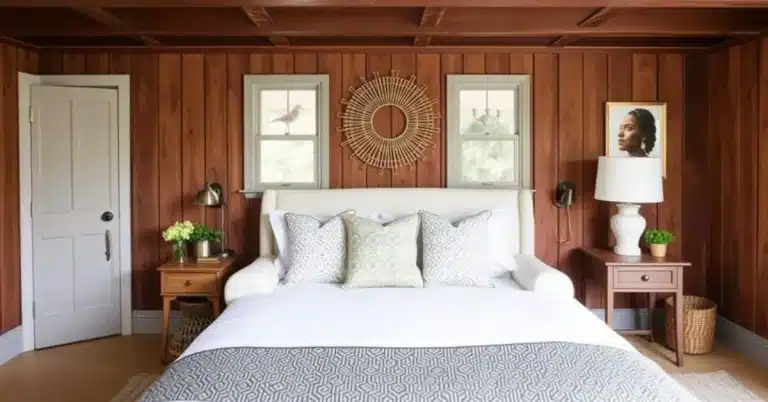
Wood Paneling: Dark wood paneling lined living rooms and dens across America. It gave rooms warmth but, in excess, made spaces feel closed and dim.
Popcorn Ceilings: Many homes built in the 1970s featured textured ceilings, often in a popcorn or patterned style. These finishes added visual depth while helping with sound absorption.
Open Floor Plans: The 1970s accelerated the shift toward open-plan living. Kitchens opened into dining areas; living rooms flowed into dens without formal dividers.
Arched Doorways: Arched shapes softened interior architecture and were widely used in doorways, niches, and built-in shelving.
Wet Bars: Often finished in wood or mirrored surfaces, they encouraged gatherings while adding a stylish touch to interiors.
1970s Home Decor vs. Mid-Century Modern: Key Differences
These two styles are frequently confused, but they are distinct.
| Feature | 1970s Home Decor | Mid-Century Modern |
|---|---|---|
| Era | Late 1960s–1979 | 1945–1969 |
| Color palette | Earth tones, warm saturated colors | Lighter tones, pops of primary color |
| Furniture lines | Curved, low-slung, modular | Clean, geometric, tapered legs |
| Materials | Rattan, shag, velvet, macramé | Molded plastic, fiberglass, teak |
| Formality | Casual, relaxed | Structured but livable |
| Pattern use | Heavy, layered | Restrained, accent-level |
| Overall feel | Earthy, warm, tactile | Sleek, airy, optimistic |
The competitor site midcenturymoderngal.com focuses almost entirely on the mid-century modern era (1950s–60s). If you want authentic 1970s decor guidance — the shag carpets, earth tones, macramé, and conversation pits — that’s a distinct aesthetic this article addresses.
How to Incorporate 1970s Home Decor Today
What Works in Modern Homes
Contemporary interiors are increasingly embracing softer architecture, organic forms, and emotionally resonant spaces — all of which draw natural inspiration from the 1970s. The key is selective borrowing, not full reproduction.
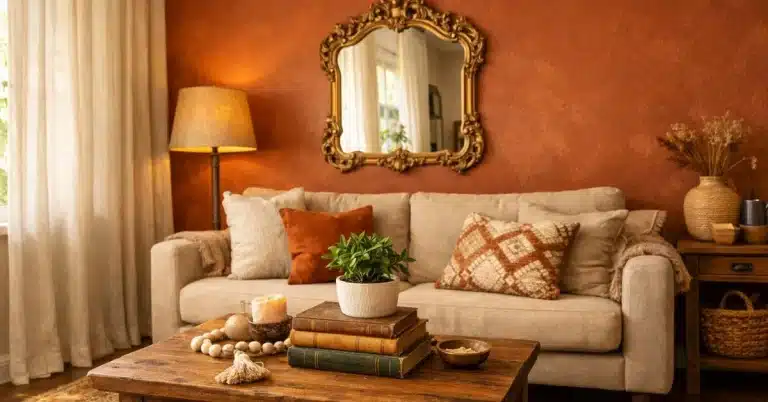
Start with one statement piece: a burnt orange velvet sofa, a rattan pendant light, or a mustard-toned area rug. Build outward from there with neutral anchors so the retro element reads as intentional.
Effective modern applications:
- A shag-style area rug in a natural ivory or warm taupe (modernizes the texture without the dated color)
- Rattan accent chairs paired with a white or linen sofa
- Macramé as a single wall feature, not throughout the room
- Ceramic vessels in earth tones on open shelving
- Velvet throw pillows in burnt orange or rust on a neutral couch
What to Avoid
Common 1970s interior design mistakes include overusing earth tones, cluttered macramé decor, dark wood overload, and too many patterns.
Specifically:
- Don’t paint every wall in mustard or orange — use them as accents
- Avoid stacking geometric wallpaper, patterned upholstery, and a busy rug in the same room
- Don’t install floor-to-ceiling dark wood paneling — use a single accent wall or refinish with a lighter stain
- Skip the wall-to-wall shag carpet; a shag area rug achieves the effect without the commitment
The key to pulling off 70s design in a contemporary home is balance — you want nostalgia, not cosplay. You want personality, not clutter.
Conclusion
1970s home decor represents one of the most personality-driven design eras in American interior history. Its earth-tone palettes, shag textures, macramé, rattan furniture, and low-slung seating defined how millions of households lived for over a decade. The style is distinct from mid-century modern — earthier, heavier, and more casual — and it is experiencing a genuine revival in modern homes. The most effective approach is selective: choose pieces that bring warmth and character without overwhelming a space. One burnt orange velvet chair or a rattan pendant light can anchor the entire aesthetic without turning your home into a time capsule.
FAQ: 1970s Home Decor
What colors are associated with 1970s home decor?
Burnt orange, avocado green, mustard yellow, harvest gold, chocolate brown, and rust red are the signature colors of 1970s American home interiors.
What is the difference between 1970s decor and mid-century modern?
Mid-century modern (1945–1969) features cleaner lines, lighter palettes, and structured silhouettes; 1970s decor is earthier, heavier, and more casual, with shag textures, darker tones, and modular seating.
Is 1970s home decor coming back in style?
Yes. Elements like rattan furniture, curved seating, earth-tone palettes, macramé, and velvet upholstery are all trending in contemporary American interior design as of 2025–2026.
What furniture styles were popular in the 1970s?
Low-slung modular sectionals, sunken conversation pits, pod chairs, rattan accent chairs, and teak dining sets were the dominant furniture choices of the era.
How do I add 1970s style to my home without it looking dated?
Choose one or two signature elements — a velvet accent chair, a rattan light fixture, or an earth-tone rug — and pair them with neutral, contemporary pieces to keep the look grounded and intentional.

As an admin, with a passion for transforming spaces and a sharp eye for design trends, I created Interior Design Style Quiz to help homeowners make confident, informed decisions about their homes from the curb all the way inside.