Mexican Home Decor: Ideas, Styles & Design Tips
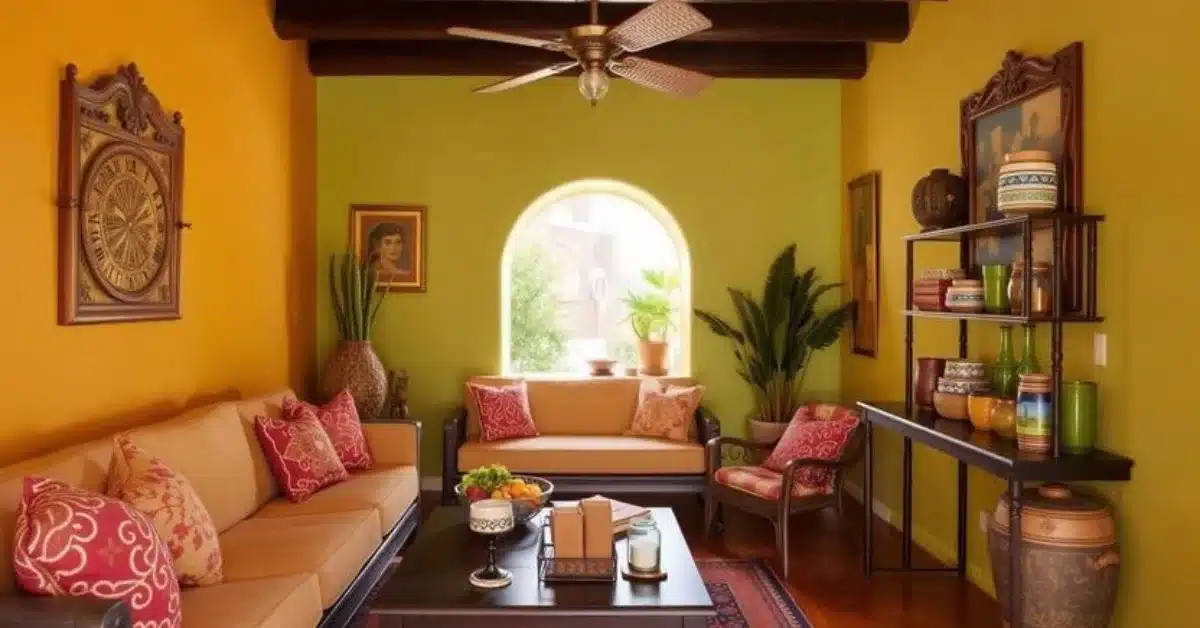
Mexican home decor blends bold colors, handcrafted ceramics, woven textiles, and folk art traditions rooted in indigenous and Spanish colonial heritage. Key elements include Talavera pottery, carved wood furniture, papel picado, terracotta tiles, and vibrant paint palettes. It suits living rooms, kitchens, patios, and entryways and adapts easily to modern and eclectic interiors.
What Is Mexican Home Decor?
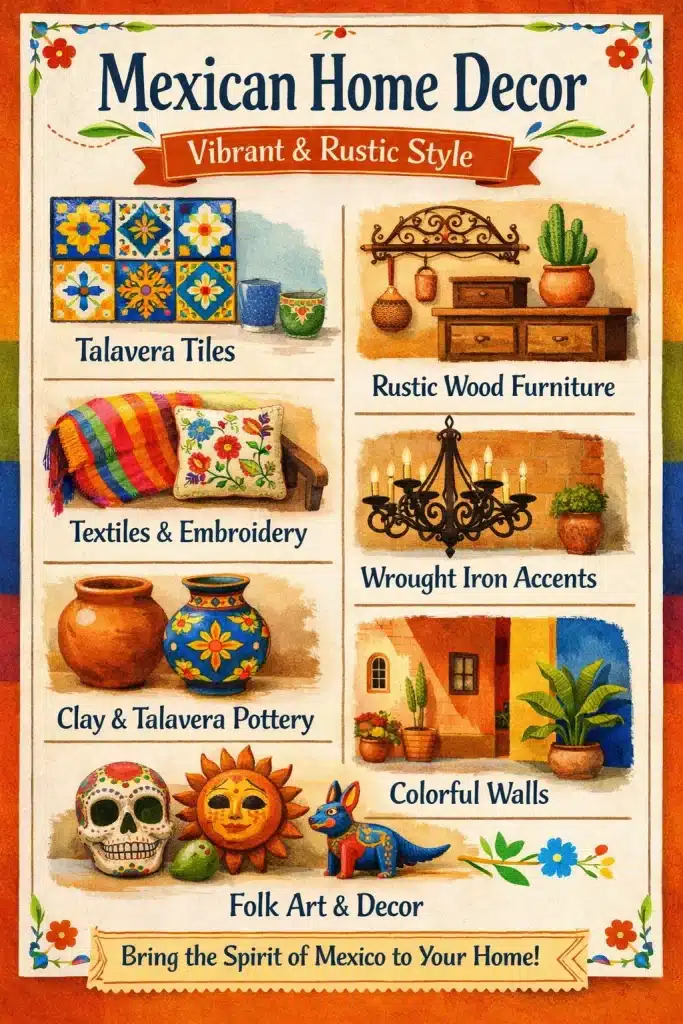
Mexican home decor is an interior design style rooted in Mexico’s pre-Columbian and colonial heritage. It combines indigenous craft traditions such as Oaxacan wood carving and Pueblan pottery with Spanish architectural influences like terracotta tile and wrought iron. The result is a visually layered, color-forward aesthetic built around handmade objects with cultural meaning.
This style is not a single look. It ranges from the vibrant chaos of a maximalist Día de los Muertos-inspired living room to the restrained warmth of a Baja-style whitewashed adobe home with a single hand-painted vase.
Core Elements of Mexican Home Decor
Talavera Ceramics
Talavera is tin-glazed earthenware produced in Puebla, Mexico, characterized by white backgrounds and bold hand-painted patterns in cobalt, yellow, black, green, and orange. Authentic Talavera carries a Denomination of Origin certification and is made by fewer than a dozen certified workshops in Puebla and Tlaxcala.
In home decor, Talavera appears as decorative plates, vases, planters, sink basins, and backsplash tiles. A single Talavera planter on a kitchen windowsill reads as an accent; a tiled bathroom in Talavera reads as a full design statement.
Textiles: Woven, Embroidered, and Block-Printed
Mexican textiles are among the most varied in the world. Key types used in home decor include:
| Textile | Origin Region | Typical Use |
|---|---|---|
| Zapotec rugs (tapetes) | Oaxaca | Area rugs, wall hangings |
| Otomi embroidery | Hidalgo | Throw pillows, wall art, table runners |
| Reboso-style fabric | Multiple regions | Throws, curtains |
| Tenango embroidery | Hidalgo | Framed art, cushion covers |
| Huipil-inspired prints | Chiapas, Oaxaca | Upholstery, placemats |
Hand-loomed Zapotec rugs use natural dyes derived from cochineal insects, indigo, and marigold, producing colors that age gracefully rather than fade uniformly.
Wood Carving and Furniture
Mexican furniture is typically made from mesquite, pine, or parota wood dense, durable hardwoods well-suited to carved and painted finishes. Carved wood furniture often features floral motifs, geometric patterns, and religious iconography. Pieces from the Jalisco highlands, particularly from Tonalá and Tlaquepaque, are recognized internationally as high-quality artisan furniture hubs.
In practice, a carved wood console table, painted headboard, or rustic pine bench brings immediate warmth to a neutral room without additional styling effort.
Wrought Iron and Metal Work
Wrought iron is a colonial-era staple in Mexican architecture and interior design. It appears as candle holders, light fixtures, curtain rods, mirrors, and decorative wall pieces. Copper work, centered in Santa Clara del Cobre, Michoacán, produces hammered bowls, sinks, and cookware used both functionally and decoratively.
A hammered copper pendant light above a kitchen island functions as a centerpiece that references both Mexican craft and contemporary design simultaneously.
Terracotta, Saltillo Tile, and Stone
Terracotta floors, Saltillo tiles, and volcanic stone (cantera) are foundational materials in Mexican architecture that translate directly into home decor. Saltillo tile a handmade terracotta tile from Saltillo, Coahuila is a warm, slightly irregular floor tile widely used in U.S. Southwest and Mediterranean-style homes.
Terracotta pots are inexpensive, durable, and visually versatile. A cluster of terracotta planters in varying sizes on a patio or entryway is one of the most cost-effective ways to establish a Mexican-inspired space.
Mexican Home Decor Color Palette
Color is the most immediate marker of Mexican design. The traditional palette draws from nature, ceramics, and architecture.
Core Colors:
- Terracotta / rust derived from clay and soil; grounds the palette
- Cobalt blue dominant in Talavera pottery; pairs with white and terracotta
- Saffron / marigold yellow associated with Día de los Muertos marigolds
- Deep red / chile red a warm, saturated accent common in Oaxacan textiles
- Turquoise appears heavily in coastal and Yucatán-influenced interiors
- Forest green used in painted furniture and tile borders
For U.S. interiors, pairing terracotta walls with white trim and cobalt accents is one of the cleanest ways to achieve a Mexican-inspired look without overwhelming the space.
Mexican Folk Art in Home Decor
What Counts as Mexican Folk Art?
Mexican folk art (artesanías) refers to handmade objects produced using traditional regional techniques. In home decor, the most prominent categories are:
- Alebrijes fantastical carved and painted animal figures from Oaxaca
- Árbol de la Vida (Tree of Life) ceramic candelabras from Metepec, Estado de México
- Barro negro black clay pottery from Oaxaca, fired using pre-Hispanic methods
- Huichol beadwork intricate yarn and bead art from Nayarit and Jalisco
- Papel picado perforated tissue paper banners used as festive wall or ceiling decor
Folk art pieces function as conversation objects and visual anchors. A large Árbol de la Vida on a bookshelf, for instance, commands attention while communicating cultural specificity.
How to Decorate Each Room in Mexican Style
Living Room
Start with a warm wall color terracotta, ochre, or warm white. Layer in a Zapotec-style rug, woven throw pillows in Otomi or geometric patterns, and one or two folk art statement pieces. Wrought iron candle holders and a carved wood coffee table complete the look without needing a full renovation.
Kitchen
Mexican kitchens center on Talavera. Apply hand-painted tiles as a backsplash behind the stove or sink. Hang copper pots on a wall-mounted rack. Use terracotta or barro negro serving dishes as counter decor. A painted wood shelf displaying Talavera plates is both functional and decorative.
Bedroom
Use embroidered textiles Otomi or Tenango print duvet covers, decorative pillows, or a woven blanket at the foot of the bed. A carved wood headboard or side table introduces the furniture tradition. Warm lighting from wrought iron or hammered copper fixtures reinforces the palette.
Patio and Outdoor Spaces
Saltillo tiles, terracotta planters, and wrought iron furniture are purpose-built for outdoor use. String lights, papel picado, and a mosaic-tiled tabletop transform a basic patio into a recognizable aesthetic space with minimal cost.
Mexican Home Decor Style Comparisons
| Style | Color Palette | Key Materials | Best For |
|---|---|---|---|
| Traditional Mexican | Terracotta, cobalt, marigold | Talavera, carved wood, wrought iron | Full-room transformation |
| Modern Mexican | Neutral base + bold accents | Concrete, copper, barro negro | Minimalist interiors |
| Bohemian Mexican | Earth tones + saturated brights | Textiles, folk art, plants | Eclectic, layered spaces |
| Southwest Fusion | Terracotta, turquoise, cream | Saltillo tile, leather, woven cotton | U.S. Southwest homes |
Cost Range for Mexican Home Decor in the U.S.
- Talavera decorative plate: $20–$60 (imported authentic); $10–$25 (reproduction)
- Zapotec rug (4’x6′): $150–$400 (authentic handwoven); $40–$90 (machine-made)
- Árbol de la Vida candelabra: $80–$250 depending on size and complexity
- Hammered copper pendant light: $120–$350
- Saltillo tile (per sq ft): $3–$8 unsealed; professional installation adds $4–$8/sq ft
- Alebrije (medium, hand-carved): $60–$200 from artisan importers
Authentic pieces sourced directly from Mexican artisan collectives or U.S. importers who work with certified workshops cost more but hold both aesthetic and monetary value over time.
Conclusion
Mexican home decor is a craft-centered design tradition with deep regional diversity. Its strength lies in the handmade quality of its objects Talavera ceramics, Zapotec rugs, carved wood, and folk art each carry the mark of the artisan who made them. For U.S. homeowners, incorporating this style is as approachable as a single terracotta planter or as immersive as a fully tiled kitchen. The common thread is authenticity: sourcing pieces made by real artisans using real techniques produces results that mass-produced decor cannot replicate.
What is the most recognizable element of Mexican home decor?
Talavera ceramics are the most universally recognized element the hand-painted blue-and-white pottery from Puebla appears in kitchens, bathrooms, and gardens across Mexican and Mexican-inspired interiors.
Can Mexican home decor work in a modern home?
Yes. A neutral modern interior benefits from selective Mexican accents: a single barro negro vase, a hammered copper fixture, or a Zapotec rug introduces texture and warmth without visual conflict.
What’s the difference between authentic and reproduction Mexican decor?
Authentic pieces are handmade by regional artisans using traditional materials and techniques. Reproductions are factory-made, often with machine printing and synthetic materials. Authentic Talavera, for example, carries a Denomination of Origin certification; reproduction pieces do not.
Where can I buy authentic Mexican home decor in the U.S.?
Options include artisan importers, Latin American craft markets, Etsy sellers sourcing directly from Mexico, and specialty retailers who partner with certified workshops. Look for provenance information and artisan attribution when available.
How do I avoid making the decor look like a theme restaurant?
Restraint is key. Pick two or three signature elements one textile, one ceramic, one folk art piece rather than filling every surface. Ground the palette in neutrals and let the accent pieces speak individually.

As an admin, with a passion for transforming spaces and a sharp eye for design trends, I created Interior Design Style Quiz to help homeowners make confident, informed decisions about their homes from the curb all the way inside.