DIY Shelf Ideas for Small Rooms: 15 Space-Saving Solutions That Actually Work
DIY shelf ideas for small rooms include floating wall shelves, corner shelves, over-door organizers, ladder shelves, and built-in nook shelving. These solutions use vertical wall space to increase storage without occupying floor area. Most projects cost between $15 and $100 in materials and require only basic tools. The best approach depends on wall type, weight capacity needs, and the room’s primary function.
Key Takeaways
- Floating shelves are the most versatile DIY option for small rooms and cost $20 to $60 to build.
- Corner shelves convert unused dead space into functional storage.
- Vertical stacking and wall-mounted systems consistently outperform floor-standing units in rooms under 150 square feet.
- Stud-mounted shelves can hold 50 to 80 pounds per shelf; drywall anchors support 10 to 25 pounds.
- Matching shelf finish to wall color creates the illusion of more space.
What Are the Best DIY Shelf Ideas for Small Rooms?
The best DIY shelf ideas for small rooms are floating shelves, corner shelves, pegboard wall systems, ladder shelves, and over-door storage units. Each solution mounts to walls or uses vertical clearance to free up floor space, which is the primary constraint in rooms under 200 square feet.
The right choice depends on three factors: available wall space, weight of items to be stored, and skill level. Floating shelves suit most rooms. Corner units work well in bedrooms and home offices. Pegboard systems excel in craft rooms and garages.
15 DIY Shelf Ideas for Small Rooms
1. Floating Wall Shelves
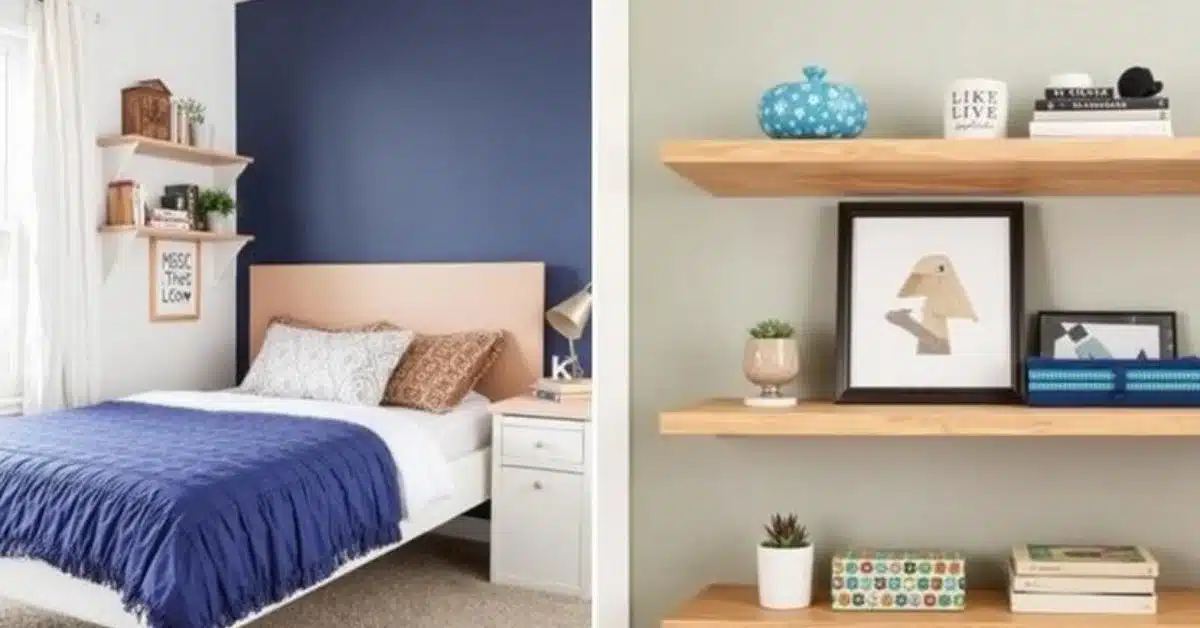
Floating shelves are the most common and cost-effective small room storage solution. They attach directly to wall studs with hidden brackets, leaving no visible hardware. A standard 24-inch pine floating shelf costs roughly $15 to $30 in lumber and $8 to $12 in hardware.
For best results, install at least two shelves staggered vertically rather than one wide shelf. This distributes weight and creates more usable surface area per linear foot of wall space.
Estimated cost: $25 to $50 per shelf Skill level: Beginner Best for: Living rooms, bedrooms, entryways
2. Corner Floating Shelves
Corner shelves use the least-utilized wall space in any room. A triangular or L-shaped corner shelf can hold books, plants, or decorative objects without encroaching on the floor area.
Cut two equal-length boards at 45-degree angles, join them, and mount with L-brackets into corner studs. Corner shelves typically hold 15 to 30 pounds when properly anchored.
Estimated cost: $15 to $35 Skill level: Beginner to intermediate Best for: Bedrooms, bathrooms, reading nooks
3. Pegboard Wall Storage System
A pegboard system turns an entire wall section into modular, reconfigurable storage. Hooks, bins, and small shelves attach to the pegboard grid and can be repositioned without drilling new holes.
Standard 4×4-foot pegboard sheets cost $15 to $25 at home improvement stores. Mount with 1-inch standoff spacers to allow hook clearance behind the board. This setup is particularly effective for home offices and craft rooms where tool and supply access matters.
Estimated cost: $30 to $70 for a full wall panel Skill level: Beginner Best for: Offices, craft rooms, kitchens
4. Ladder Shelf (Leaning Bookcase)
A leaning ladder shelf requires no wall mounting and takes up less than 2 square feet of floor space. Build it from two long side rails and five horizontal rungs, then lean it against any wall.
Use 1×3 or 1×4 pine boards. Space rungs 12 inches apart. Sand, stain, and seal for a finished look. This is one of the few DIY shelf projects that relocates easily when rearranging a room.
Estimated cost: $30 to $60 Skill level: Beginner Best for: Bedrooms, living rooms, bathrooms
5. Over-Door Shelving Unit
The space above interior doors is almost always unused. A shallow shelf mounted 1 to 2 inches above the door frame stores items accessed infrequently, such as seasonal decor, extra linens, or board games.
Mount a 10-inch-deep shelf at door-frame height using two heavy-duty L-brackets. Keep items stored here under 20 pounds and avoid glass or breakables in case of accidental contact.
Estimated cost: $20 to $40 Skill level: Beginner Best for: Bedrooms, closets, hallways
6. Window Sill Extended Shelf
Extending the window sill inward by 4 to 6 inches creates a narrow display or plant shelf that takes up no additional wall or floor area. This works particularly well in rooms with deep window jambs.
Use a piece of 1×6 lumber cut to the window width. Fasten it to the existing sill with construction adhesive and finish nails. Paint or stain to match existing trim.
Estimated cost: $10 to $25 Skill level: Beginner Best for: Living rooms, dining rooms, bedrooms
7. Built-In Bookcase Using Alcoves or Recesses
If a room has a fireplace alcove, stairway recess, or any wall niche, building fixed shelves into that space uses depth that is otherwise wasted. Built-in shelves in alcoves gain 6 to 14 inches of depth without extending into the room.
Measure the alcove precisely, cut shelves to fit, and support them with shelf pins or painted wood cleats. Paint the inside of the alcove a darker shade than the walls to make shelves appear more intentional and built-in.
Estimated cost: $40 to $150 depending on alcove size Skill level: Intermediate Best for: Living rooms, home libraries, studies
8. Pipe and Wood Industrial Shelf
Black iron pipe flanges and wooden planks create an industrial-style wall shelf that is both functional and visually distinctive. Pipe fittings mount directly to wall studs, providing high weight capacity.
Floor flanges cost $6 to $10 each. A 48-inch pipe shelf with two pipe supports and one pine plank totals approximately $45 to $65 in materials. This style handles up to 50 pounds per shelf when mounted into studs.
Estimated cost: $40 to $80 per shelf Skill level: Intermediate Best for: Home offices, living rooms, kitchens
9. Crate Wall Shelf Grid
Wooden crates mounted in a grid pattern create deep, box-style shelves that can store books, plants, baskets, and folded clothing. The depth of standard produce crates (12 to 14 inches) makes them more practical than shallow floating shelves for bulkier items.
Sand and paint or stain the crates, then mount them to a plywood backing panel using screws and wood glue. Anchor the backing panel to wall studs.
Estimated cost: $30 to $80 depending on number of crates Skill level: Beginner to intermediate Best for: Bedrooms, living rooms, kids’ rooms
10. Tension Rod Shelf (No Nails Required)
For renters or anyone who cannot drill into walls, heavy-duty tension rods installed between two parallel walls in a nook or closet support lightweight shelves without fasteners.
Lay a cut piece of MDF or plywood across two horizontal tension rods. Each shelf can hold 10 to 15 pounds depending on rod rating. This works best in closets, pantry nooks, or bathroom alcoves.
Estimated cost: $15 to $30 Skill level: Beginner Best for: Renters, bathrooms, closets
11. Bedside Wall-Mounted Nightstand Shelf
A bedside floating shelf replaces a bulky nightstand with a 10- to 12-inch shelf mounted at mattress height. This frees floor space on both sides of the bed, which is significant in rooms under 150 square feet.
Mount at 24 to 28 inches from the floor for standard bed height. Add a small lip to prevent items from sliding off. Include a power outlet proximity consideration if a phone or lamp will rest on it.
Estimated cost: $20 to $45 Skill level: Beginner Best for: Small bedrooms, studio apartments
12. Bathroom Over-Toilet Shelf Tower
The wall space above the toilet in most bathrooms goes unused. A simple 2-shelf tower mounted at 60 to 72 inches above the floor stores toiletries, towels, and decor without impeding movement.
Build a basic rectangular frame from 1×8 pine with two fixed shelves inside. Mount to wall studs. Use waterproof paint or sealer to protect against bathroom humidity.
Estimated cost: $30 to $60 Skill level: Beginner to intermediate Best for: Small bathrooms, powder rooms
13. Under-Stair Shelf System
For rooms adjacent to a staircase, the triangular wall space under the stairs can be fitted with angled or tiered shelves. This niche is often sealed off as dead space when it could hold 20 to 40 linear feet of shelving.
Build individual shelf boxes sized to fit each triangular section, then paint the interior for a polished built-in look. This is a higher-investment project but adds substantial storage.
Estimated cost: $80 to $200 Skill level: Intermediate to advanced Best for: Small living rooms, entryways, home libraries
14. Rope-Hung Floating Shelf
Two holes drilled through each end of a plank, with thick rope threaded through and anchored to a ceiling joist or wall mount, create a hanging shelf that adds visual interest and requires no wall-mounted hardware below the shelf itself.
Use 3/4-inch Manila or cotton rope rated for at least 50 pounds. Space shelves by knotting below each plank. Keep loaded weight under 15 to 20 pounds per shelf.
Estimated cost: $20 to $45 Skill level: Beginner Best for: Boho and eclectic interiors, kitchens, bedrooms
15. Full-Wall Vertical Shelving Grid
For rooms with one long, unbroken wall, a floor-to-ceiling shelving grid built from 2×4 uprights and 1×10 planks creates the maximum possible storage in the minimum floor footprint. A 6-foot wide, 8-foot tall shelving grid delivers roughly 60 square feet of shelf surface.
Frame the uprights to existing wall studs or freestanding with toe-board anchors. This project takes a weekend but dramatically changes the functionality of a small room.
Estimated cost: $100 to $250 depending on room size and material choice Skill level: Intermediate Best for: Home offices, small apartments, studio rooms
DIY Shelf Ideas Comparison Table
What Materials Are Best for DIY Shelves in Small Rooms?
Pine and MDF are the two most practical materials for DIY shelves in small rooms. Pine is lightweight, easy to cut, takes paint and stain well, and costs $1.50 to $3.00 per linear foot at standard dimensions. MDF is denser, gives smoother paint finishes, but is heavier and does not tolerate moisture.
For bathroom shelves, use PVC boards or seal all wood surfaces with at least two coats of polyurethane. For heavy loads, upgrade to 3/4-inch plywood or solid hardwood.
How Much Weight Can DIY Shelves Hold?
DIY shelf weight capacity depends on the mounting method, not shelf material alone. Shelves anchored into wood studs (typically 16 inches apart) hold 50 to 80 pounds per bracket point. Drywall anchors rated for 50 pounds should not be loaded beyond 25 pounds in practice, as dynamic load from vibration reduces their real-world capacity.
For heavy bookshelves or kitchen storage, always locate and drill into studs. Use a stud finder or the knock-and-nail test before mounting any shelf that will hold more than 20 pounds.
Conclusion
DIY shelf ideas for small rooms come down to one consistent principle: use vertical space before adding square footage. Floating shelves, corner units, pegboard systems, and built-in alcove shelves all address the same problem from different angles, and most cost under $75 to build.
Start with the wall type you have, determine how much weight you need to store, and choose the mounting method that fits your skill level. A room that feels cramped because of clutter often needs better vertical storage, not more floor space. A well-executed DIY shelf project can add 20 to 40 linear feet of storage without touching the floor plan.
DIY Shelf Ideas for Small Rooms: FAQ
Q1: What is the easiest DIY shelf to build for a small room?
A floating shelf built from a single pine board with two L-brackets is the simplest project, taking under 30 minutes to install with a drill and level.
Q2: How deep should shelves be in a small room?
Shelves in small rooms should be 8 to 10 inches deep for books and decor, and no more than 12 inches deep for general storage, to avoid making the room feel cramped.
Q3: Can I install shelves without drilling into walls?
Yes. Tension rod shelves, leaning ladder shelves, and freestanding units require no wall drilling and are ideal for renters or anyone in temporary housing.
Q4: How high should floating shelves be installed?
Install floating shelves 60 to 72 inches from the floor for most display and storage purposes. Eye-level placement between 60 and 66 inches works best for items accessed regularly.
Q5: What is the cheapest DIY shelf idea for a small room?
A window sill extension shelf costs as little as $10 to $15 in materials and requires only a cut board, construction adhesive, and finish nails.
Q6: How do I make shelves look built-in on a budget?
Paint the shelf the same color as the wall, use flush-mount hidden brackets, and add a 1-inch wood trim strip along the front edge to create a built-in appearance for under $60.

As an admin, with a passion for transforming spaces and a sharp eye for design trends, I created Interior Design Style Quiz to help homeowners make confident, informed decisions about their homes from the curb all the way inside.