The Complete Exterior Home Renovation Guide: Best Projects, Costs & Real ROI (2026)
Exterior Home Renovation is the first thing people see and the last thing most homeowners invest in. Yet the data tells a different story about where renovation dollars actually go the furthest.
According to the 2025 Remodeling Cost vs. Value Report, 8 of the top 10 highest-ROI home improvement projects are exterior replacements. A new garage door returns 268% of its cost at resale. Manufactured stone veneer comes in at 208%. Even a straightforward fiber cement siding replacement recoups over 114% of what you spend.
That’s not a coincidence, it’s a pattern. Exterior renovations sit at the intersection of protection, aesthetics, and resale value in a way that most interior projects simply don’t match.
This guide covers everything you need to know before committing to an exterior renovation: which projects deliver real returns, what they actually cost, how to choose the right contractor, and the design trends shaping curb appeal in 2026. Whether you’re preparing to sell, finally fixing years of deferred maintenance, or just done with the way your house looks from the street this is where to start.
What Counts as an Exterior Home Renovation?
Before planning anything, it helps to understand the full scope of what “exterior renovation” actually includes. The term covers a wide spectrum from a single weekend paint job to a full structural transformation involving new siding, roofing, windows, doors, and landscaping.
Broadly, exterior home renovations fall into four categories:
Protective upgrades roofing, gutters, flashing, foundation waterproofing. These prevent water damage and structural deterioration, and they often carry mandatory urgency when problems appear.
Aesthetic improvements paint, siding replacement, stone veneer, shutters, trim updates, new doors. These directly affect curb appeal and are typically the most visible transformation.
Energy efficiency upgrades window replacement, insulated entry doors, exterior wall insulation, attic ventilation improvements. These reduce utility costs and often qualify for federal tax credits.
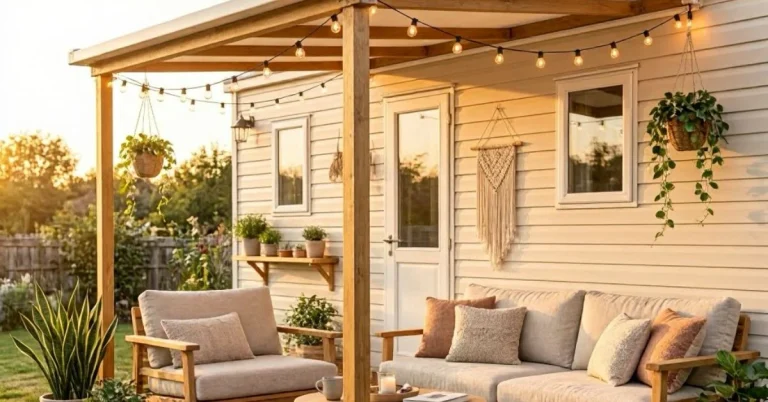
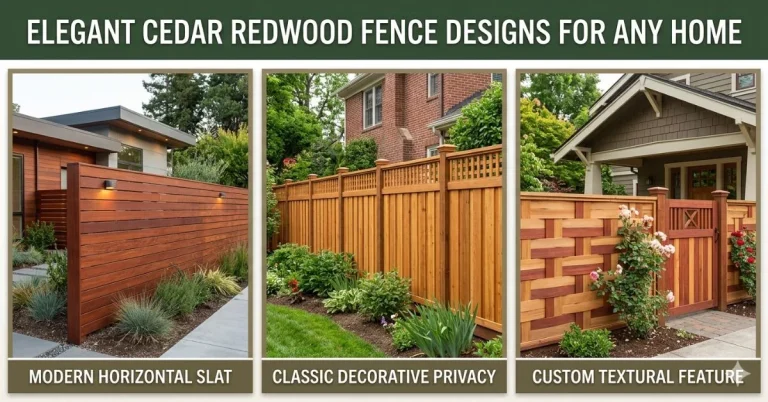
Outdoor living expansions decks, patios, pergolas, fencing, driveways. These extend usable square footage and are among the most popular projects homeowners are planning for 2026, according to the latest Houzz & Home Study.
Most homeowners end up combining projects from two or more of these categories doing siding and windows together, for example, or pairing a new roof with gutter replacement. Bundling related work is almost always more cost-efficient than treating each project as a standalone job.
The Highest-ROI Exterior Renovation Projects (With Real Numbers)
Not all exterior renovations pay back equally. Here’s a breakdown of the projects with the best documented return on investment, based on 2025 Cost vs. Value data and current market conditions.
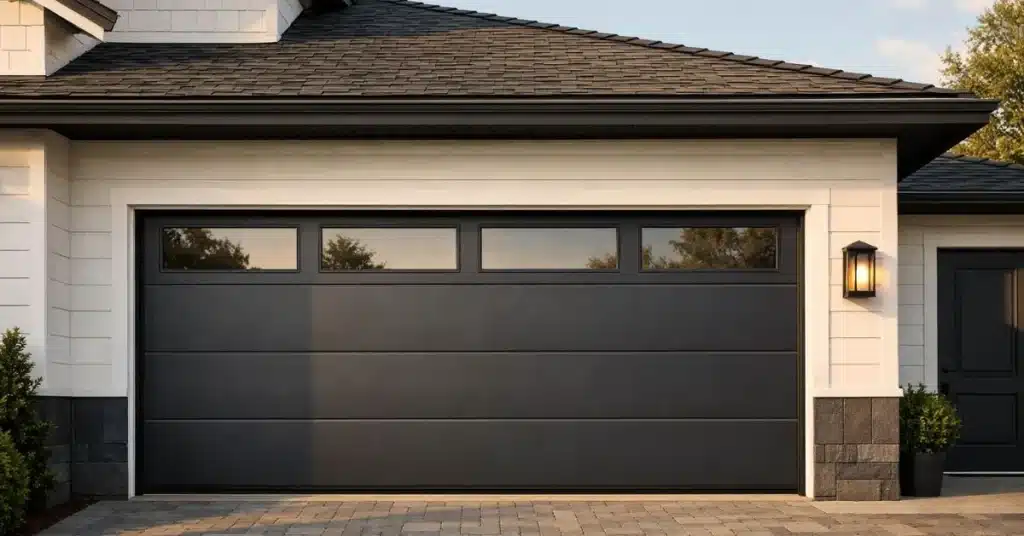
1. Garage Door Replacement
Average cost: $4,000–$7,500
Average ROI: 268%
Why it works: The garage door is often the largest visual element on a home’s front facade. An outdated or damaged door signals neglect immediately, while a clean, modern replacement signals care. Steel insulated garage doors are the most cost-effective choice they improve energy efficiency, require minimal maintenance, and install in a single day.
2. Manufactured Stone Veneer
Average cost: $10,000–$20,000
Average ROI: 208%
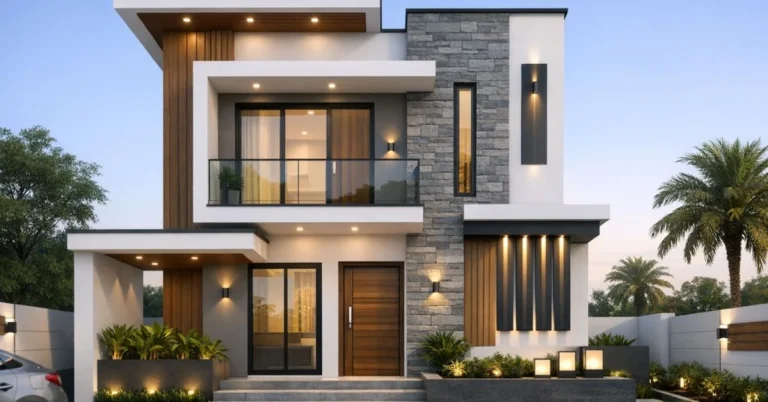
Why it works: Stone veneer adds a premium architectural element that reads as expensive even when it’s applied as an accent rather than full coverage. It’s especially effective on the lower third of a facade or around entryways, where it creates visual anchoring. Brands like Eldorado Stone and Cultured Stone dominate this market, and their products are significantly lighter than natural stone, which simplifies installation.
3. Fiber Cement Siding Replacement
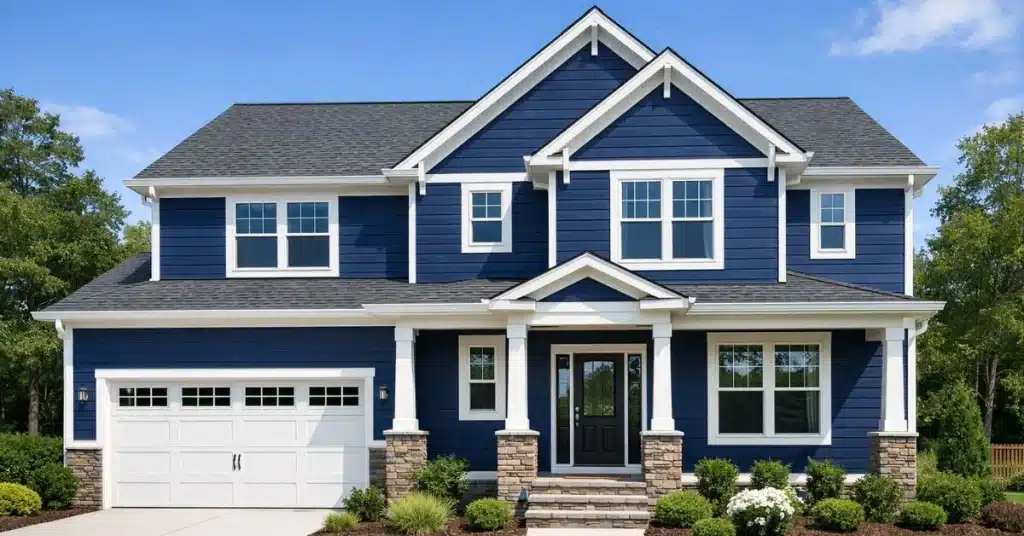
Average cost: $15,000–$25,000
Average ROI: ~114%
Why it works: James Hardie products have essentially become the industry standard for residential fiber cement siding. The material is fire-resistant, moisture-resistant, and available in a wide range of profiles lap siding, shingle panels, vertical board-and-batten. It holds paint far longer than wood and resists the warping and cracking that plague vinyl in extreme climates.
4. Vinyl Siding Replacement
Average cost: $10,000–$18,000
Average ROI: ~97%
Why it works: While fiber cement has better durability metrics, vinyl siding still delivers strong returns for homeowners who need an affordable, low-maintenance solution. Modern vinyl products have improved dramatically in thickness and texture realism, and insulated vinyl (which adds a layer of foam backing) can meaningfully reduce heating and cooling costs.
5. Steel Entry Door Replacement
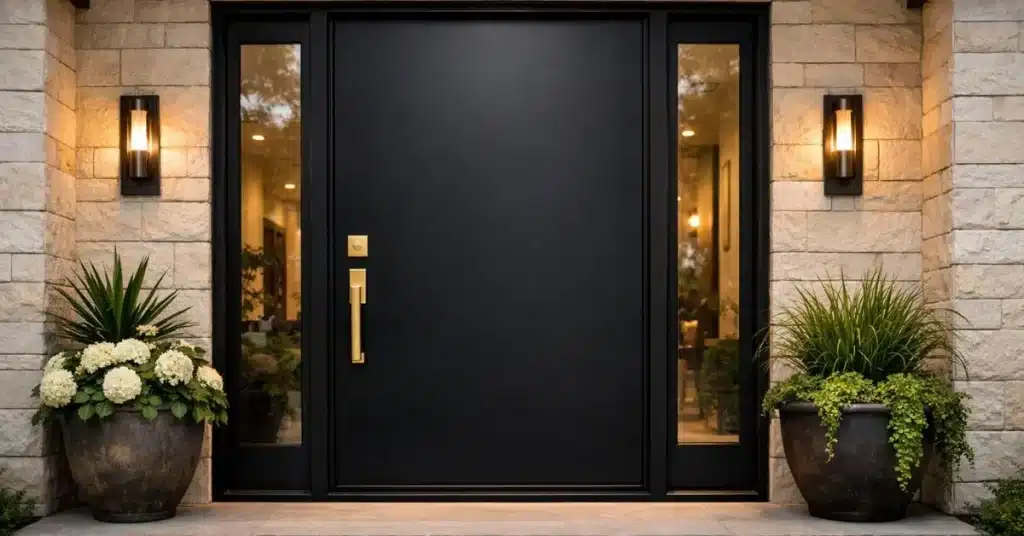
Average cost: $2,500–$5,000
Average ROI: 216%
Why it works: Entry doors punch above their weight in terms of curb appeal impact relative to cost. A new steel door improves security, weather sealing, and visual presence all at a fraction of the cost of siding or roofing projects. Fiberglass doors from brands like Therma-Tru or ProVia are worth considering for their wood-grain aesthetics without the maintenance concerns of actual wood.
6. Roofing Replacement
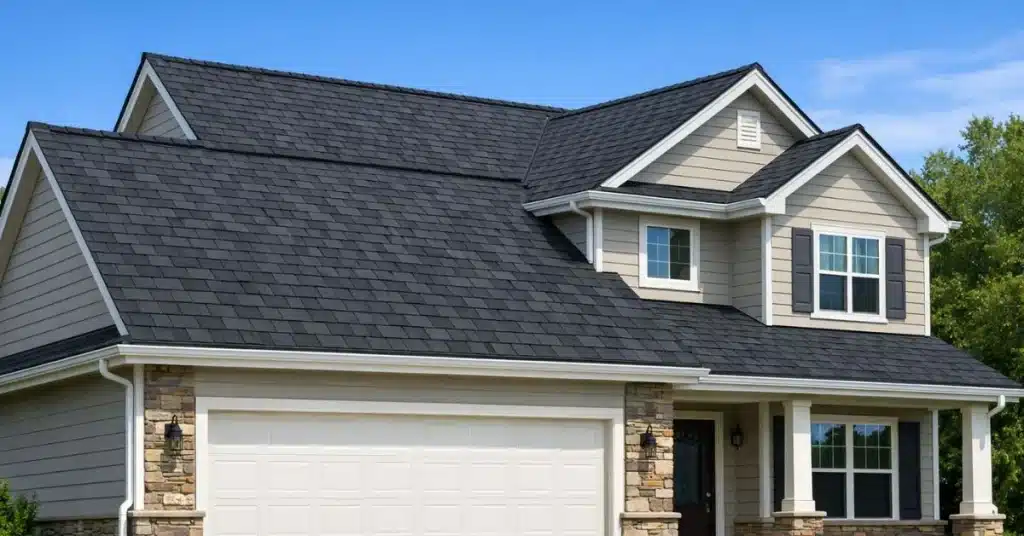
Average cost: $8,000–$35,000+
Average ROI: 60%–75%
Why it works: Roofing ROI on paper looks lower than the projects above, but that framing misses the point. A failing roof isn’t a discretionary upgrade it’s a structural liability that actively discourages buyers, triggers homeowner’s insurance complications, and creates cascading interior damage. Asphalt architectural shingles (Owens Corning, GAF, CertainTeed) remain the most popular choice. Metal roofing costs more upfront but offers a 40–70 year lifespan compared to 20–30 years for asphalt.
7. Window Replacement
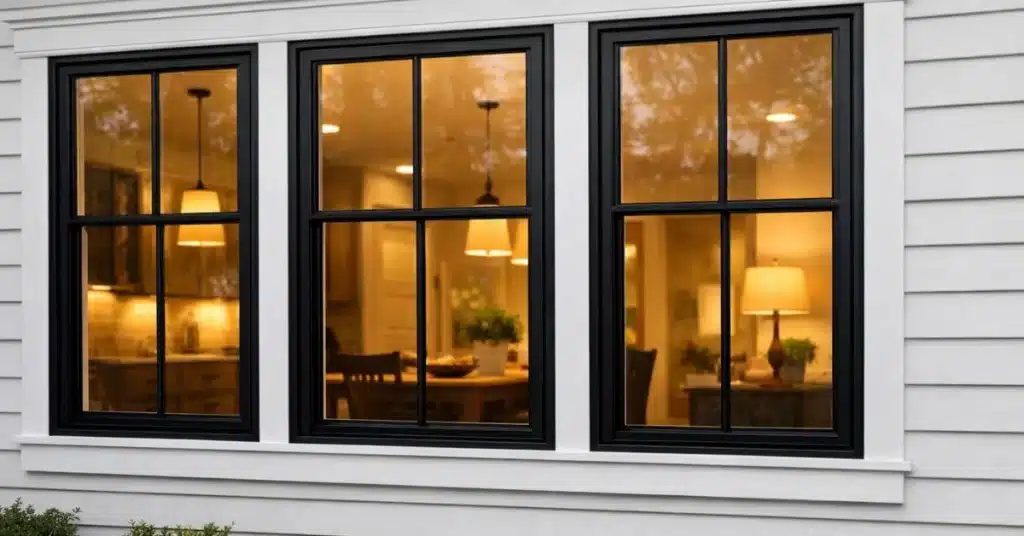
Average cost: $3,500–$12,000 for a full home
Average ROI: 67%
Why it works: Window replacement delivers returns in two directions simultaneously resale value and monthly energy savings. Double-pane vinyl windows carry a U-value of 0.30–0.45; triple-pane units achieve 0.20–0.30, which translates to measurable heating and cooling reductions in climate-sensitive regions. Energy Star-certified windows also qualify for the federal 25C tax credit, which covers 30% of costs up to $600 per year.
Exterior Renovation Cost Table: What to Budget in 2026
| Project | Low Estimate | High Estimate | Avg. ROI |
|---|---|---|---|
| Garage Door Replacement | $4,000 | $7,500 | 268% 🔥 |
| Steel Entry Door | $2,500 | $5,000 | 216% |
| Stone Veneer Accent | $10,000 | $20,000 | 208% |
| Fiber Cement Siding | $15,000 | $25,000 | 114% |
| Vinyl Siding | $10,000 | $18,000 | 97% |
| Exterior Paint | $3,000 | $8,000 | 55–70% |
| Deck Addition (Composite) | $14,000 | $35,000 | 50–65% |
| Asphalt Roof Replacement | $8,000 | $25,000 | 68% |
| Window Replacement | $3,500 | $12,000 | 67% |
| Metal Roof | $20,000 | $55,000 | 48% |
Exterior Design Trends Shaping 2026
Design trends matter more than many homeowners admit. A renovation that looks dated immediately upon completion loses curb appeal value faster than one aligned with current buyer preferences.
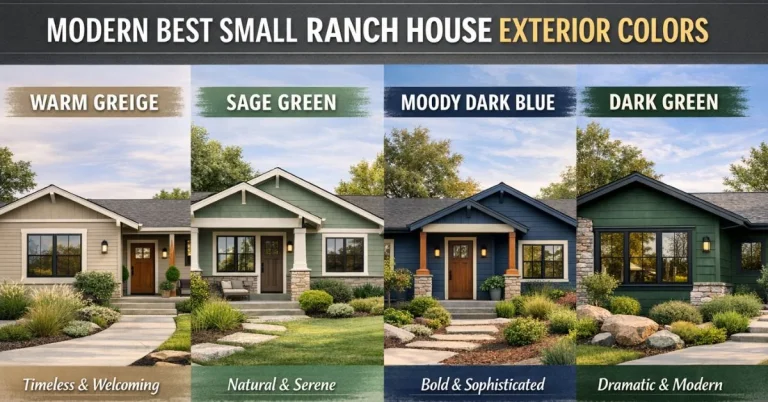
Warm neutrals are replacing the cold gray era. The shift has been building for two years. Homeowners are moving away from stark blue-grays, charcoal, and stark white exteriors toward warmer palettes, creams, taupes, muted sage greens, and soft clay tones. Pantone’s 2026 Color of the Year, Cloud Dancer, signals this direction explicitly. For exterior paint, think Benjamin Moore’s White Dove or Accessible Beige by Sherwin-Williams paired with warm black or bronze hardware.
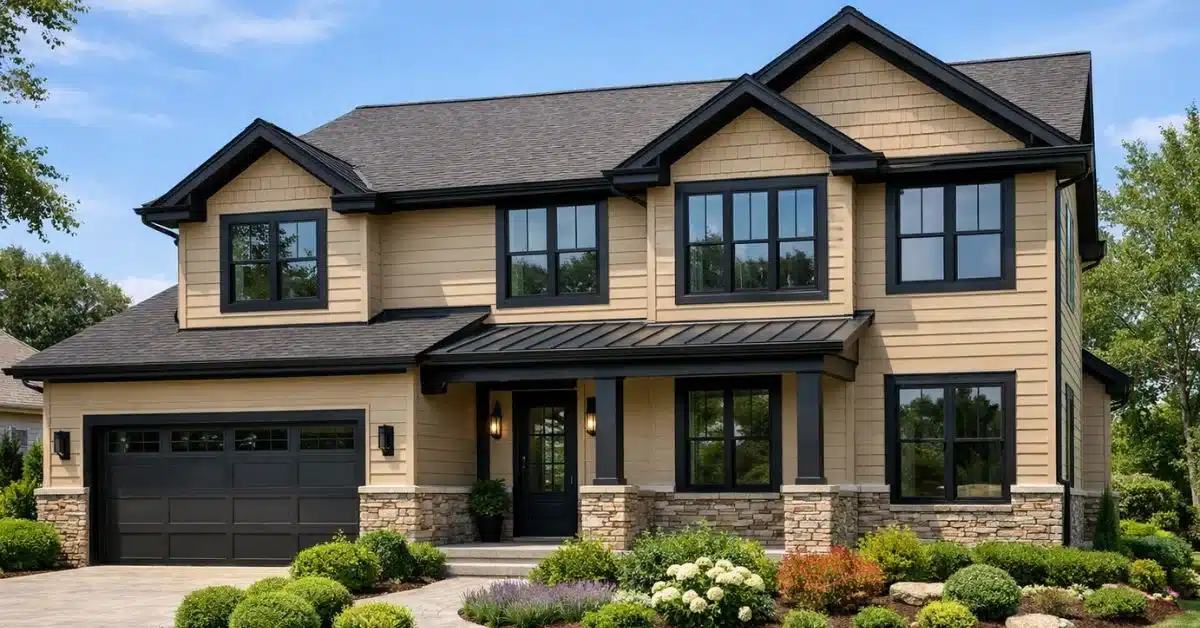
Mixed materials are creating more visual depth. Single-material exteriors feel flat. The most visually compelling renovations in 2026 combine two or three complementary materials: horizontal fiber cement lap siding on the main body with board-and-batten vertical siding on dormers or bump-outs, for example. Stone veneer as a base accent adds grounding. Dark-trimmed black windows against a warm siding color create high-contrast sophistication without being aggressive.
Black windows are still going strong. The trend toward black window frames shows no sign of slowing. They photograph beautifully, work with almost every exterior color palette, and signal quality to buyers who would otherwise walk past.
Oversized entry features are gaining ground. Front porches with deeper overhangs, larger-than-standard entry doors (8-foot doors are increasingly common), and board-formed concrete steps are all appearing more frequently in renovation projects, even in markets where homes are modest in size.
Solar integration is maturing. The solar panel aesthetic has improved considerably. Modern integrated systems from GAF Energy and Tesla’s Solar Roof product line are closer to flush with rooflines than older racked systems. With the 30% federal Investment Tax Credit (ITC) still in place through 2032, solar additions during a roof replacement project have become financially compelling.
How to Plan Your Exterior Renovation: A Practical Framework
Start With a Condition Assessment, Not a Wish List
Most homeowners approach exterior renovation by thinking about what they want it to look like. The smarter starting point is understanding what needs to be fixed structurally first because cosmetic work applied over deteriorating substrates is money wasted.
Walk the perimeter of your home with a critical eye. Look for:
- Peeling or bubbling paint (often signals moisture behind the surface)
- Gaps or cracks in caulking around windows and doors
- Siding that’s warped, cracked, or showing signs of rot at the base
- Gutters pulling away from the fascia or showing rust
- Missing or cracked shingles, especially near valleys and flashing points
- Soft spots on decks or porch floors
- Settled or cracked concrete around the foundation
If you find significant structural concerns, active leaks, foundation issues, failing soffits, those get addressed before any aesthetic work begins. No exceptions.
Set a Realistic Budget with a Built-In Buffer
The general rule of thumb used by experienced contractors and financial advisors alike: don’t spend more than 30% of your home’s current market value on total renovations. For a $400,000 home, that caps meaningful exterior investment at around $120,000 though most exterior renovation projects fall well below that threshold.
Whatever budget you set, add 15–20% as a contingency. Exterior renovations frequently uncover issues that weren’t visible during the initial assessment: rotted sheathing under siding, damaged flashing behind window frames, deteriorated substrate that needs replacement before new material can be installed.
Financing options worth knowing about in 2026:
- Home equity line of credit (HELOC): Interest may be tax-deductible when funds are used for home improvements
- FHA Title I loans: Government-backed loans specifically for home improvement projects
- Energy efficiency financing: PACE (Property Assessed Clean Energy) programs allow repayment through property taxes
- Contractor financing: Many reputable contractors now offer 0% financing periods read the terms carefully
Prioritize Projects Strategically
If you’re doing multiple projects, sequencing matters. The logical order:
- Roof first everything else depends on the roof being sound
- Windows and doors before new siding goes on
- Siding after roofing and windows are complete
- Paint or accent materials after the main cladding is in place
- Landscaping, lighting, and hardscape last, once the main renovation is complete
This sequence prevents re-doing work and ensures each subsequent project has a clean, stable substrate to work against.
Choosing the Right Contractor: What Separates Good from Great
The contractor you hire matters as much as the materials you choose. Poor installation shortens product lifespans, voids manufacturer warranties, and creates performance problems that may not appear immediately.
Licensing and insurance are non-negotiable. Verify a contractor’s general liability insurance (minimum $1 million), workers’ compensation coverage, and active state contractor’s license before any conversation about pricing. Ask for certificates of insurance directly and don’t accept verbal assurances.
Manufacturer certifications matter. James Hardie has its “HardiePlank Preferred Contractor” program. GAF has its “Master Elite” certification. Owens Corning has its “Preferred Contractor” network. These certifications require contractors to meet installation training standards and often extend product warranties well beyond standard coverage sometimes to 50 years.
Get three written bids and read them carefully. Low bids are almost always low for a reason. When comparing bids, verify that they specify the same materials (manufacturer, product line, thickness), the same scope of work, the same warranty terms, and the same removal and disposal plan for existing materials.
Ask about their subcontracting approach. Many large exterior renovation contractors do the sales and project management but subcontract the actual installation. This isn’t inherently problematic, but you should know who’s going to be on your roof or nailing your siding and verify that subcontractors also carry adequate insurance.
Check for permits. Exterior renovations in most jurisdictions require permits for roofing, siding replacement, and window installation. Contractors who suggest skipping permits to save money are creating a problem if you inherit unpermitted work that can create complications when you sell and may void homeowner’s insurance claims.
Energy Efficiency: The Underrated Argument for Exterior Renovation
The conversation about exterior renovation almost always focuses on aesthetics and resale value. The energy efficiency dimension gets less attention, but it’s financially significant especially in regions with extreme climate conditions.
The building envelope, the combination of roof, walls, windows, and doors accounts for roughly 25–30% of a typical home’s heating and cooling losses. Upgrading multiple components simultaneously creates compounding efficiency gains that exceed what you’d achieve by tackling each project independently.
The 25C energy tax credit (expanded under the Inflation Reduction Act) covers 30% of costs for qualifying:
- Exterior windows and skylights: up to $600/year
- Exterior doors: up to $500/year (two doors maximum)
- Insulation and air sealing: up to $1,200/year
- Heat pumps and heat pump water heaters: up to $2,000/year
These credits don’t disappear after one year they reset annually, meaning you can capture them across multiple tax years by spreading projects strategically.
For homeowners in colder climates, the combination of new windows, insulated siding, and a well-sealed roof assembly can reduce annual heating costs by 15–25%. In hot climates, reflective roofing materials and proper attic ventilation offer comparable cooling cost reductions.
Curb Appeal Improvements That Don’t Break the Bank
Not every improvement requires a full renovation budget. For homeowners with tighter budgets, these targeted improvements deliver noticeable curb appeal gains at relatively modest cost.
Exterior painting: A professionally painted exterior, new body color, trim color, and shutters typically costs $3,000–$8,000 for an average single-family home. The transformation can be dramatic, and a good exterior paint job from a quality product (Sherwin-Williams Duration, Benjamin Moore Aura Exterior, or PPG Timeless) should last 10–15 years with proper prep.
Landscaping refresh: Adding defined mulch beds, removing overgrown foundation plantings, and adding a clean edge between the lawn and beds can take a house from neglected to maintained in a single weekend. Native plants that match your climate require less maintenance and look intentional. The National Association of Realtors consistently ranks landscaping as one of the highest-returning low-cost curb appeal improvements.
Exterior lighting upgrade: Replacing dated coach lights with modern fixtures, adding path lighting, or installing uplighting to highlight architectural features takes a few hours and costs a few hundred dollars. It’s the renovation equivalent of changing your jewelry before going out inexpensive and immediately visible.
House numbers and mailbox: New house numbers in a bold, legible font and a well-chosen mailbox are the kind of details that signal care to buyers without requiring a contractor. Clean, modern hardware at entry points (door handles, house numbers, exterior light fixtures) creates visual coherence.
Pressure washing: Before making any decisions about paint or siding, pressure wash the exterior. You may find that dirt and algae were making things look worse than they actually are and it gives you a clean baseline for assessing what work actually needs to be done.
Common Exterior Renovation Mistakes (and How to Avoid Them)
Choosing trendy colors over timeless ones. Bold, highly specific colors date quickly and limit buyer appeal. If you plan to sell within five years, stick to proven neutral palettes with classic trim contrasts. Save the personality for landscaping and decor.
Skipping moisture barriers. A house wrap like Tyvek HomeWrap is standard for a reason. Contractors who suggest skipping it to save money are creating conditions for rot, mold, and insulation damage down the line. It’s a small cost with enormous long-term consequences.
Mismatching materials and climate. Fiber cement performs exceptionally in most climates but requires careful installation in freeze-thaw cycles where improper caulking becomes a moisture entry point. Wood siding is beautiful but requires climate-matched paint systems and regular maintenance cycles. Choose materials that match what the weather in your region will actually demand.
Ignoring soffit, fascia, and trim. New siding with rotted fascia boards looks incomplete and signals that the renovation was done on a budget. All trim elements should be replaced or repaired in concert with the main cladding project.
Skipping the neighbor and HOA check. Many communities have architectural review requirements Homeowners Associations, historic preservation overlays, and local design review boards can all have jurisdiction over exterior appearance. Check before you commit to a color or material. Violations can require expensive reversals.
Conclusion
Exterior home renovation is one of the few places where smart spending and genuine pride in your home point in exactly the same direction. Fix what’s failing, upgrade what matters most, sequence the work logically, and hire people who actually know what they’re doing. That’s the entire playbook. The houses that hold their value, sell quickly, and make owners genuinely happy to pull into the driveway every evening aren’t the ones that had the biggest budgets. They’re the ones where someone made thoughtful decisions early, bought quality materials once, and treated the exterior as the asset it actually is. Start there, and everything else follows.
FAQs
Q: What exterior renovation adds the most value?
Garage door replacement delivers up to 268% ROI for as little as $4,000.
Q: How much does an exterior home renovation cost?
Most full exterior renovations run between $30,000 and $80,000 depending on scope and materials.
Q: Do I need permits for exterior renovation work?
Yes roofing, siding, and window replacements require permits in most jurisdictions.
Q: Is fiber cement or vinyl siding better?
Fiber cement lasts longer and looks more premium; vinyl costs less and never needs painting.
Q: What time of year is best for exterior renovation?
Spring mild temperatures, good drying conditions, and contractors are easier to book before summer.

As an admin, with a passion for transforming spaces and a sharp eye for design trends, I created Interior Design Style Quiz to help homeowners make confident, informed decisions about their homes from the curb all the way inside.